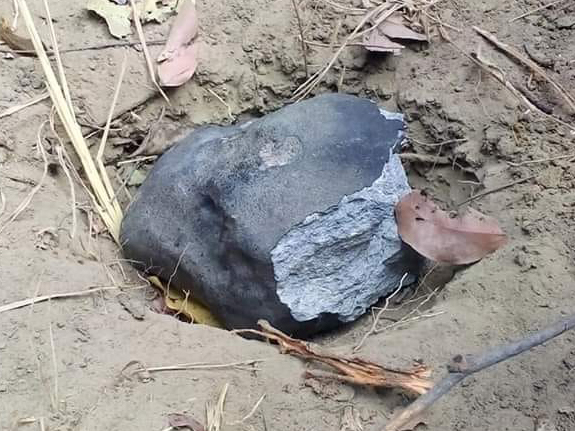
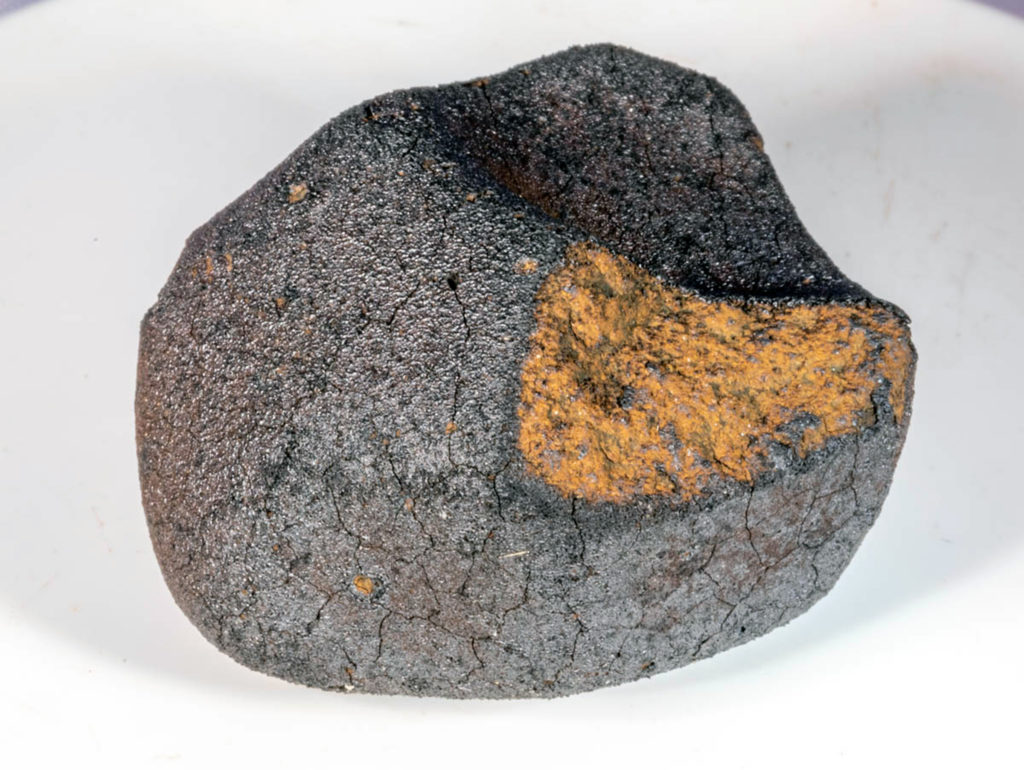
Martian (augite basalt)
Meteoritical Bulletin Database entry
RESEARCH PAPERS
40Ar/39Ar Systematics and Noble Gas Components in the Early Amazonian Martian Meteorite Northwest Africa 8159
W. S. Cassata
47th Lunar and Planetary Science Conference (2016), Abstract #2118
PDF
Electron Probe Microanalysis, Micro X-Ray Diffraction, and Deuterium-Hydrogen Analysis of Hydrous Alteration in Martian Meteorites Northwest Africa 10416 and 8159
Z. Vaci, H. E. Newsom, C. B. Agee, A. J. Brearley, O. Tschauner, C. D. K. Herd
47th Lunar and Planetary Science Conference (2016), Abstract #2538
PDF
Nano-Scale Investigation of Spinel-Orthopyroxene Intergrowths in Northwest Africa 8159. A Record of fO2 But at What Temperature?
P. Provencio, C. K. Shearer, A. S. Bell, P. V. Burger
47th Lunar and Planetary Science Conference (2016), Abstract #2411
PDF
Shocked Feldspar in Martian Meteorites: Evidence Against Pervasive Melting and Resetting
J. Hu, T. G. Sharp
47th Lunar and Planetary Science Conference (2016), Abstract #2542
PDF
Discovery of a new Martian Meteorite Type: Augite Basalt – Northwest Africa 8159
New Meteorite Type NWA 8159 Augite Basalt: Specimen from a Previously Unsampled Location on Mars?
Northwest Africa 8159: An ~2.3 Billion Year Old Martian Olivine – Bearing Augite Basalt
Ti-Cr-O Isotope Systematics of the Anomalous Eucrites and Martian Meteorites
C. D. Williams, M. E. Sanborn, Q. -Z. Yin
46th Lunar and Planetary Science Conference (2015), Abstract #1671
Neodymium and Tungsten Isotope Systematics of Mars Inferred from the Augite Basaltic Meteorite NWA 8159
T. M. Kayzar, L. Borg, T. S. Kruijer, T. Kleine, G. Brennecka, C. Agee
46th Lunar and Planetary Science Conference (2015), Abstract #2357
Shock Effects in NWA 8159: Evidence for a Modest Shock Pressure and a Large Impacting Body
T. G. Sharp, E. L. Walton, J. Hu
46th Lunar and Planetary Science Conference (2015), Abstract #1939
The Mineralogical Record of fO2 Variation and Alteration in Northwest Africa 8159 (NWA 8159). Evidence for the Interaction Between a Mantle Derived Martian Basalt and a Crustal Component(s)
C. K. Shearer, A. S. Bell, P. V. Burger, F. M. McCubbin, C. Agee, J. Simon, J. J. Papike
46th Lunar and Planetary Science Conference (2015), Abstract #1483
Northwest Africa 8159 (NWA 8159)
Morocco
Purchased: 2012
Classification: Martian (augite basalt)
History: Purchased by Brahim Tahiri from a Moroccan hunter and sent to his partner Sean Tutorow for classification, 2012.
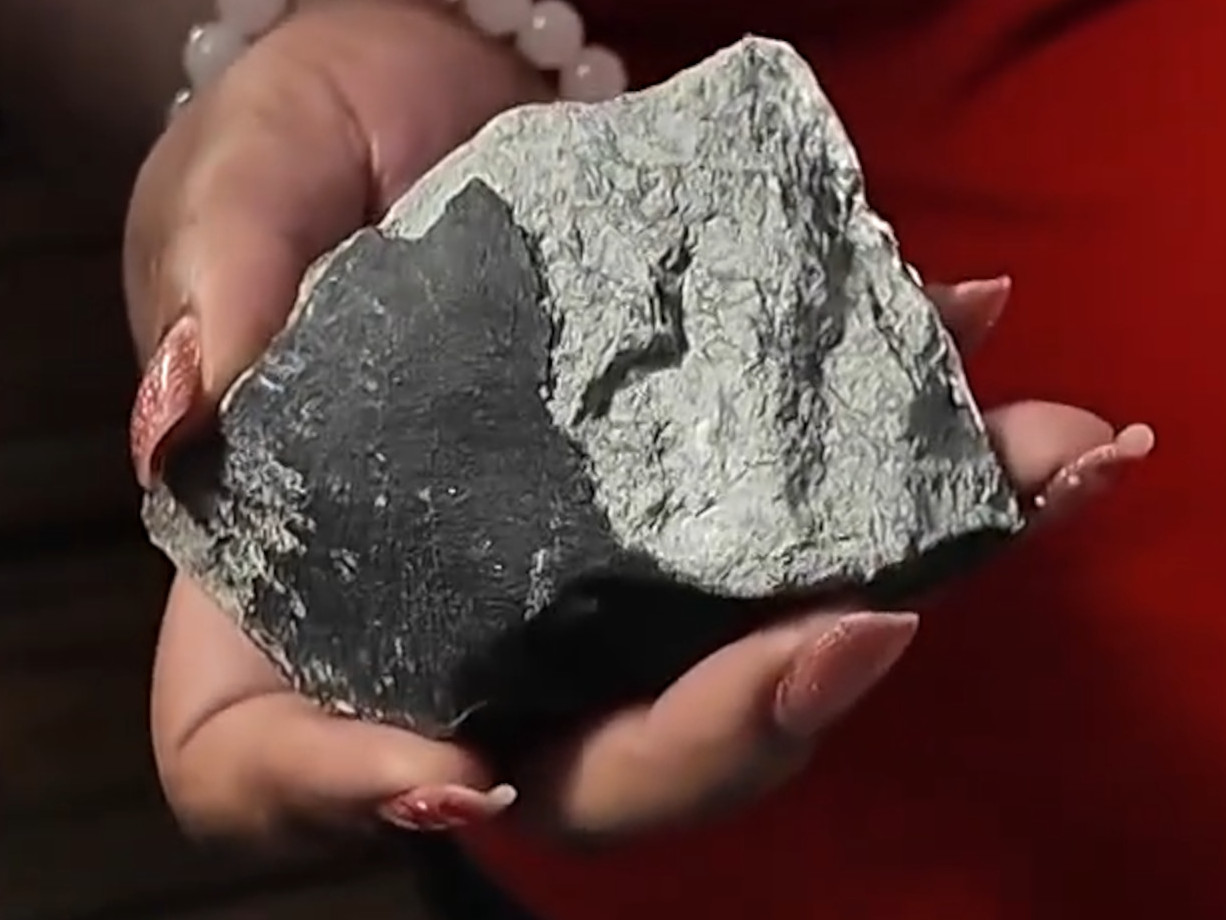
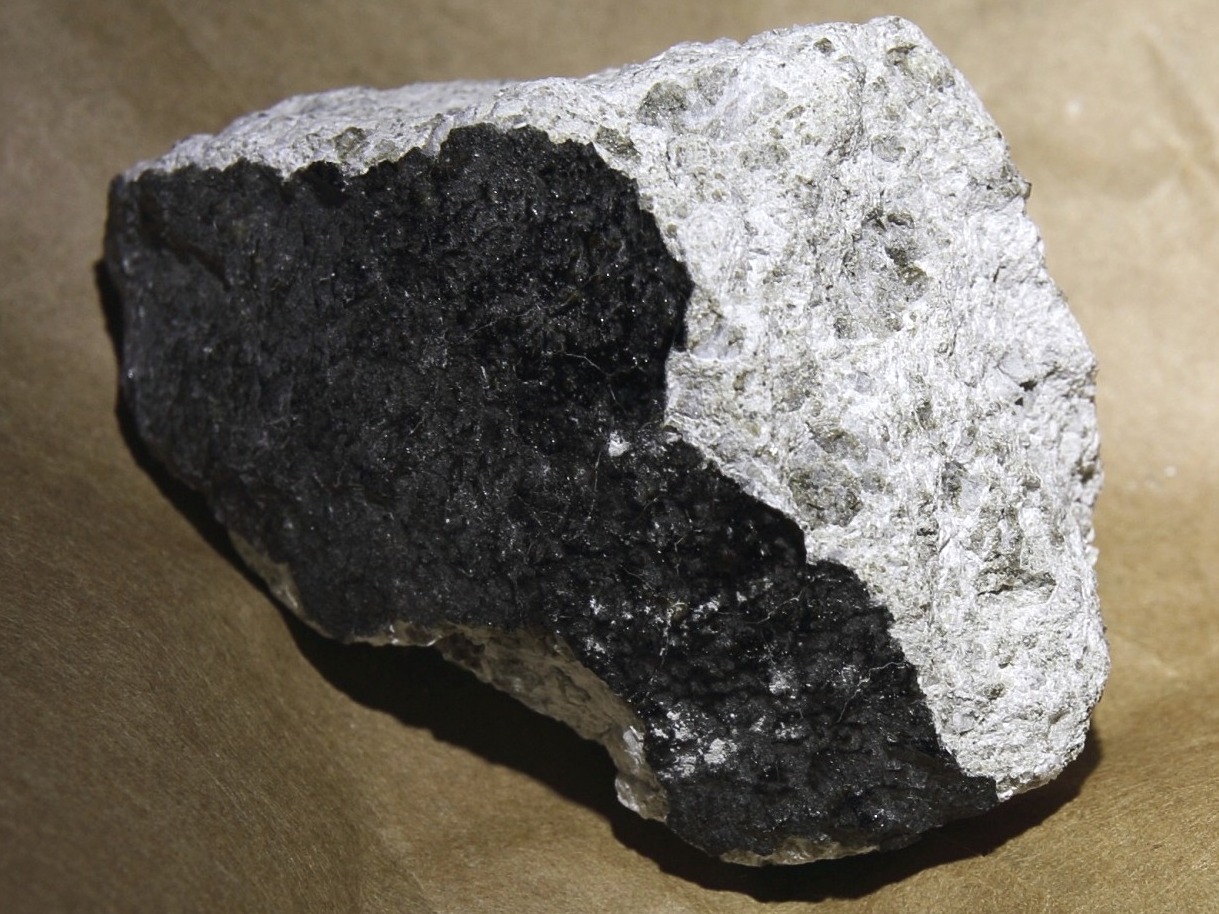
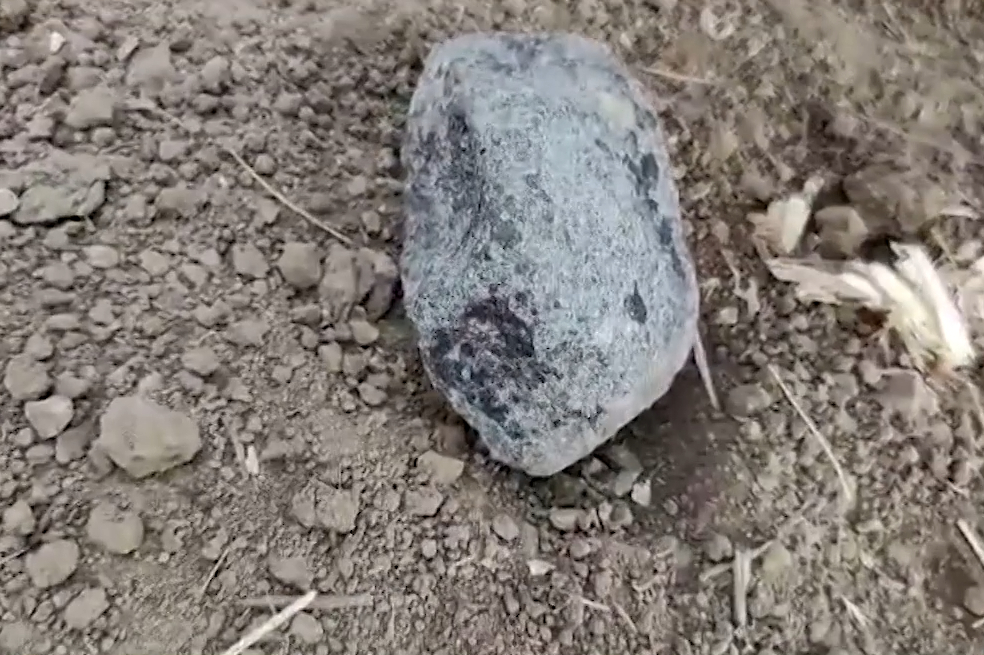
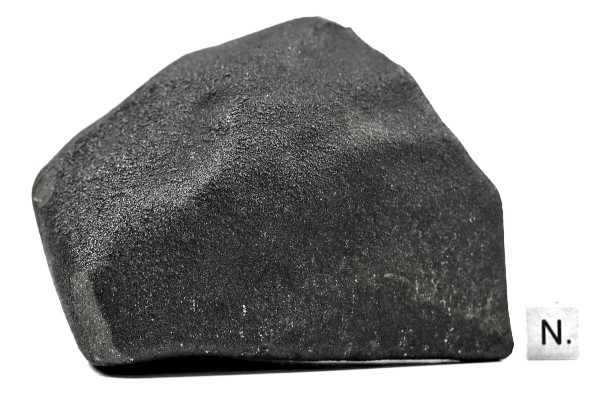
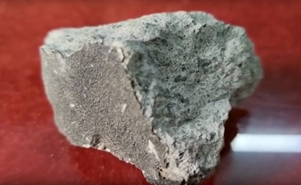
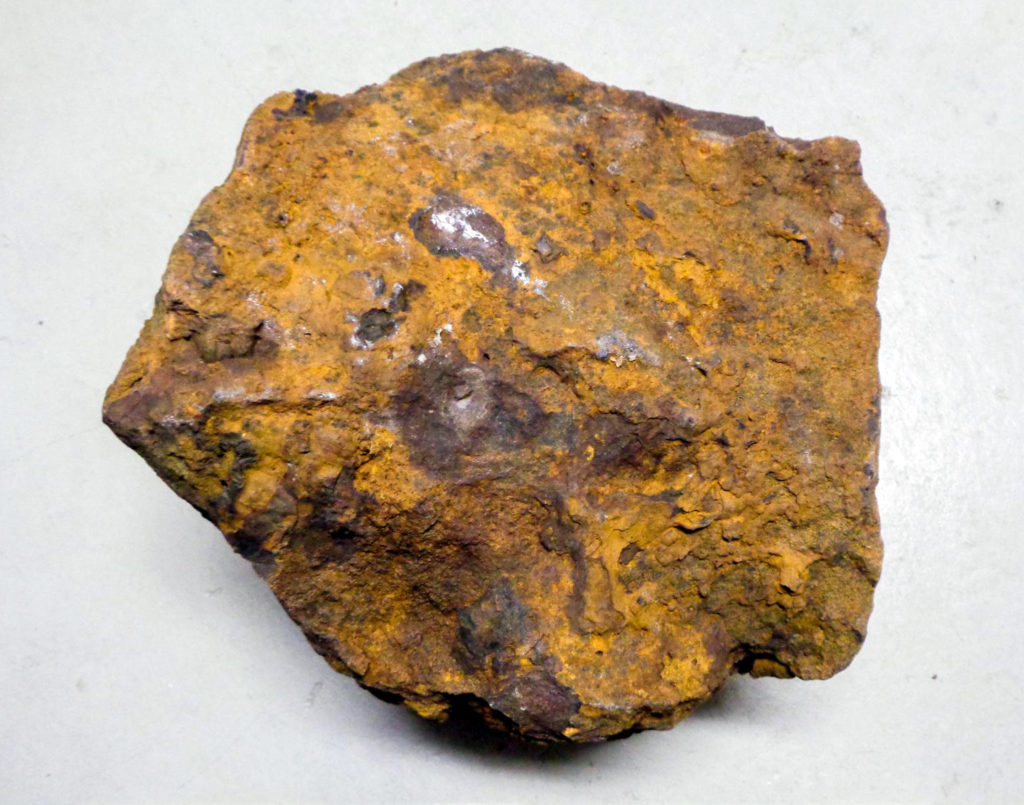
Physical characteristics: Single stone, weathered exterior with yellow-brown patina, light colored desert soil coating on one side. Saw cut reveals a very fine-grained, gray-green interior, with a few small melt veins present, but one vein was up to 1 mm thick, lithology offsets at vein boundaries suggest slight brecciation.
Petrography: (C. Agee, UNM) Microprobe examination of a two polished mounts shows intergranular texture with approximately 50% augite, 40% plagioclase and maskelynite, 5% olivine. Augites have equant habits 10-200 μm with igneous zoning. Some augite crystals are rimmed with Fs-rich orthopyroxene. Plagioclase with shock-fractured prismatic laths up to 500 × 100 μm, but many are smaller (~50 × 10 μm), approximately half of the plagioclase has been converted to maskelynite, and is observed as unfractured, glassy casts. Olivine ~100 μm, most with resorbed or coronal grain boundaries. Ubiquitous magnetite, most grains 10-100 μm. Minor ilmenite, merrillite, Cl-apatite, and Cr-spinel. Trace calcite and barite assumed to be desert weathering products.
Geochemistry: (C. Agee, N. Muttik, F. McCubbin, UNM) EMPA. Augite Fs38.6±11Wo30.4±11.0, Fe/Mn=36±4, n=78; orthopyroxene rims Fs62.3±5.9Wo0.6±0.3, Fe/Mn=23±3, n=6; plagioclase An58.2±2.3Ab41.5±2.4Or0.3±0.2, n=7; maskelynite An58.1±1.8Ab41.6±1.7Or0.2±0.0, n=5; olivine Fa66.2±3.8, Fe/Mn=50±5, n=15; large shock melt vein (mean value from EMPA with 20 μm beam) SiO2=46.14±0.94, TiO2=0.67±0.09, Al2O3=10.63±1.22, Cr2O3=0.14±0.02, FeO=24.89±1.92, MnO=0.50±0.04, MgO=4.02±0.39, CaO=9.10±0.38, Na2O=1.80±0.17, P2O5=0.29±0.03, Cl=0.067±0.022 (all wt%), n=10. (Karen Ziegler, UNM) Oxygen isotope values of 5 acid-washed aliquots of bulk sample, 1.2, 1.2, 1.8, 2.0, 1.0 mg, gave δ17O = 2.406, 2.405, 2.093, 2.532, 2.329, δ18O = 4.089, 3.947, 3.328, 4.197, 3.880, Δ17O = 0.247, 0.321, 0.336, 0.316, 0.280 (linearized, all permil).
Classification: Martian (augite basalt). This is a martian meteorite based on oxygen isotopes, Fe/Mn of augite and olivine, and An-content of plagioclase and maskelynite. This martian meteorite is a fine grained olivine-bearing augite basalt that does not appear to be a SNC type although there are some aspects of it that resemble SNC. The augite and olivine compositions and crystallization trends are similar to nahklites, in particular MIL 03346. It does not resemble most shergottites in that pigeonite is absent, and orthopyroxene is only a minor phase present as Fe-rich rims on some augite grains, however plagioclase compositions are similar to shergottites, in particular the low potassium labradorites in QUE 94201. Shock pressures appear to have been lower than for shergottites, perhaps similar to Chassigny and some nakhlites, as only about half the plagioclase has been transformed to maskelynite. Magnetite is the dominant oxide phase in this meteorite, the only other martian meteorite that shares this aspect is basaltic breccia NWA 7034 and its pairings.
Specimens: 24.57 g including a two probe mounts on deposit at UNM, Reed holds 2.21 g, Sean Tutorow holds the main mass.