Vibrational spectroscopic, thermophysical, and structural properties of two Antarctic howardites: EET 87503 and QUE 97001
Ozan Unsalan, Cisem Altunayar-Unsalan, Bernardo A. Nogueira, Melanie Kaliwoda, Rui Fausto
Advances in Space Research
In Press, Journal Pre-proof, Available online 17 July 2025
“Highlights
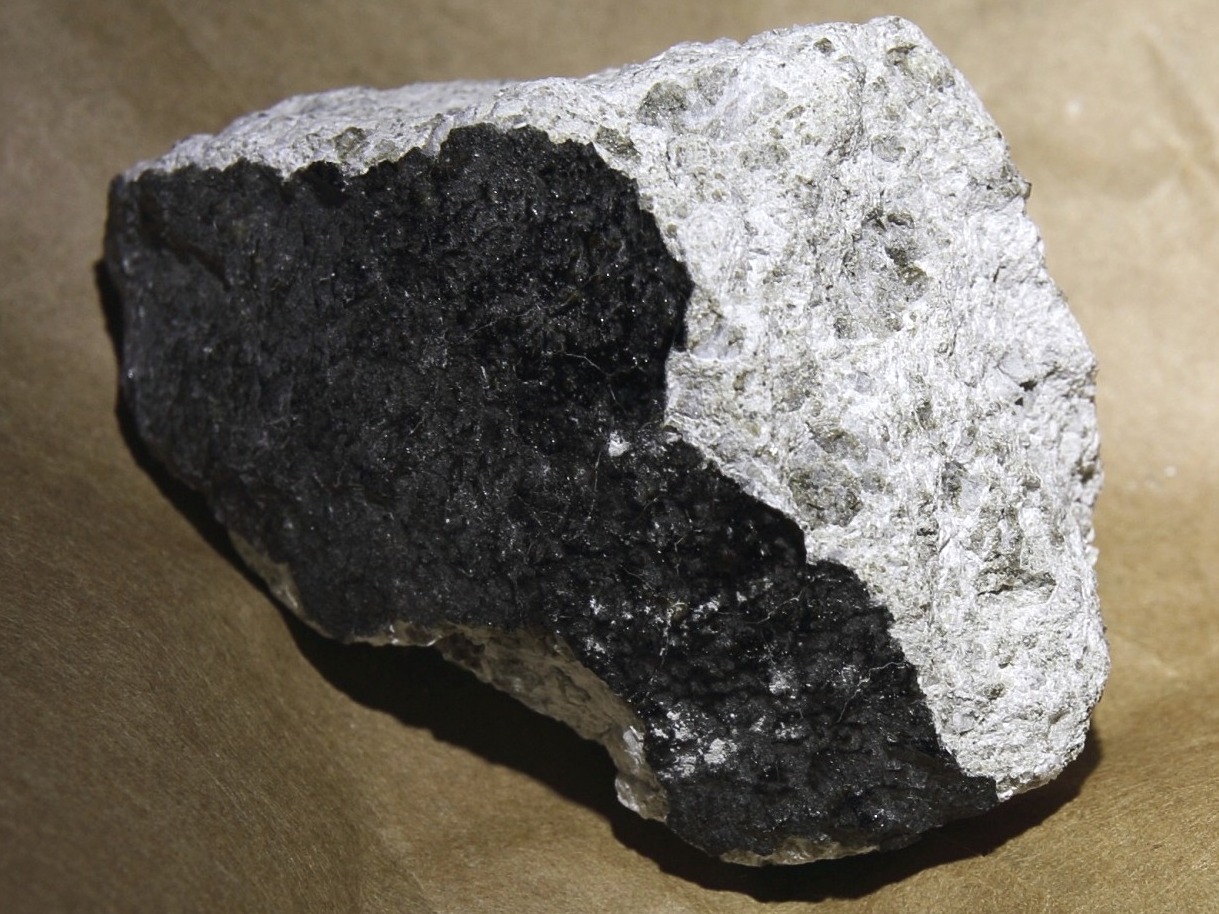
- Antarctic howardites, EET 87503 and QUE 97001, were investigated by Raman spectroscopy, optical microscopy, DSC, and TGA.
- A rare magnesium-end-member silicate, monticellite, was identified in both meteorites, offering insights into the thermal and impact histories of these howardites.
- Troilite contents of 0.26 and 0.13% for EET and QUE, respectively indicate variations in their thermal histories.
- TGA showed minimal weight loss (<1%) upon heating to 1200°C, suggesting that both meteorites are largely stable.”
“This study uses optical microscopy, Raman spectroscopy, differential scanning calorimetry (DSC), and thermogravimetric analysis (TGA) to examine the Antarctic howardite meteorites EET 87503 and QUE 97001. DSC results revealed troilite phase transitions in EET and QUE at 146.66 and 147.50 °C, corresponding to 0.26% and 0.13% troilite content, respectively. TGA indicated minor weight loss (< 1%) in both samples, with EET showing 0.399% and QUE 0.638% weight loss upon heating up to 1200 °C. Raman spectroscopy confirmed the presence of key minerals, including enstatite, ferrosilite, diopside, forsterite, ilmenite, and anorthite, as well as, in the case of the QUE 97001 meteorite, monticellite, a rare magnesium-end-member silicate olivine type mineral, providing insights into the complex thermal and impact histories of these howardites. The present findings appear as a contribution to a better understanding of the mineralogy and thermal evolution of this type of meteorites, linking them to potential parent bodies such as asteroid 4Vesta.”