Asuka 12236 more primitive than Paris: Clues given by their Infrared and Raman micro-spectroscopy signaturesOPEN ACCESS
Zahia Djouadi, Vassilissa Vinogradoff, Zelia Dionnet, Coline Serra, Douchka Dimitrijevic, Alexandra Malnuit, Cateline Lantz, Philippe Claeys, Steven Goderis, Louis Le Sergeant d’Hendecourt
MAPS, Version of Record online: 19 July 2025
LINK (OPEN ACCESS)
PDF (OPEN ACCESS)
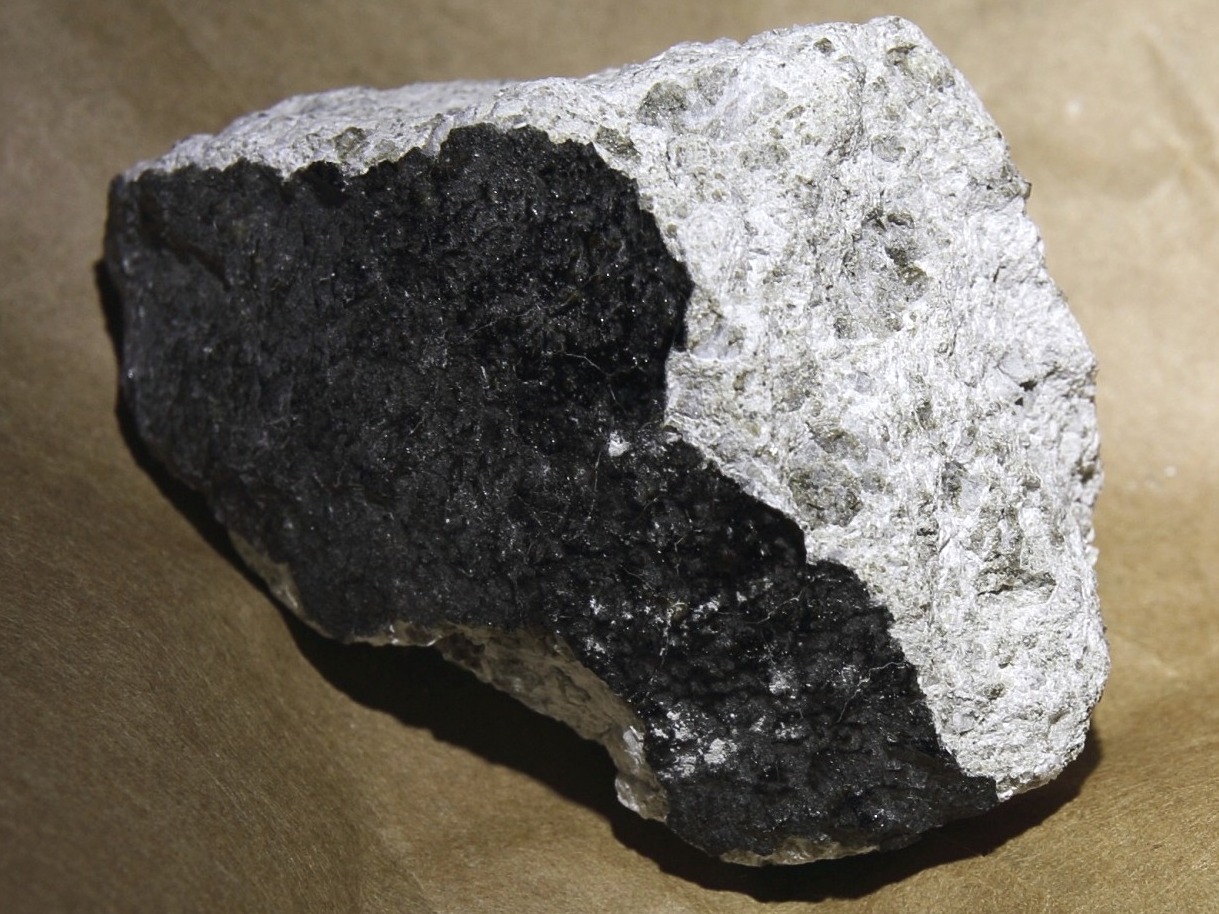
“Carbonaceous chondrites are meteorites originating from undifferentiated objects of the Solar System, which may retain signatures of primitive matter. Here, we present a comparative study between two CM chondrites Asuka 12236 and Paris, both considered among the most primitive in the carbonaceous chondrite meteorite collection. This work is based on the combination of infrared and Raman micro-spectroscopy, aiming to compare the spectral characteristics of these two peculiar chondrites. We present an average infrared spectrum from the mid to far infrared of Asuka 12236, which has never been reported yet in the literature. Contrary to the average spectrum of Paris, the Asuka 12236 spectrum shows signatures of anhydrous minerals (olivine and or pyroxene) as well as the presence of amorphous phases. These findings are in agreement with the low degree of alteration reported for Asuka 12236. Aromatic primary amines and imines are also detected in Asuka 12236, heterogeneously distributed within the meteorite. In addition, the comparison of the Raman signatures of the two meteorites highlights different carbon structuration and thus thermal histories. Our spectroscopic investigations confirm that Asuka 12236 can be considered more primitive than the Paris carbonaceous chondrite.”