Magnesium phosphate in the Cold Bokkeveld (CM2) carbonaceous chondriteOPEN ACCESS
Martin R. Lee, Tobias Salge, Ian Maclaren
MAPS, Version of Record online: 28 July 2025
LINK (OPEN ACCESS)
PDF (OPEN ACCESS)
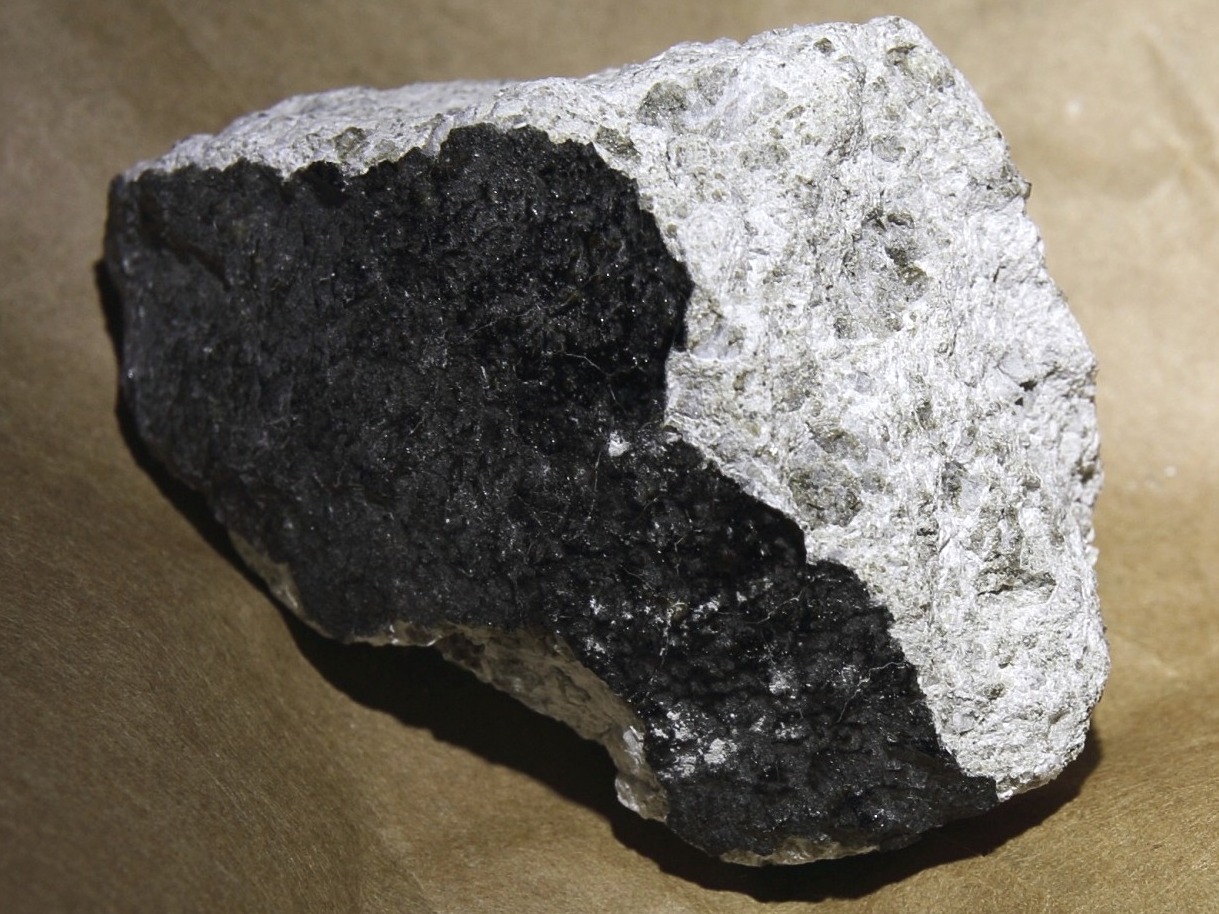
“Hydrous Mg-phosphate was first described from astromaterials in particles returned from the C-type asteroid Ryugu, and has subsequently been found in samples of the B-type asteroid Bennu and CI1 carbonaceous chondrites. This phase may have been highly significant as a source of bioessential compounds for early Earth. Here, we describe Mg-phosphate from a petrologic type 1 clast (called “C1MP”) in the Cold Bokkeveld CM2 carbonaceous chondrite. This clast has a fine-grained serpentine–saponite matrix that in addition to the Mg-phosphate contains magnetite, Mg-Fe carbonate, calcite, pentlandite, transjordanite, eskolite, and daubréelite/zolenskyite. The Mg-phosphate grains are 7–36 μm in size and together constitute 0.27% of the clast by area. They have a “cracked” texture in scanning electron microscope images, and scanning transmission electron microscopy (STEM) shows that they are highly porous suggesting alteration of originally hydrous grains. The Mg-phosphate has Mg/P and Na/P ratios (atom%) of 1.02 and 0.25, respectively, along with minor concentrations of C, S, Cl, K, Ca, and Fe. Nitrogen was sought because ammonia has been reported from Ryugu Mg-phosphate, but none was detected by X-ray or electron spectroscopy. 4D-STEM shows that the C1MP clast’s Mg-phosphate is amorphous, and radial distribution function analysis of electron diffraction patterns reveals that its P-O and Mg-P bonding distances are comparable to newberyite (MgHPO4.3H2O). The C1MP clast’s Mg-phosphate formed from late-stage alkaline brines and subsequently underwent dehydration, amorphization, and partial loss of Na in response to heating in its parent body and/or during laboratory analysis.”