A terrestrial rock instead of an ureilite: Caution is recommended to scientists working on material received from meteorite collections
Lidia Pittarello, Stepan M. Chernonozhkin, Oscar Marchhart, Martin Martschini, Silke Merchel, Alexander Wieser, Frank Vanhaecke, Steven Goderis
MAPS, Version of Record online: 13 August 2025
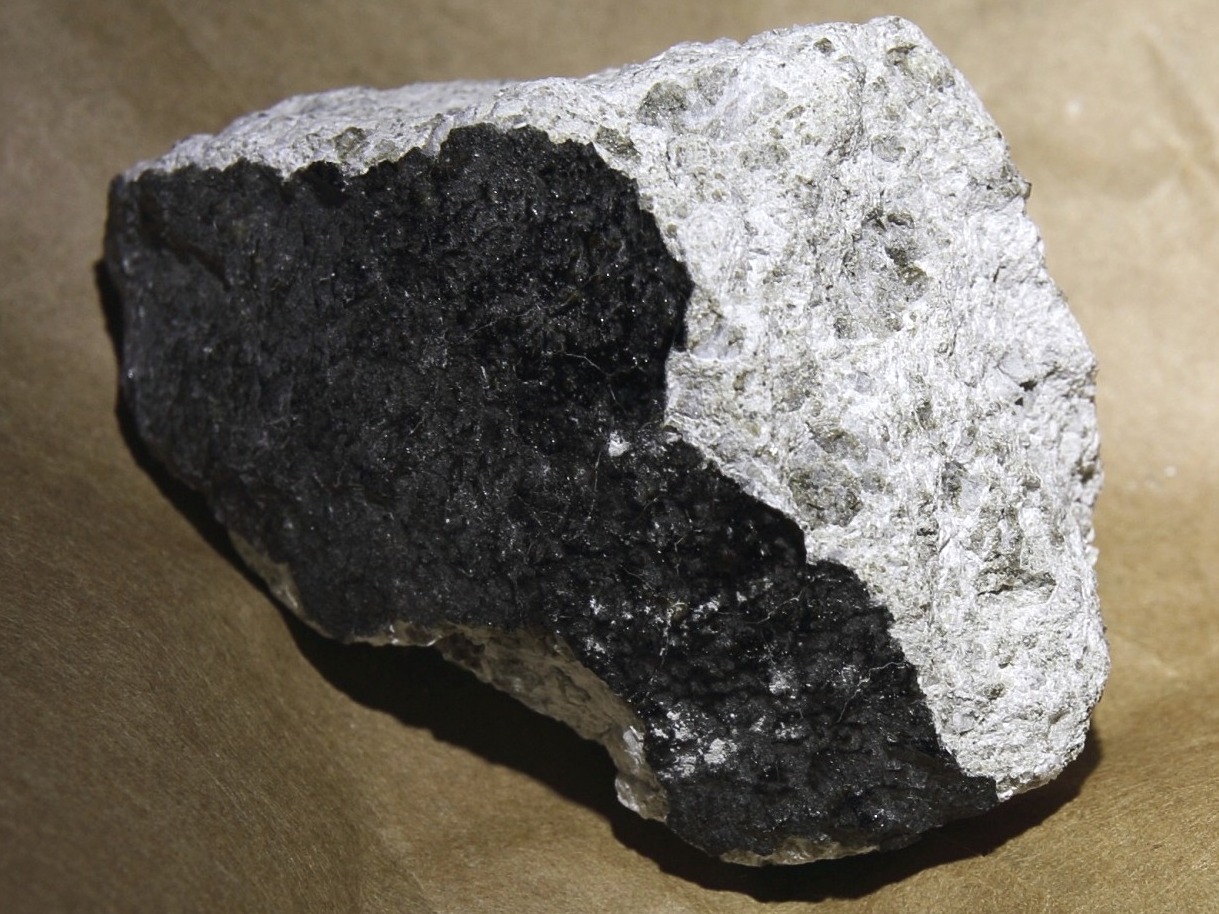
“Planetary scientists heavily depend on meteorite curation facilities for the preparation and allocation of protected (e.g., Antarctic), highly valuable extraterrestrial specimens. In this work, a fragment of the Dyalpur ureilite obtained from a museum is discussed. The sample is found to contain microstructural, geochemical, and isotopic features inconsistent with any meteorite. The fragment consists of pargasitic amphibole, Ni-sulfides, and chromite grains in Fo92 olivine groundmass, cut by serpentine veins. Amphibole geothermobarometry yields equilibrium conditions that are not compatible with the assumed ureilite parent body. Assuming the fragment represented a rare clast in an ureilite, further analyses were performed. Both the oxygen isotopic composition and the extremely low level of cosmogenic radionuclides confirm the terrestrial origin of the fragment; it is a partially serpentinized peridotite. This work stresses the importance of petrographic characterization of samples used for (isotope) geochemical analyses, of a well-documented sample curation, and of cosmogenic nuclide measurements for the unequivocal identification of extraterrestrial material. Finally, caution is recommended before making sensational claims in cases of anomalous results.”