Updating the Urey-Craig diagram: The iron redox states of the building blocks of the outer solar systemOPEN ACCESS
Kana Amano, Jean-Christophe Viennet, Pierre Beck, François Guyot, Sergey Yaroslavtsev, Dimitrios Bessas, Aleksandr Chumakov, Ludovic Delbes, Olivier Poch, Mathieu Roskosz
“Highlights
- The Urey-Craig diagram is revised based on Mössbauer spectroscopy
- The CI materials are more reduced than previously estimated
- The CM, CI, and Tagish Lake materials formed at distinct redox conditions
- The CM samples with higher alteration degrees show more Fe2⁺-rich clay composition”
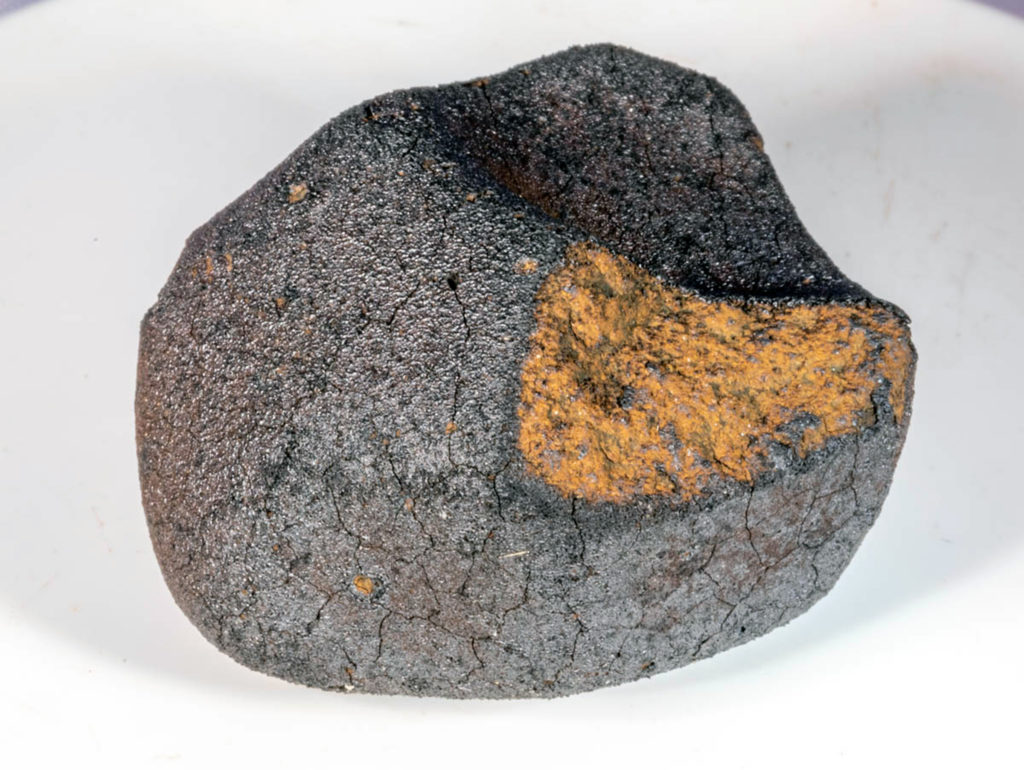
“The iron speciation and valence state of meteorites reflect the formation conditions and evolution of primitive bodies in the solar system. This idea is illustrated in an iconic plot in planetary science, the so-called Urey-Craig (UC) diagram, where the amount of iron accommodated in sulfides and metallic alloys is plotted versus that found in oxides and silicates. Hydrous carbonaceous chondrites (i.e., CI and CM type) are usually considered as the oxidized end-member. Here, we reevaluate the position of CIs in the UC diagram based on available data from recent space missions that sampled CI-like materials and by a recently found CI meteorite (Oued Chebeika 002) using X-ray diffraction and Mössbauer spectroscopy. Moreover, we report new data for C2-ungrouped (e.g., Tagish Lake and Tarda), CM, and CR chondrites containing varying proportions of clay minerals. The results show that the recently fallen CI and C2-ungrouped samples contain a considerable amount of iron sulfides, and metallic iron was identified in less altered CM samples, indicating that they are not completely oxidized. The updated UC diagram shows that the formation environments of CI materials are much more reduced than previously assumed, possibly implying that the oxygen fugacity that prevailed during CI material formation might not be far from that of some non-carbonaceous chondrites (e.g., L and LL type). Furthermore, the metal-bearing CM samples have Fe3+-rich poorly-crystalline phases, and the Fe3+/(Fe3++Fe2+) ratio in clay minerals decreases with increasing alteration intensity. The CI and C2-ungrouped samples do not follow this CM trend, suggesting distinct redox-controlling processes.”