Spectroscopy of the Hamburg Meteorite, Michigan H4OPEN ACCESS
M. Darby Dyar, Laura B. Breitenfeld, Melissa D. Lane, Timothy Glotch, Roger Clark, Neil Pearson, Elizabeth C. Sklute, Molly C. McCanta, Amanda J. Hendrix, Brandon Weller
The Planetary Science Journal, Volume 6, Number 10, Published October 24, 2025
LINK (OPEN ACCESS)
PDF (OPEN ACCESS)
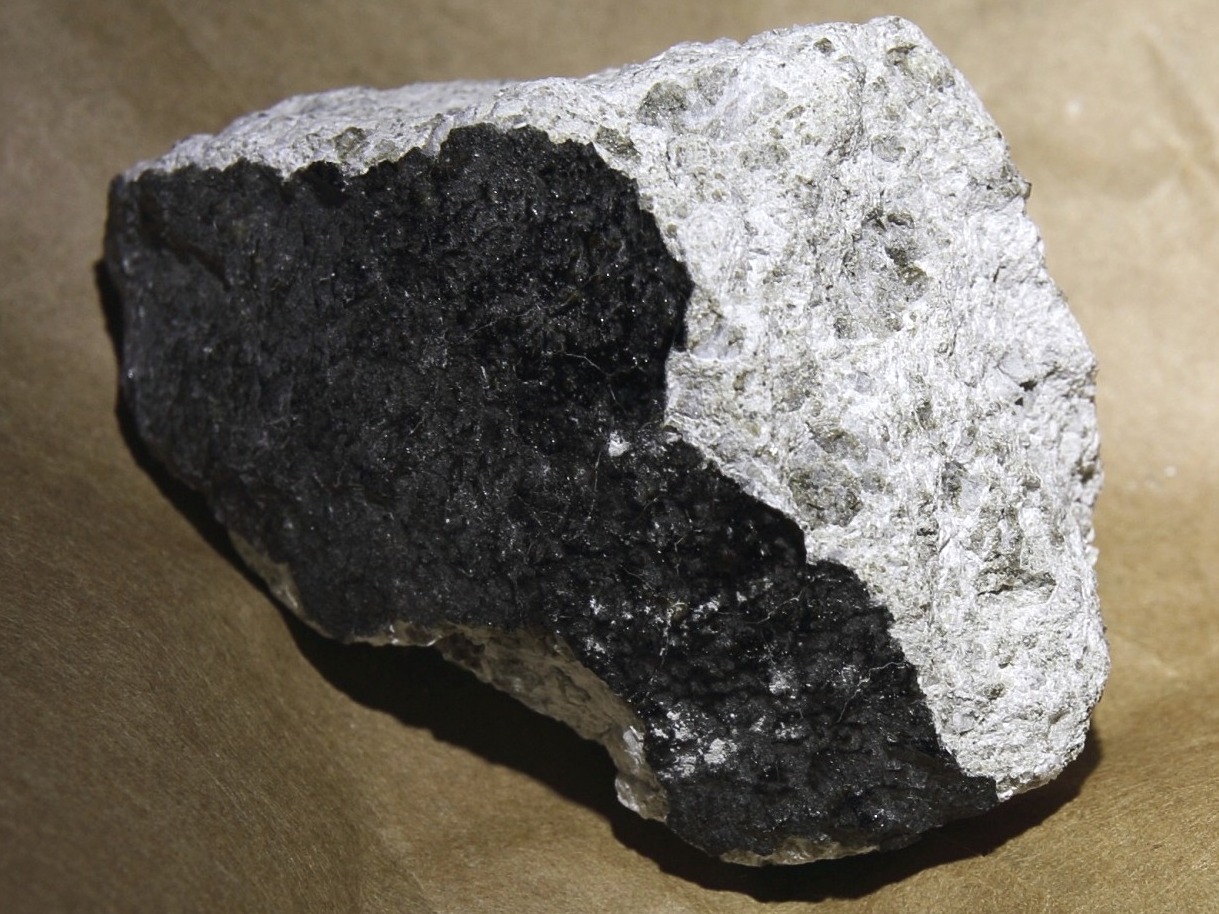
“Spectroscopic studies of the Hamburg (Michigan H4) meteorite using visible–near-infrared (VNIR), mid-infrared (MIR), Raman, and Mössbauer data reproduce the results of more conventional laboratory measurements of petrology and geochemistry. This combination provides general information on the mineral modes of silicates, although spectroscopy was performed on different splits of this meteorite, and varying results may be explained by heterogeneity that is typical of ordinary chondrites. Raman also detects small features assigned to first-order D and G carbon bands, while Mössbauer data show the presence of Fe oxides and carbides. The electron microprobe (EMPA) composition of olivine in this meteorite is accurately measured to be Fo81.3, while MIR and Raman closely agree with Fo80 and Fo82, respectively, and Mössbauer, at Fo60 − Fo70, is in the ballpark. Similarly, P. R. Heck et al. report pyroxenes with compositions of Fs16Wo1, while Raman suggests a somewhat similar composition of Fs28Wo0. Both VNIR and MIR detect the presence of small amounts of feldspar, while EMPA identifies its composition as An14Ab8Or5. VNIR data were matched to spectral libraries of meteorite and asteroid data and shown to closely match other L and H meteorites. The best spectral matches to the Michigan H4 meteorite are to asteroid classes L/H/LL/URE, EH/EL/AUB, and CO/CV from M. D. Dyar et al.; objects in this group are intermediate in semimajor axis lengths for their orbits. The results highlight the strengths and weaknesses of each technique and show their collective strength when applied together to a single meteorite sample.”