Pułtusk H5 Chondrite — A Compilation of Chemical, Physical, and Thermophysical DataOPEN ACCESS
Katarzyna Łuszczek and Radosław A. Wach
Geosciences 2025, 15(11), 438
Published: 18 November 2025
LINK (OPEN ACCESS)
PDF (OPEN ACCESS)
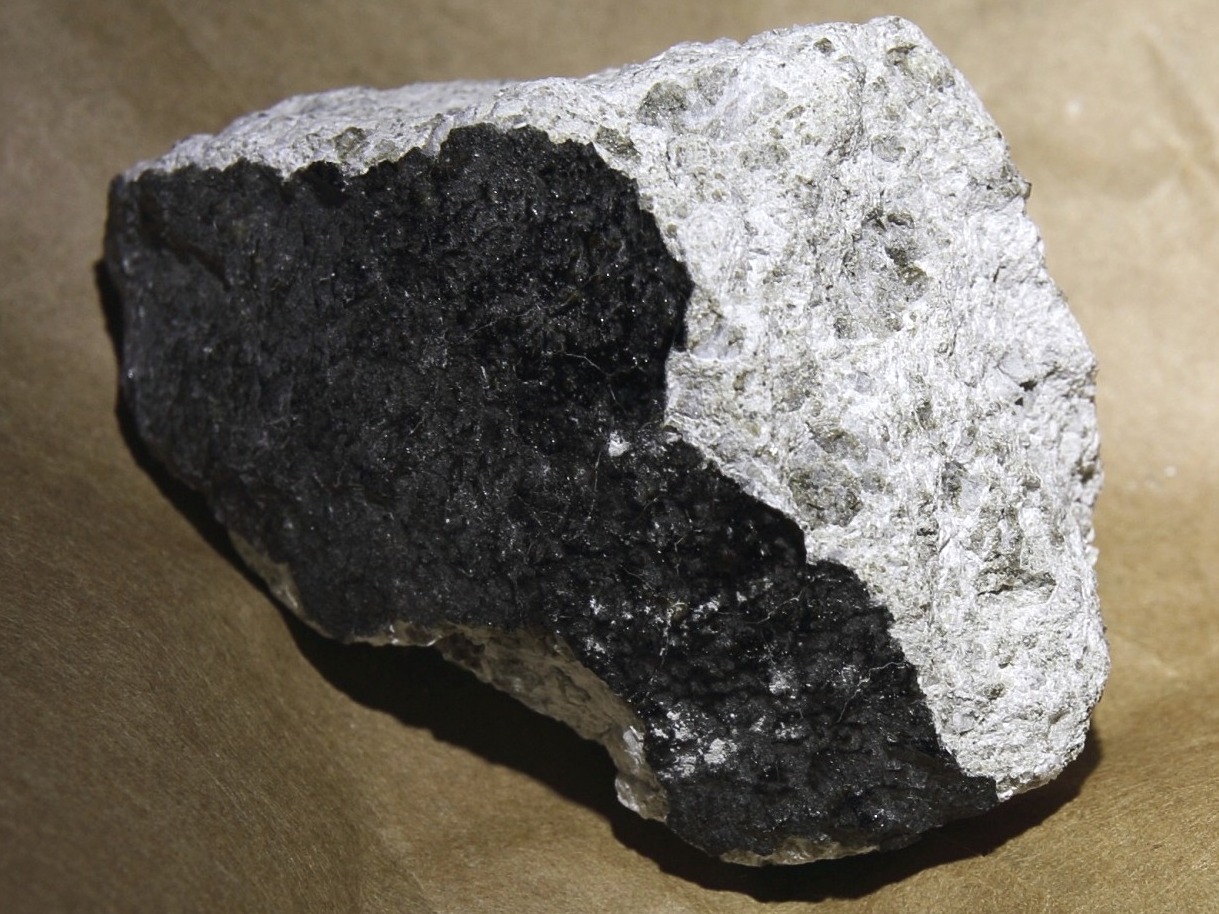
“The Pułtusk meteorite, classified as an H5 ordinary chondrite, is one of the best documented Polish falls, yet some important data on its physical and thermophysical properties remain limited. This study provides new measurements and derived parameters of its physical and thermophysical properties that complement existing datasets for the Pułtusk meteorite and H chondrites in two important ways. Firstly, they cover a temperature range previously not explored. Secondly, using techniques generally applied in geology to validate the novel techniques developed recently, bulk and grain densities, porosity, and specific heat capacity were determined using the Archimedean method and differential scanning calorimetry, supported by bulk chemical analyses performed by ICP-MS and ICP-ES. The chemical composition of Pułtusk closely matches that of average H chondrites, though Fe and Ni contents are about 15–20% lower, likely due to weathering effects. Measured bulk density, grain density, and porosity are 3.30 g/cm3, 3.41 g/cm3, and 3.22%, respectively. The specific heat capacity increases from 564 to 1147 J/(kg·K) between 223 and 773 K, with 699 J/(kg·K) at 300 K. Derived thermophysical parameters include thermal conductivity, thermal diffusivity, and thermal inertia at 200 K, 300 K, and low pressure, and in ambient air. These results are consistent with previous data for H chondrites and confirm Pułtusk as a representative sample of this group. The new dataset can enhance the accuracy of models describing the Yarkovsky effect, meteoroid atmospheric entry, and the thermal evolution of ordinary chondrite parent bodies.”