Petrography of phosphates in CI and CY carbonaceous chondritesOPEN ACCESS
C. S. Harrison, A. J. King, R. H. Jones, L. Piani
MAPS, Version of Record online: 26 September 2025
LINK (OPEN ACCESS)
PDF (OPEN ACCESS)
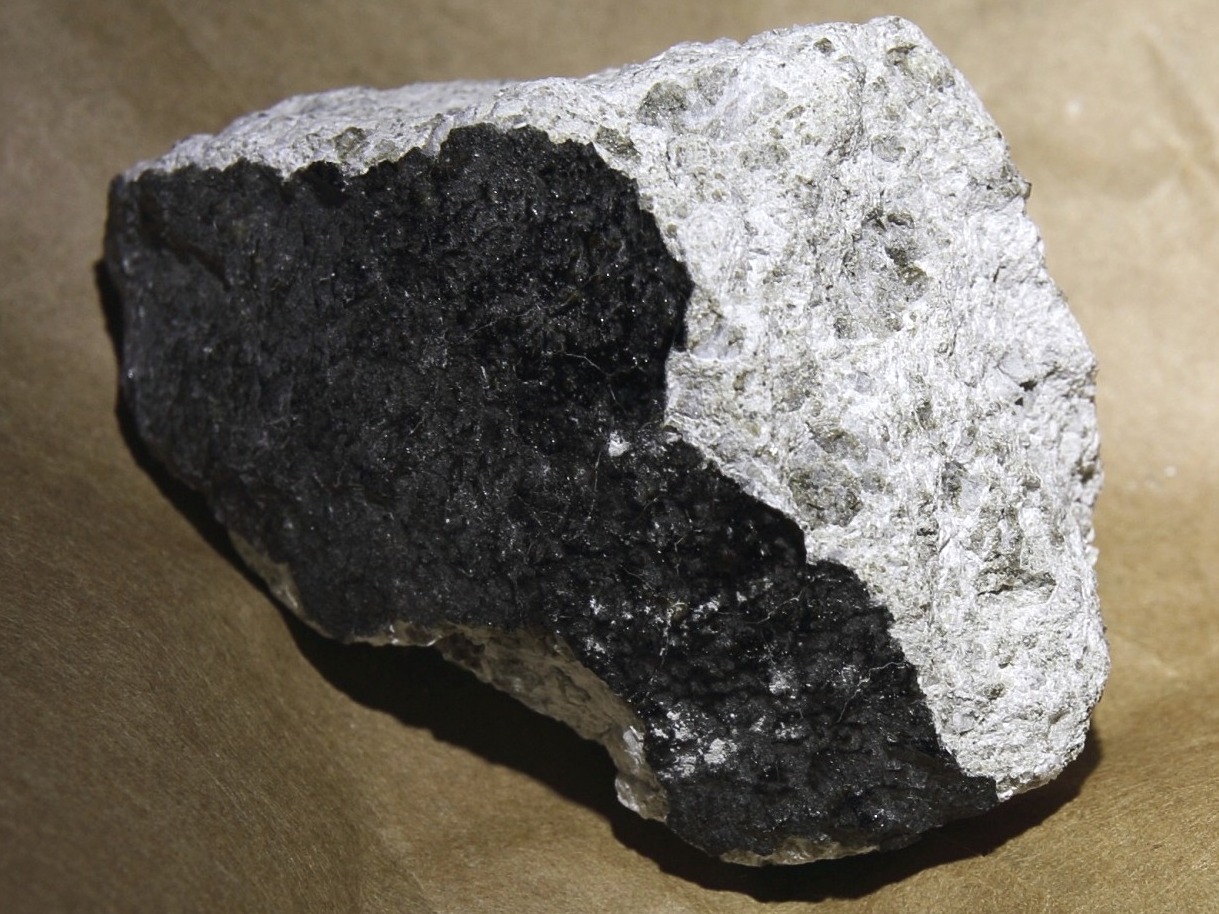
“Phosphate minerals are significant carriers of volatiles (e.g., OH) and halogens in chondritic material; however, their origin in most groups of carbonaceous chondrites remains poorly characterized. We have determined the abundance, morphology, texture, and composition of phosphate grains in aqueously altered CI chondrites and in hydrated and thermally metamorphosed Antarctic CY chondrites using scanning electron microscopy and electron probe microanalysis. Phosphates include apatite (formula Ca5(PO4)3X, where X = F-, Cl-, OH- or other anions) and sodium-bearing magnesium phosphate, both of which formed during episodes of aqueous alteration on the CI and CY parent bodies. Apatite grains in the CI chondrites range up to 40 μm in size with a modal abundance of ~0.10 area%, while in the CYs, the largest grains are ~50 μm in size and the modal abundance is ≤0.70 area%. Analysis by secondary ion mass spectrometry (SIMS) indicates that apatite in the CYs contains ~1.0–1.8 wt% H2O, with δD values of −84‰ to 393‰ likely reflecting aqueous and thermal processing. Apatite in both the CI and CY chondrites is rich in fluorine, with fluorine abundances that range from 20 to 80 mole% of the X (anion) site. This contrasts with apatite in other chondrite groups, which is predominantly Cl-rich. Estimated bulk chondrite F abundances based on F abundance in apatite are 12–21 ppm F for the CI chondrites and 61 ppm F for the CY chondrites. This is comparable to bulk CI chondrite F abundances in the literature, suggesting that most fluorine is hosted in apatite. However, the chlorine content of CI chondrite apatite (<0.05 wt%) is too low to account for the bulk chondrite Cl abundance, indicating that Cl is hosted in other phases. Mg,Na-phosphate, a rare extraterrestrial mineral, has a modal abundance of ~0.02 area% in both the CI and CY chondrites. Mg,Na-phosphates in the CI and CY chondrites are halogen-poor (<0.15 wt%) and are typically hydrated in the CIs (analytical totals as low as 67 wt%) and dehydrated in the CYs (analytical totals >96.0 wt%). The occurrence of Mg,Na-phosphates in the CI and Antarctic CY chondrites is indicative of brines on their respective parent bodies. Similarities between the two groups, as well as with the phosphate mineral assemblage in asteroids Ryugu and Bennu, indicate that comparable fluid compositions and environmental conditions were prevalent on numerous parent bodies in the early Solar System.”