A new approach to investigate the influence of space weathering and spectral resolution on the visibility of infrared spectral features in meteoritesOPEN ACCESS
Bernadett D. Pál, Ákos Kereszturi, Ildikó Gyollai, Dániel Rezes, Sándor Biri, Béla Sulik, Máté Szabó, Péter Szávai, Zoltán Szalai
Icarus, In Press, Journal Pre-proof, Available online 10 February 2026
“Highlights
- Kaplan–Meier survival analysis used to assess spectral peak detectability.
- A spectral resolution of 14 cm−1 was enough to identify 50% of all peaks.
- Major feldspar peak near 1152 cm−1 remained visible at all resolutions.
- Peaks between 9 – were the most susceptible to irradiation.”
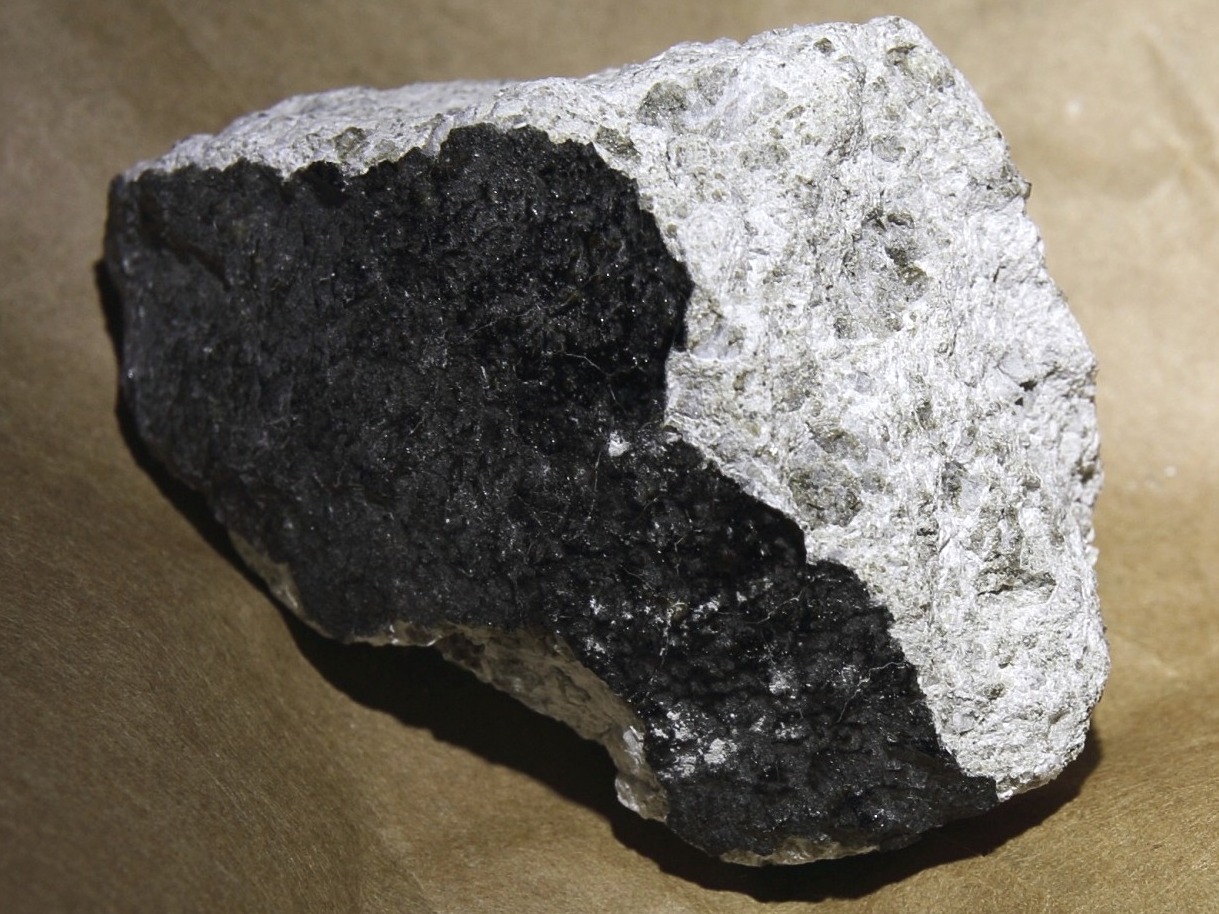
“We investigate the detectability of mineral peaks in meteorite reflectance spectra in the visual-near-infrared region and analyse how the detection of peaks changes with irradiation, and with lowering the spectral resolution. Meteorite samples were irradiated with 1 keV protons at three different fluences (1011cm−2, 1014cm−2, 1017cm−2) to simulate the effects of space weathering, FTIR spectroscopy was used to analyse the meteorite samples before and after irradiation. We use Gaussian convolution to simulate spectra gained with lower resolution instruments, and defined peak area and peak height thresholds to numerically define the disappearance of a peak. To quantify the effect of irradiation and resolution on peak detectability we use Kaplan–Meier survivability analysis. We find that at an effective spectral resolution of 14 cm−1 FWHM 50% of all identified spectral peaks were visible regardless of irradiation. We find that the major feldspar peak around 1152 cm−1 remained detectable at all considered resolutions regardless of irradiation. The region between 9 – was the most susceptible to irradiation, where the major and minor pyroxene peaks and feldspar peaks frequently merged upon irradiation. We show a new approach to quantify the detectability of spectral peaks and resolution thresholds for detecting specific minerals in weathered meteorite spectra. Our results can provide a general guideline for future remote sensing investigations, especially for low-resolution spectroscopes onboard cubesats with limited budgets.”