Phyllosilicate Infrared Spectral Features as Tracers of Aqueous Alteration in CM Chondrites and Implications for Remote Sensing of Hydrated AsteroidsOPEN ACCESS
W. M. Lawrence, B. L. Ehlmann
JGR Planets, First Published: 20 December 2025
LINK (OPEN ACCESS)
PDF (OPEN ACCESS)
“Key Points
- CM phyllosilicates show systematic shifts in the position of spectral features with their degree of aqueous alteration
- Metal-OH and Si-O stretch features track octahedral Mg/Fe and tetrahedral Si/Fe3+site occupancy in serpentines, respectively
- Co-variation in these features fingerprints alteration conditions, which may be applied to interpret spectra of C-type asteroids”
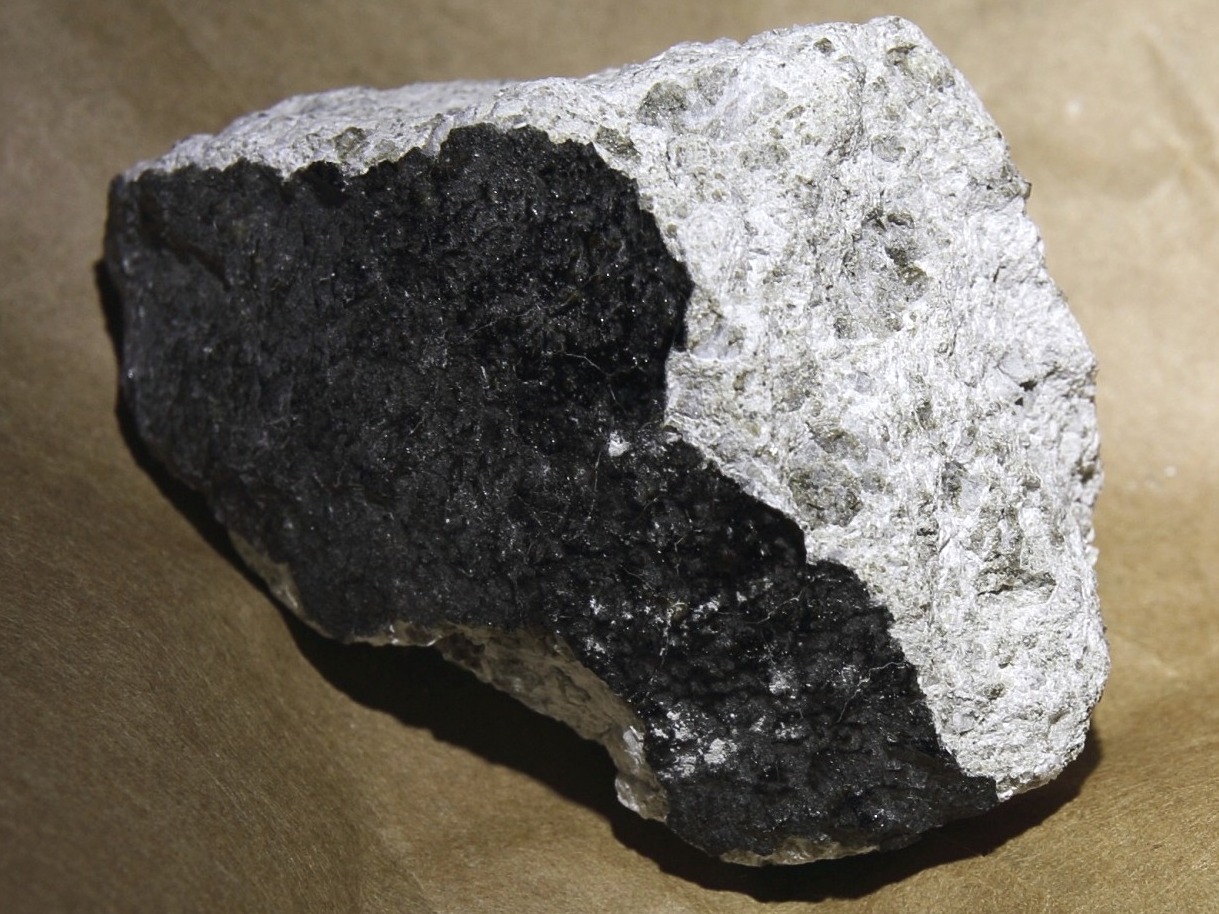
“CM (Mighei-type) carbonaceous chondrites host abundant OH/H2O-bearing phyllosilicates formed from water-rock reactions in primitive planetesimals. Their infrared (IR) spectral features resemble those of C-type asteroids, making laboratory analyses of CMs essential for interpreting asteroid observations. However, CM chondrites are often breccias composed of lithologies with variable degrees of aqueous alteration, complicating their interpretation. Here we use in situ analytical techniques to characterize spectral-compositional relationships for phyllosilicates in 8 CM lithologies across two meteorite samples. Micro-Fourier Transform Infrared (μ-FTIR) spectra collected from phyllosilicate-rich matrix regions show that band positions of the 3-μm feature and Si-O stretch Reststrahlen band (RB) systematically vary with alteration. Additional data from spatially correlated electron microprobe and μ-FTIR measurements tie spectral variations to specific cation substitutions in serpentines: the 3-μm feature shifts from 2.78 to 2.70 μm with increased Mg/Fe in octahedral sites, and the Si-O stretch RB shifts from 10.8 to 9.8 μm with increased Si/Fe3+ in tetrahedral sites. Co-variation of these features across the studied CM lithologies defines two successive alteration stages: (1) the Si-O stretch RB and 3-μm feature shift to longer and shorter wavelengths, respectively, as Mg- and cronstedtite-rich phyllosilicates form from incipient chondrule alteration; (2) Si-O stretch RB shifts to shorter wavelengths as Mg-serpentines replace cronstedtite and Mg-rich chondrules. These patterns align with inferred changes in composition and redox state for altering fluids on the CM parent body. Similar features in the spectra of C-type asteroids may reveal information about conditions of aqueous alteration and constrain models of their evolution.”