Late Aqueous Activity on Vesta
Tianjing Gao, Weibiao Hsu
JGR Planets, First Published: 27 December 2025
“Key Points
- Apatite veins in a plagioclase-rich clast indicate fluid-assisted metasomatism on Vesta with a Pb-Pb age of 4,169 ± 85 Ma
- Isotopic compositions (87Sr/86Sr and Δ17O) of the clast suggest fluids derived from primitive sources, likely carbonaceous chondrites
- Veneneia crater on Vesta was probably excavated by carbonaceous impactors during the late heavy bombardment”
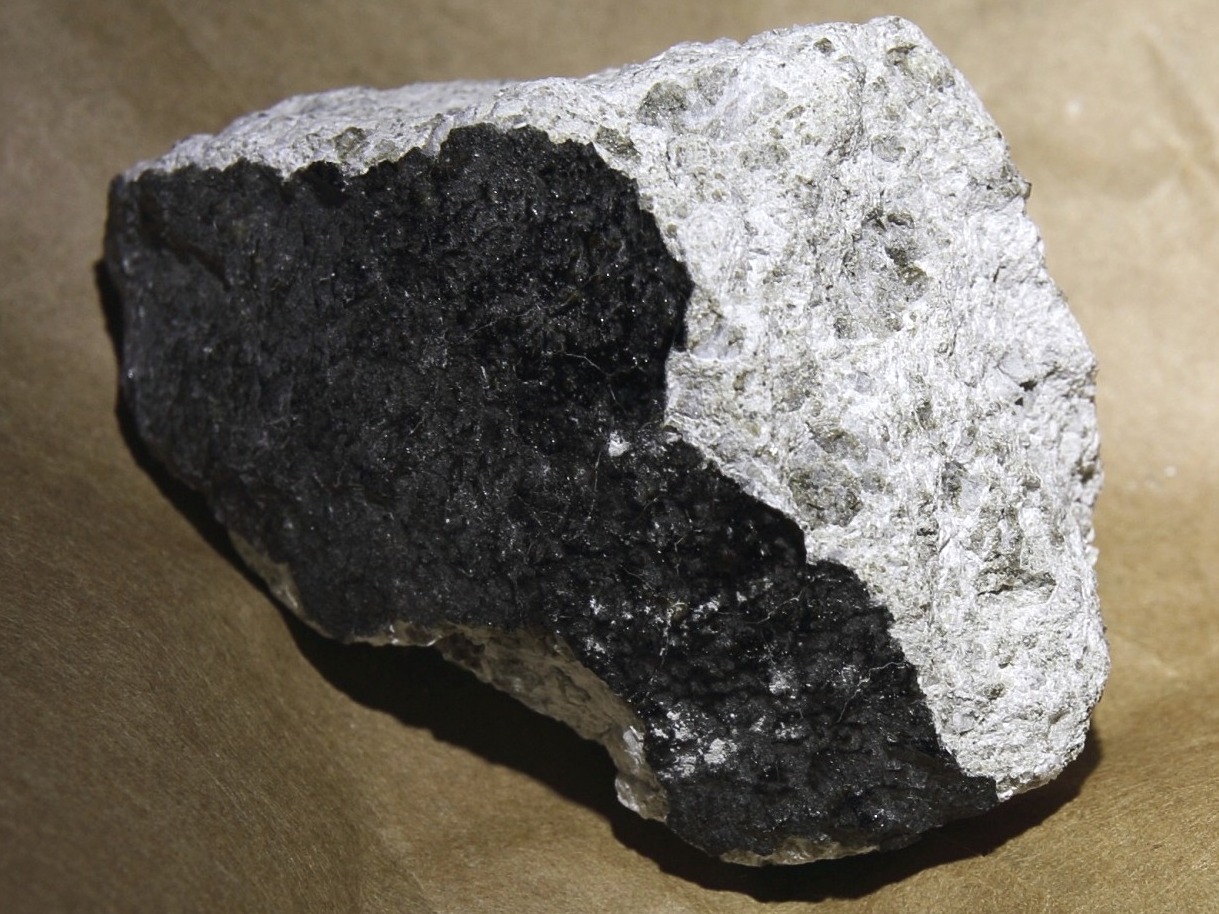
“Fluid-assisted metasomatism was prevalent on Vesta, but the timing and source(s) of aqueous activities remain elusive. Here, we report an absolute 207Pb/206Pb isochron age (4,169 ± 85 Ma) of apatites from a plagioclase-rich eucrite clast within the Jikharra 001 eucrite. Petrographic, mineralogical, and geochemical characteristics demonstrate that apatite veins in the clast formed during fluid-assisted metasomatism on Vesta. The elevated 87Sr/86Sr ratios observed in the bulk clast and plagioclase grains suggest the incorporation of fluid from primitive sources, probably carbonaceous chondrites. The slightly negative oxygen isotopic composition (Δ17O = −0.275 ± 0.013‰) of the clast further indicates a largely carbonaceous chondrite source. Impacts from carbonaceous chondrites are the probable origin of Veneneia. Evidence from apatite veins in the Jikharra 001 is consistent with a carbonaceous fluid source and may constrain the age of Veneneia to the late heavy bombardment, approximately 4.1–4.2 Ga.”