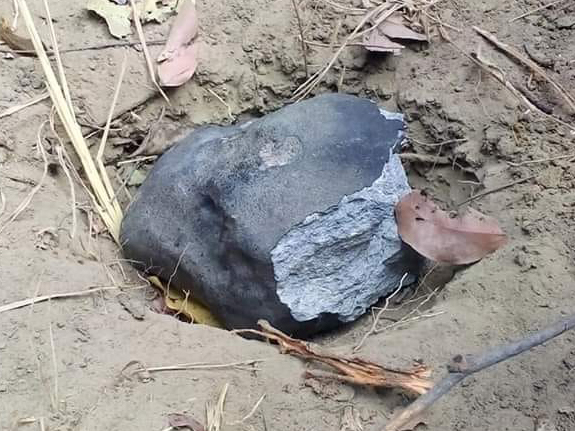
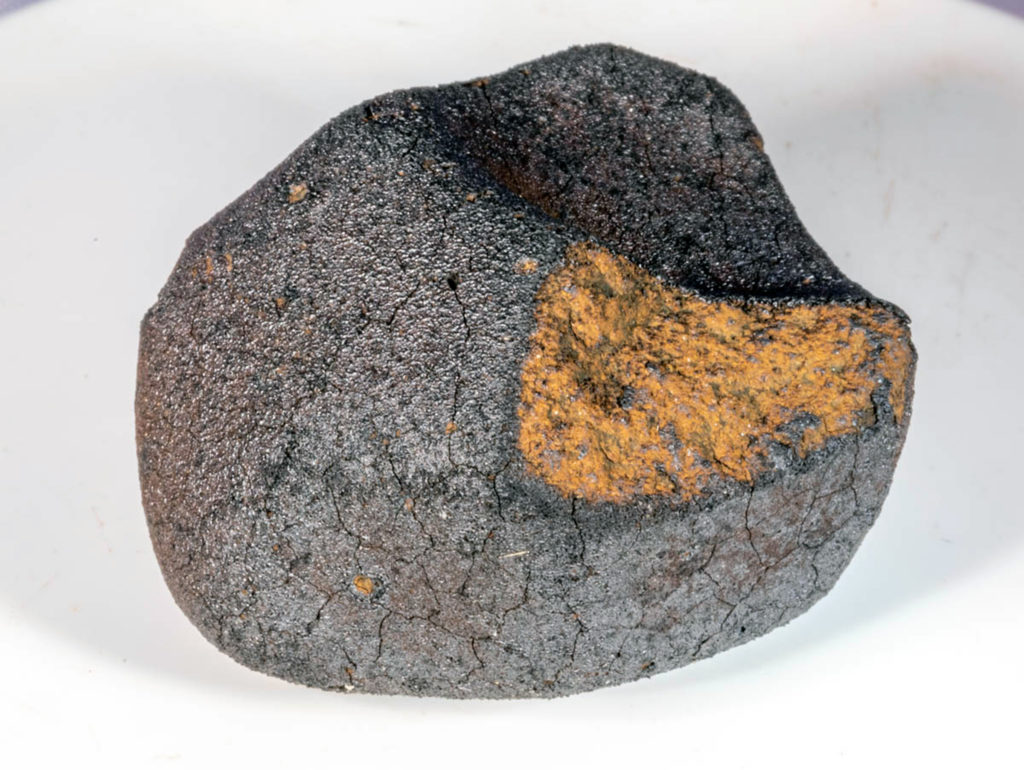
Meteorite fall (H chondrite) in Ponderosa Forest, Harris County, Texas, USA at 21:40:10 UT on 21 March 2026
Last update: 5 June 2026 (23:00 CEST)
A ~2-pound palm-sized meteorite fragment (H chondrite), probably of a higher petrologic type, weighing between 500 and 800 grams) fell through the roof of Sherrie A James’s house, which according to our own research is at location 30°01’21.7″N, 95°27’40.9″W, in Ponderosa Forest, Harris County, north of Houston, Texas, USA at 21:40:10 UT on 21 March 2026. The mass fell into her 30-year-old daughter Kiki’s bedroom on the second floor and ricocheted off the floor, hit the ceiling again and then landed on the floor between the bed and a TV set where it was found. James’s daughter was not in the bedroom at the time of the fall. Sherrie A James herself was in the bathroom when she suddenly heard two boom sounds from her daughter’s room. When her grandson came out of his own room and asked her if she had heard the sounds, she sent him into her daughter’s bedroom to check whether something had fallen down. Then her grandson saw the hole in the ceiling and told her. She went into the bedroom and saw the hole and then the impact dent on the floor. Then she discovered the other damage at the ceiling above the bed and then saw the meteorite on the floor between the bed and the nightstand with the TV set. Shortly after James called the Ponderosa Fire Department to report the incident. Fire Captain Tyler Ellingham and his team came and picked up the meteorite, which Mrs James did not dare to do. Mrs James said she would definitely keep the meteorite. On 22 March 2026 scientists from the Lunar and Planetary Institute and Rice University, including Niragya Chinchalkar (LPI), visted Mrs James and inspected the meteorite. Shortly before the meteorite fall the bolide of a meteoroid with a diameter of about 90 cm, weighing about one ton, was recorded above the Houston area. The luminous trail was first recorded at an altitude of 78.9 kilometres above Stagecoach. A main fragmentation event happened at an altitude of 46.7 kilometres above Bammel and Doppler weather radar data (KHGX (NOAA NEXRAD) and TIAH (TDWR airport radar)) show signatures of falling meteorites during an eight-minute period above an area between Willowbrook and Northgate Crossing (Sources: NASA event 20260321-214010 / NASA (meteorite falls)). Meredith Howse reports having found a 6.99-gram thumb-sized meteorite on 22 March 2026 at around 9:30 a.m. CDT. On 23 March David Gonzales reports the finding of three thumb-sized specimens in and around Collins Park on that day. His first find apparently broke into three fragments on impact on the concrete ground of a parking lot. The find location must be this location: 30°00’47.5″N, 95°30’29.4″W, which would be 4.63 kilometres west to southwest from the fall location of the James mass. Gonzales has donated two samples to Rice University for research. More than eight meteorites fragments have been found in Collins Park so far. Neeraja Chinchalkar, postdoctoral researcher at USRA’s Lunar and Planetary Institute (LPI), found a ~3-gram specimen on a paved surface while looking for meteorites together with Prajkta Mane, Senior Scientist at LPI, Bidong Zhang, Assistant Professor at Rice University, and Marc Fries. On 29 March Jacob Proctor and Alan Morgan set up a booth in Collins Park to inspect found specimens and inform the local population about the importance of meteorites and the urge to find them quickly before terrestrial weathering effects change them. First rainfall in the area started in early afternoon (~1 p.m.) of 1 April 2026 and more is forecast for the days after. One 1.6-gram fragment which was inspected at the booth was reportedly already found on 23 March by Jordan Brown. Three to four other specimens or fragments were reportedly found on 29 March as well. A Cypresswood family, Lynsey Duffy and Steve Dee, found two specimens in the park within about an hour of searching. The first one is a thumb-sized 10.8-gram almost entirely fusion-crusted specimen and the second one is a fragment weighing 61 grams. It fits perfectly to the 14-gram fragment found by Erich, an Austrian meteorite enthusiast, in Collins Park somewhere near location 30°00’40.63″ N, 95°30’29.86″ W on 29 March 2026. The 14-gram fragment was later cut in half to share it with a friend. Another fragment or specimen was reportedly found at the parking of Spring Creek Plaza near location 30°01’37.5″N, 95°30’48.5″W as reported on 31 March 2026. A 46.18-gram specimen was found by Marc Fries in the grass next to Cypresswood Drive near Barbara Bush Branch Library, somewhere around location 30°00’46.4″N, 95°30’39.6″W. At least 13 specimens and fragments have been found so far. Specimens are being analysed at Rice University’s recently founded Astromaterials Research and Exploration Laboratory (RARE) and other institutes. First analyses at Rice University reveal that the analysed specimens lack chondrules and are very enstatite-rich. The meteorite fall might not be an ordinary chondrite but potentially an enstatite chondrite. According to recorded weather radar signatures more meteorites must have fallen in the area just north of Cypresswood Drive near Collins Park including Wimbledon Estates, Wimbledon Champions Estates, and Wimbledon Centre Court Estates. We encourage homeowners in these areas to check their lawns, courts and roofs for meteorites (which look like those specimens shown in the photos below). It is important to find them before forecast rainfall soon will cause severe terrestrial weathering of these meteorite masses.
Be mindful of private property and do not trespass while searching for meteorites!
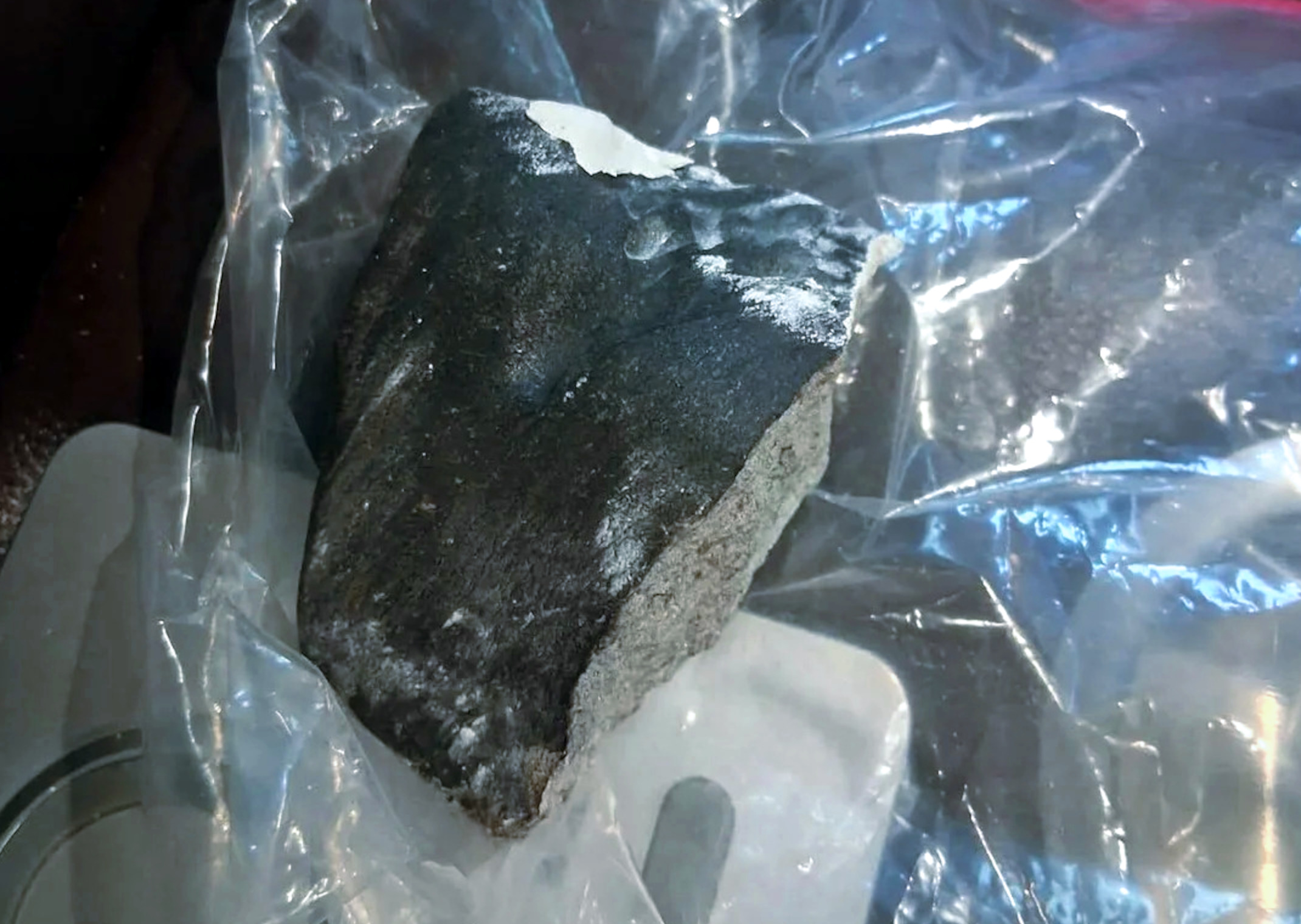
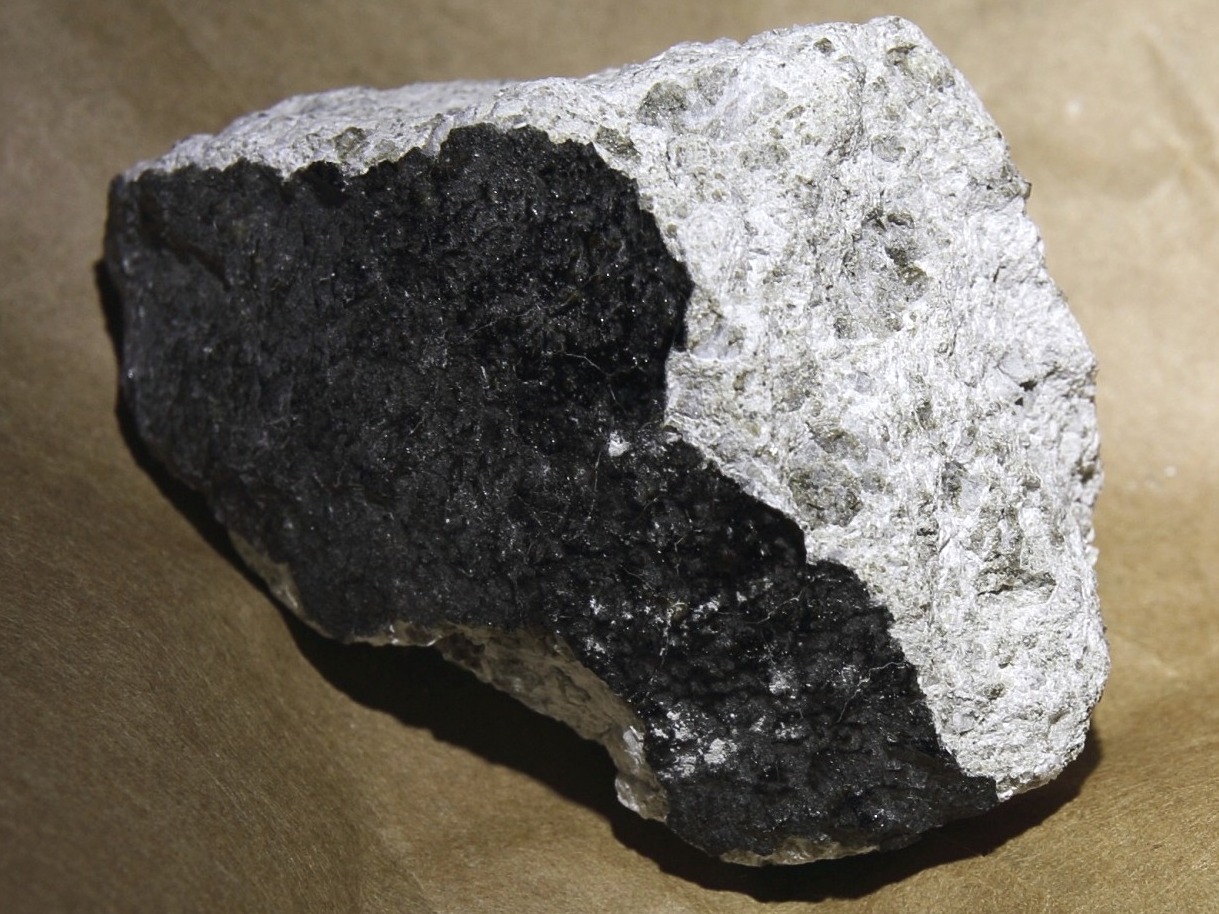
The partly fusion-crusted and partly regmaglypted meteorite mass. Photo: Sherrie A James
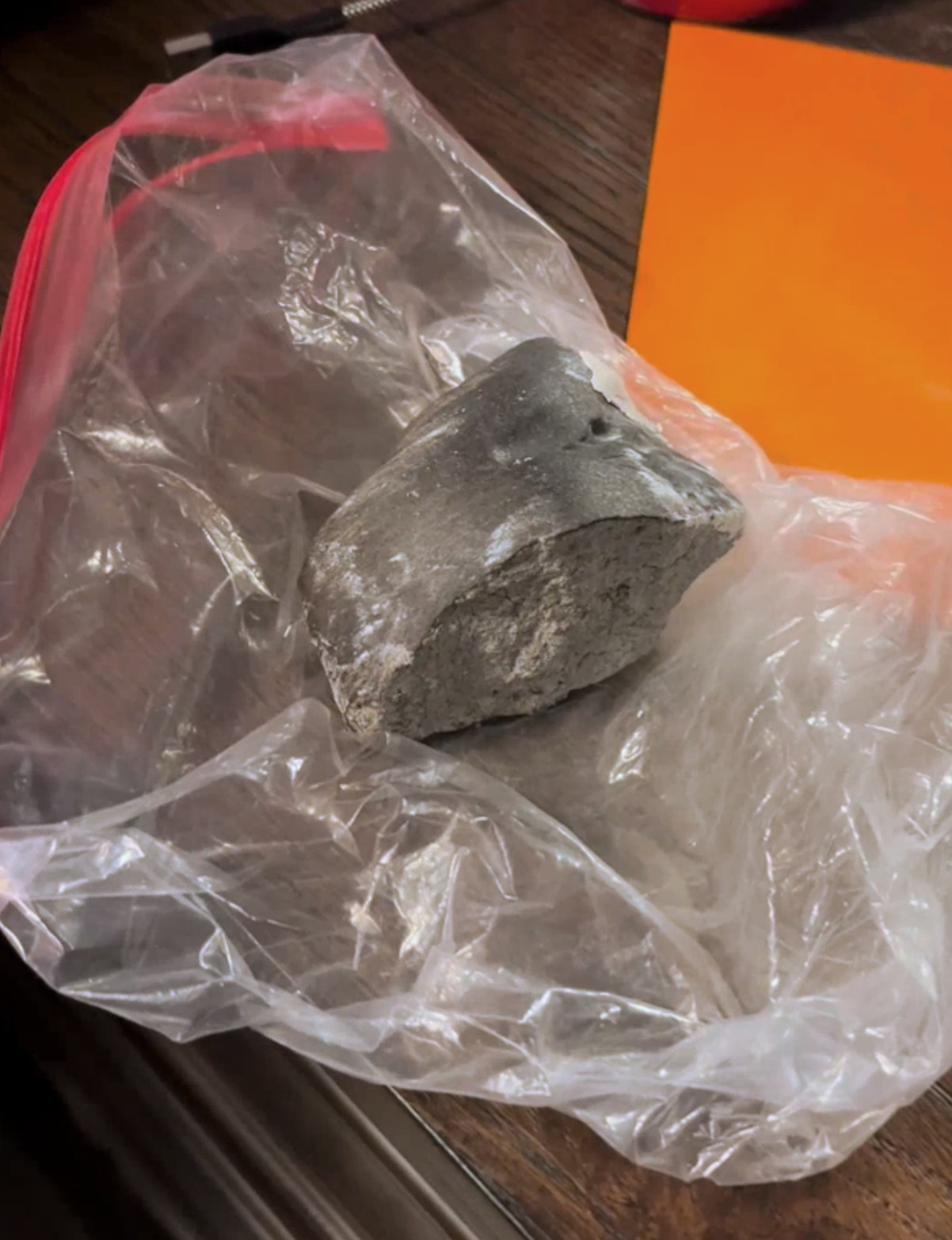
Photo: KHOU 11
Video: KHOU 11
Video: Joy Addison
Video: Joy Addison
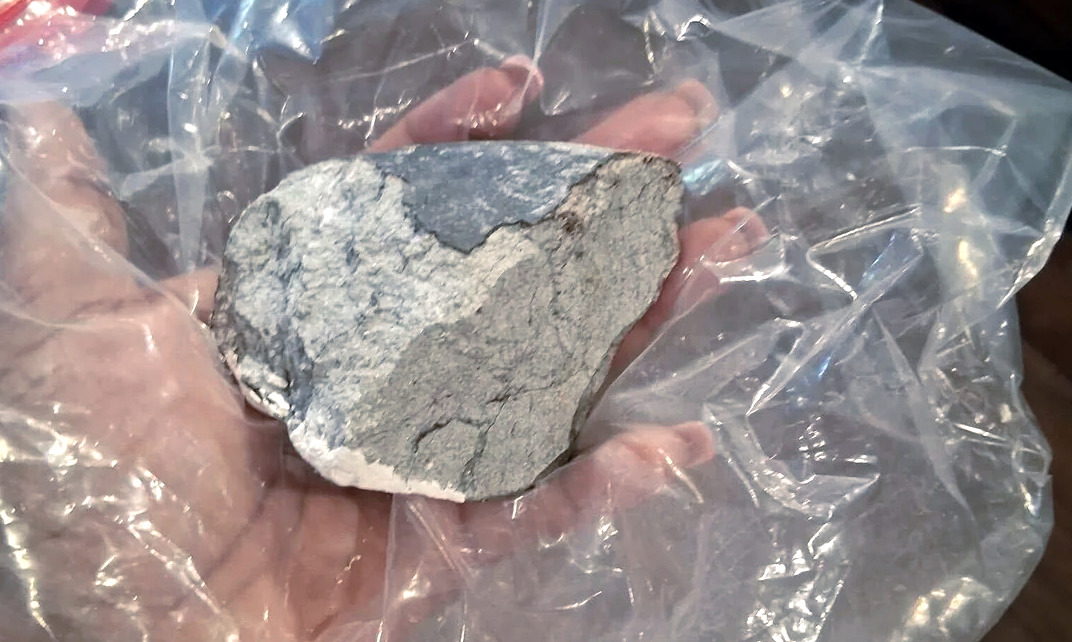
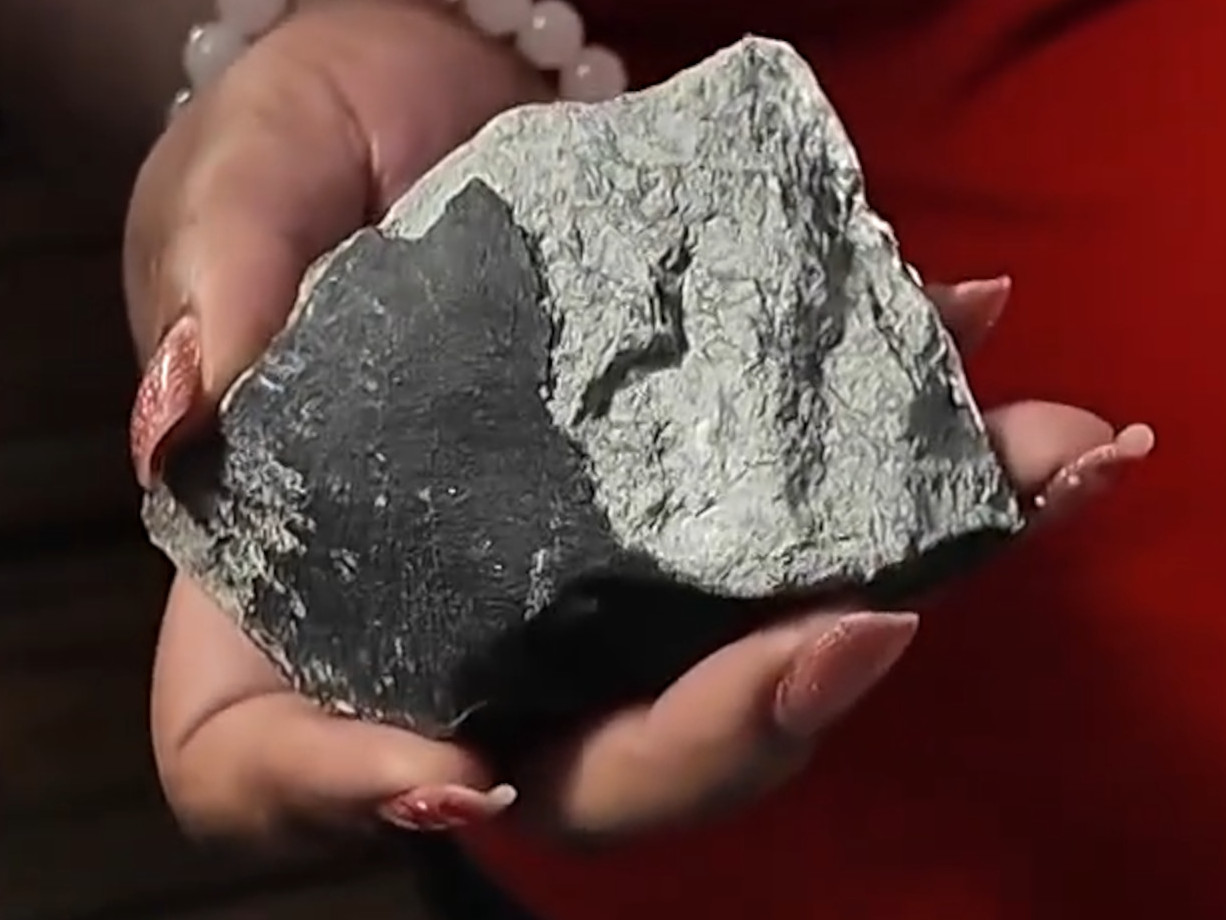
James holding her meteorite mass. Photo: Sherrie A James
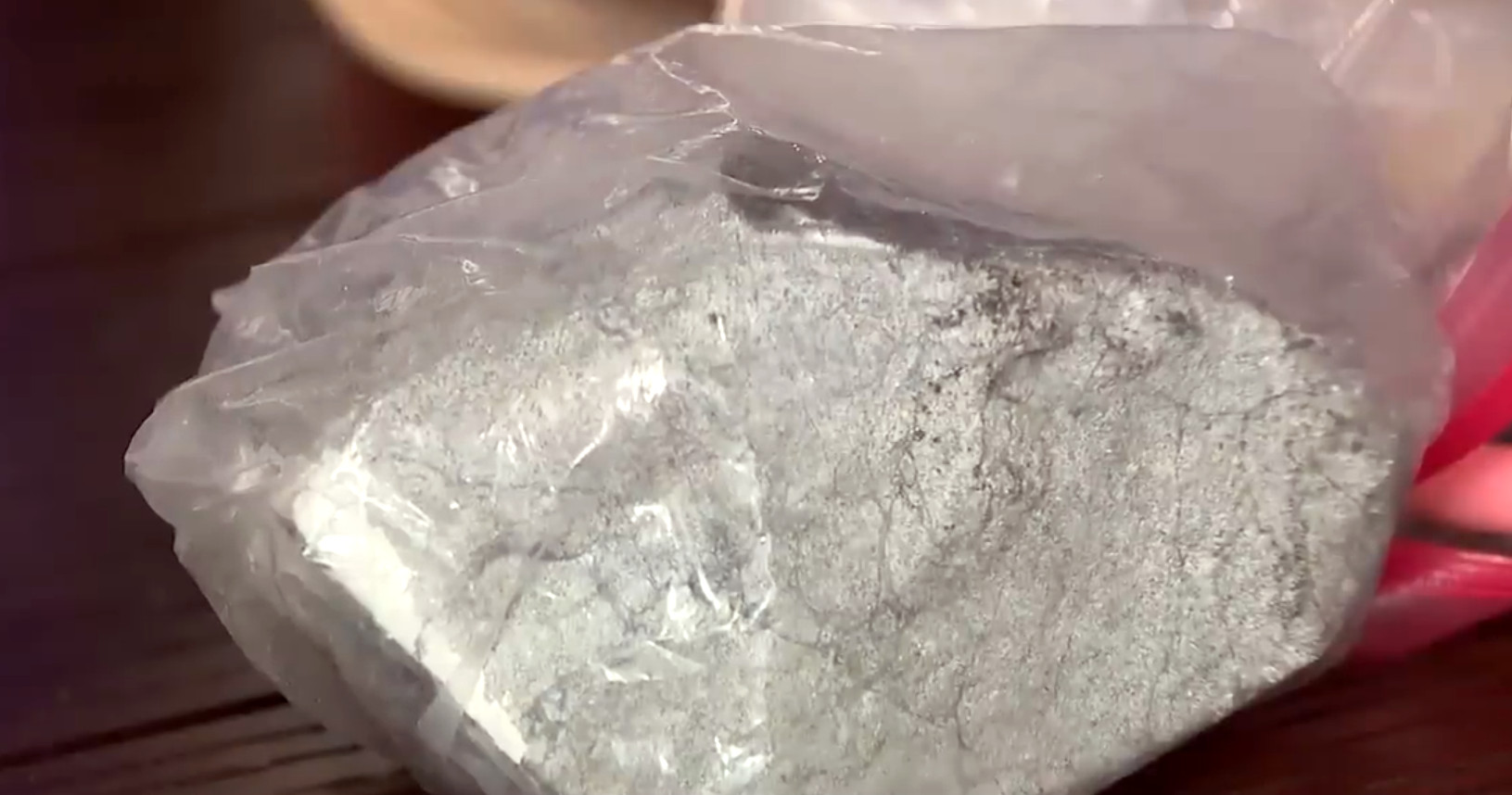
The matrix of the meteorite clearly shows melt veins. Image: Fox26
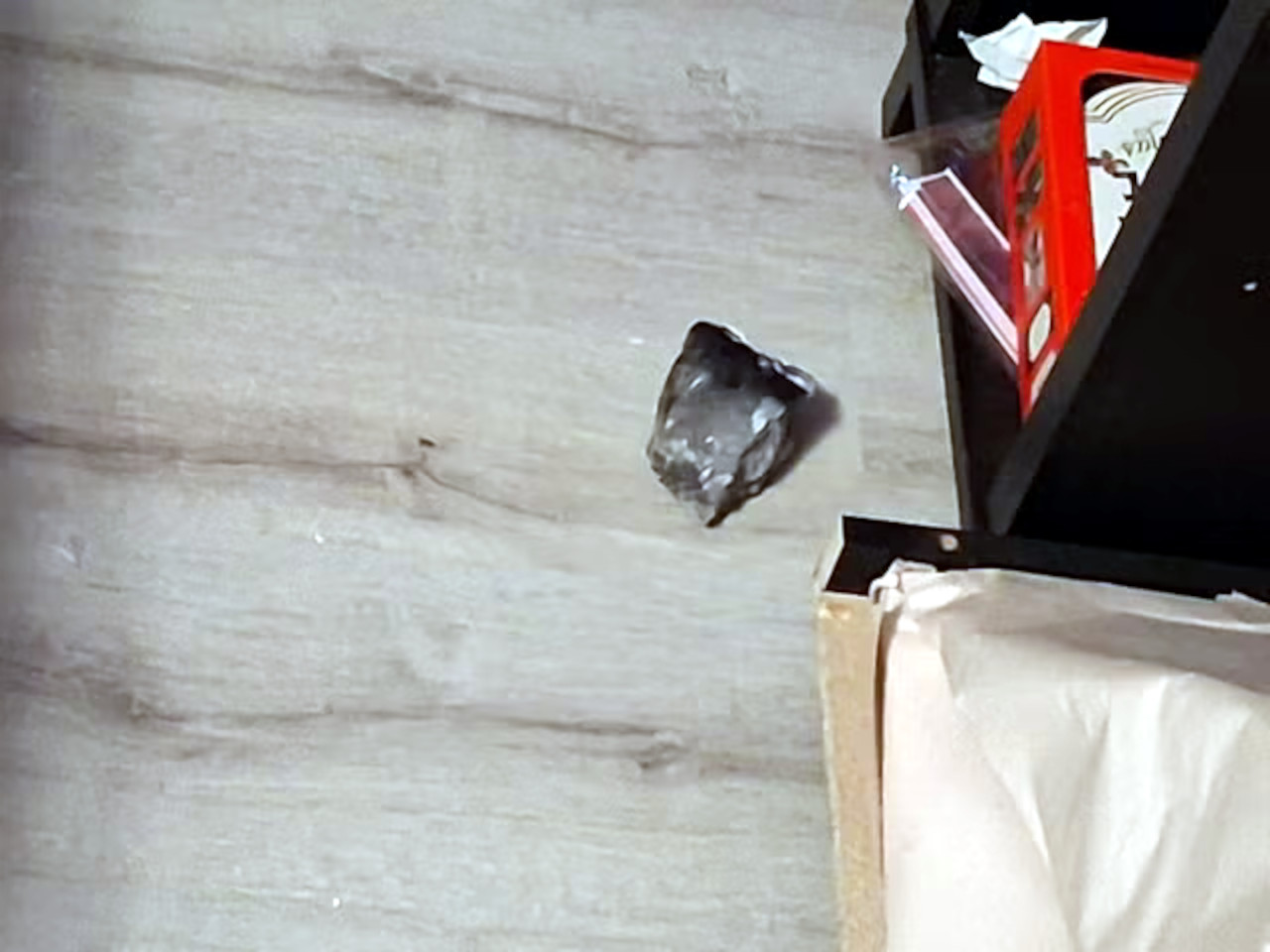
The meteorite on the floor, probably where it was found by James’s grandson. Photo: Ponderosa Fire Department
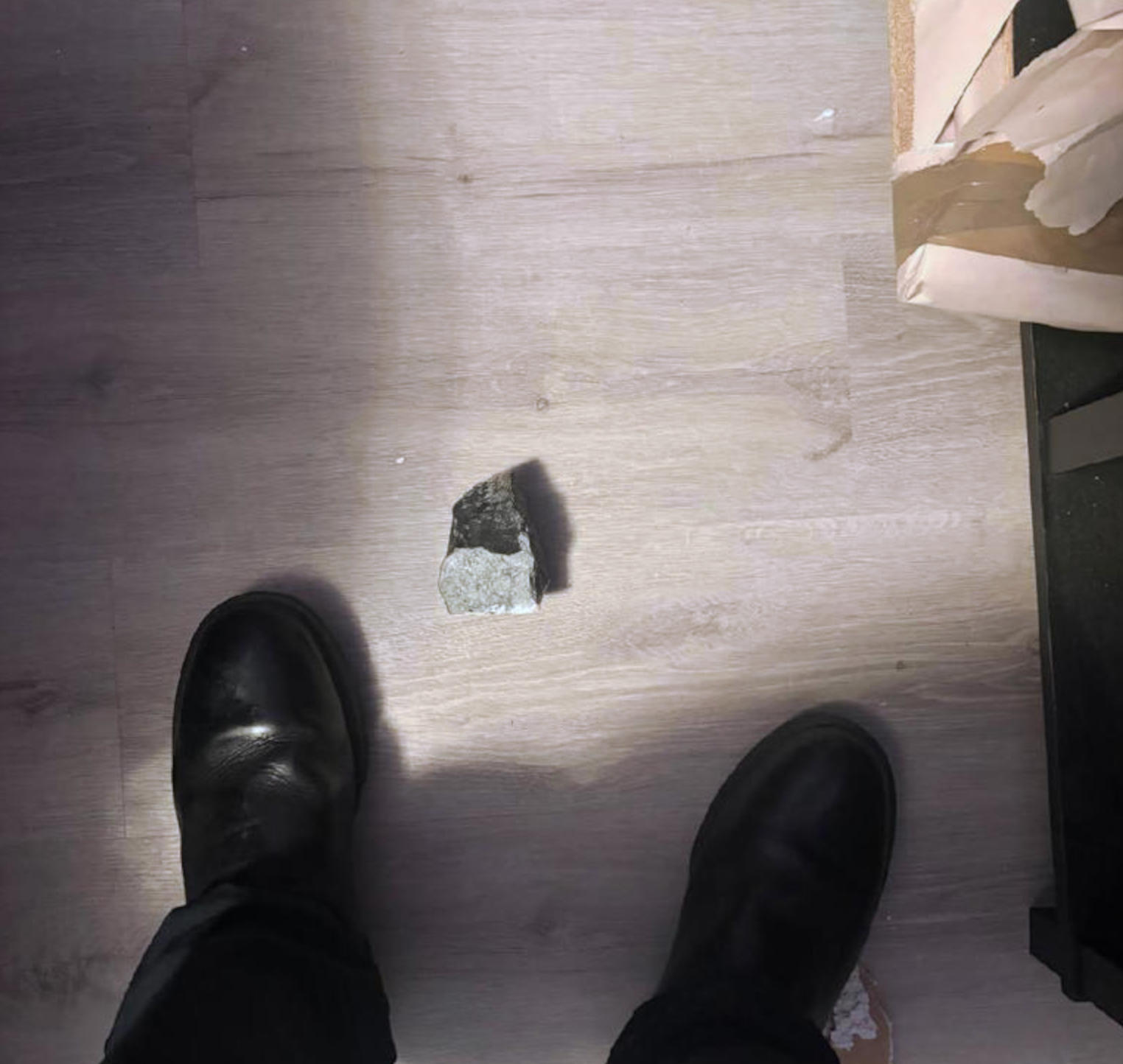
The meteorite near or at its find location on the floor. Photo: Ponderosa Fire Department
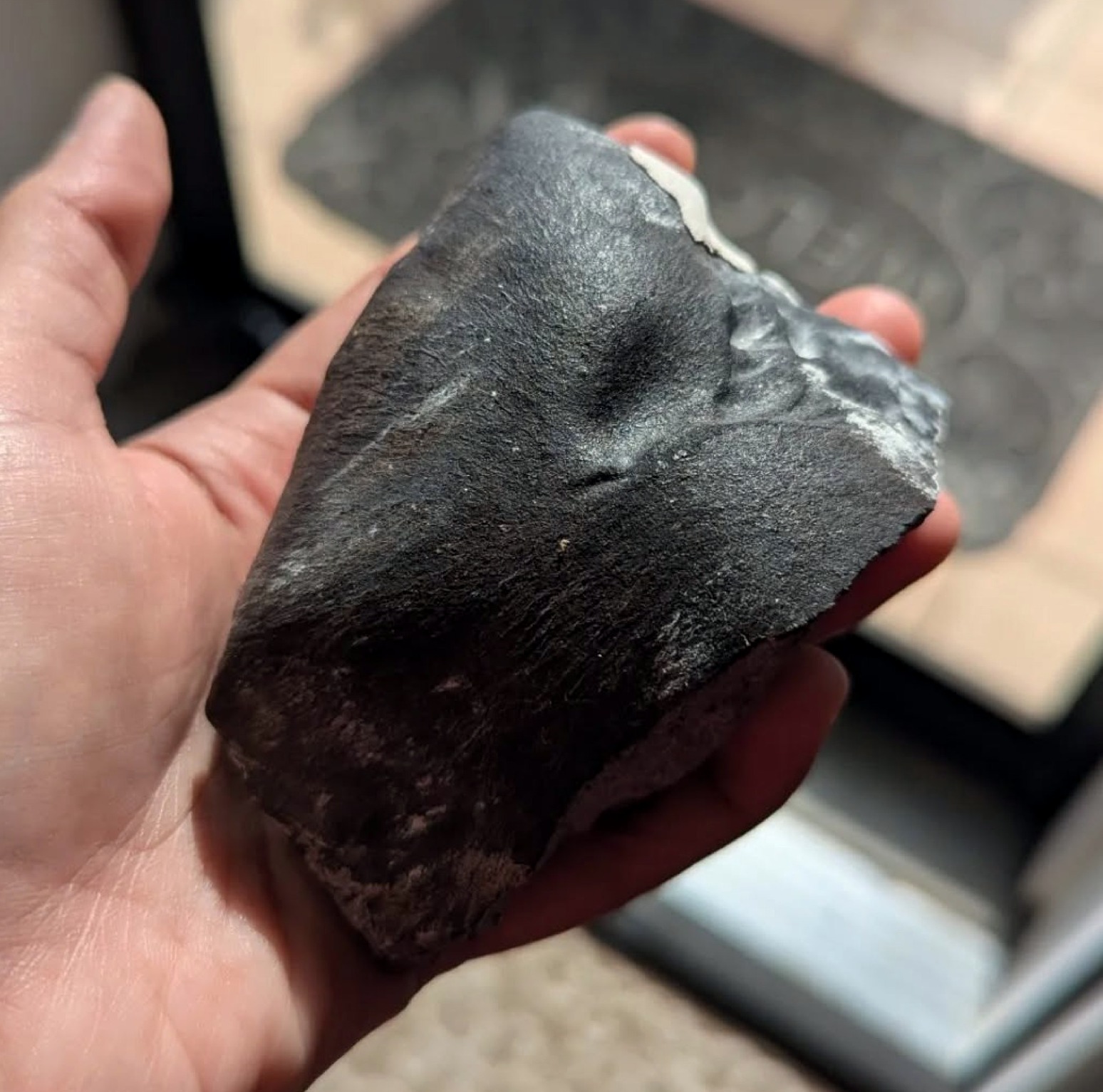
Neeraja Chinchalkar from Lunar and Planetary Institute inspecting the meteorite. Photo: Neeraja Chinchalkar
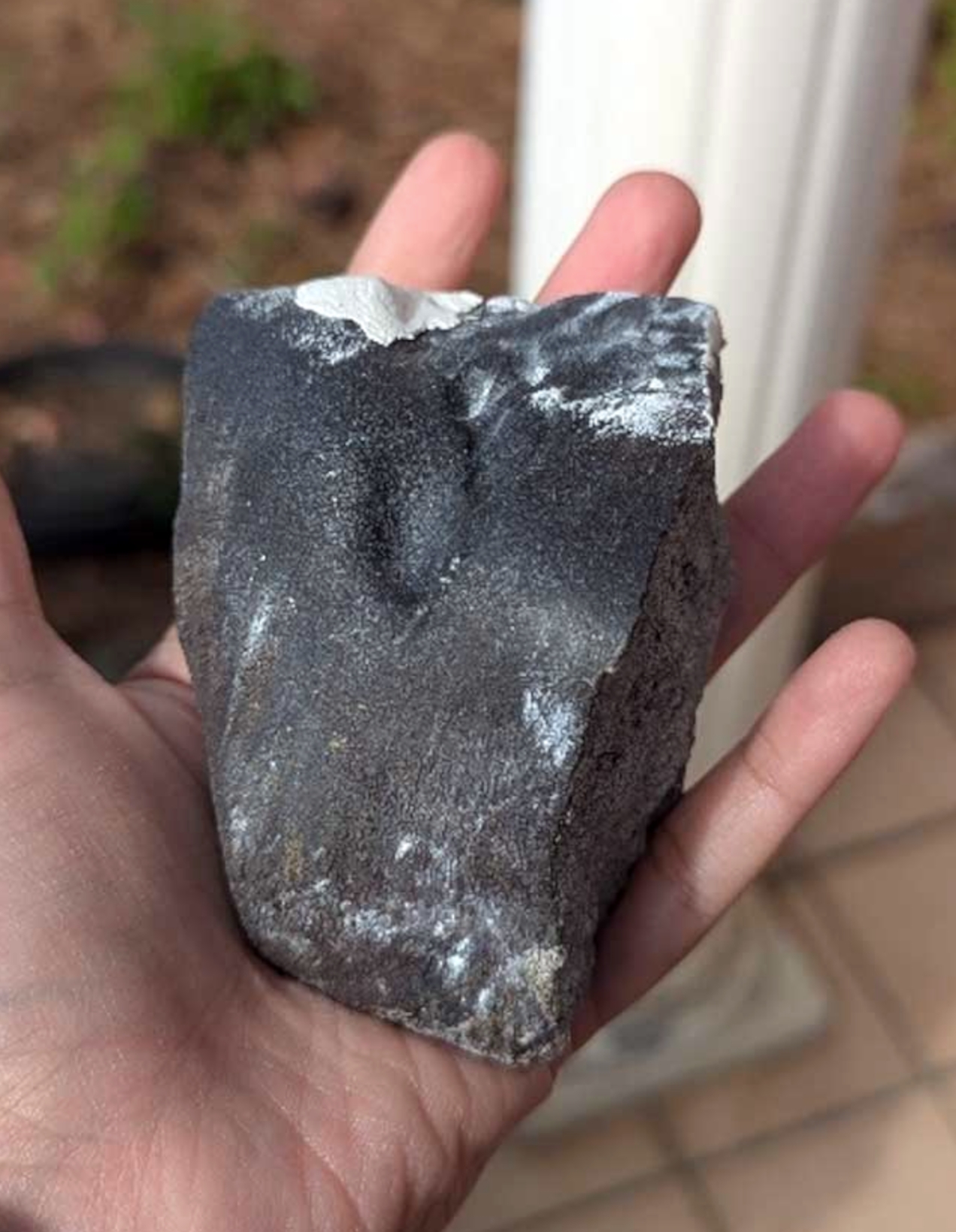
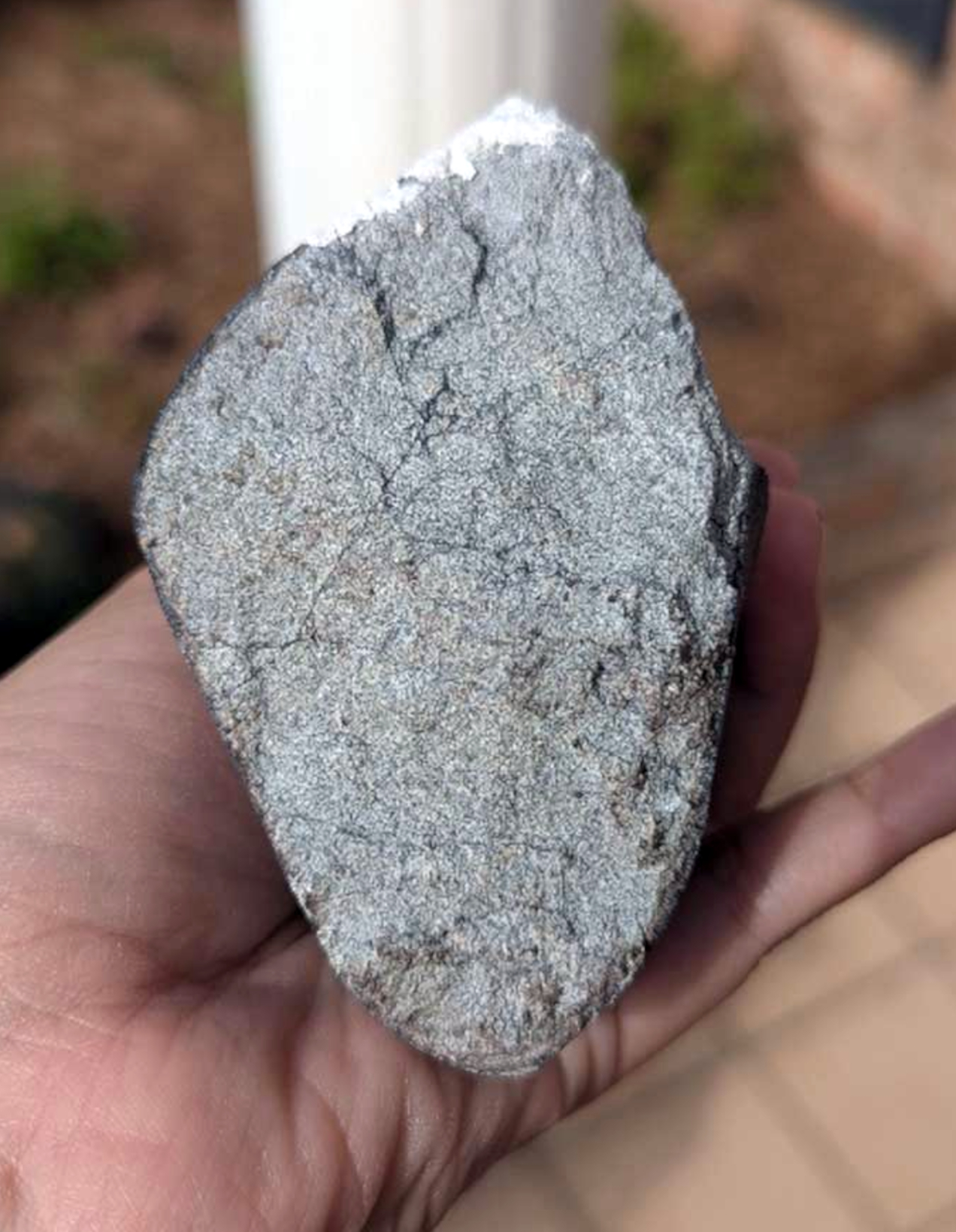
Neeraja Chinchalkar holding Sherrie James’s specimen. The matrix in the photo on the right shows several melt veins. Photos: Neeraja Chinchalkar
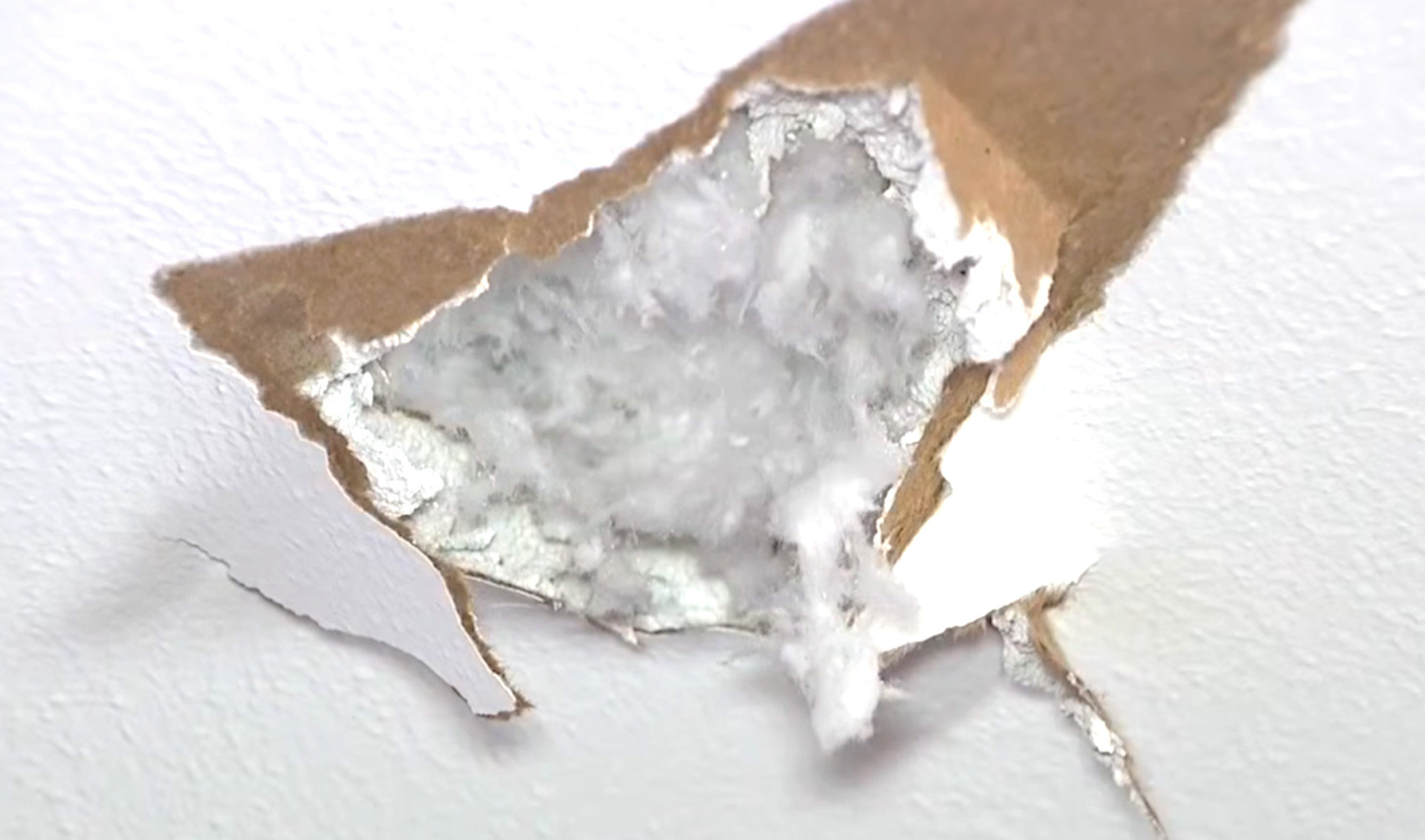
The hole in the ceiling of the daughter’s bedroom. Photo: Sherrie A James
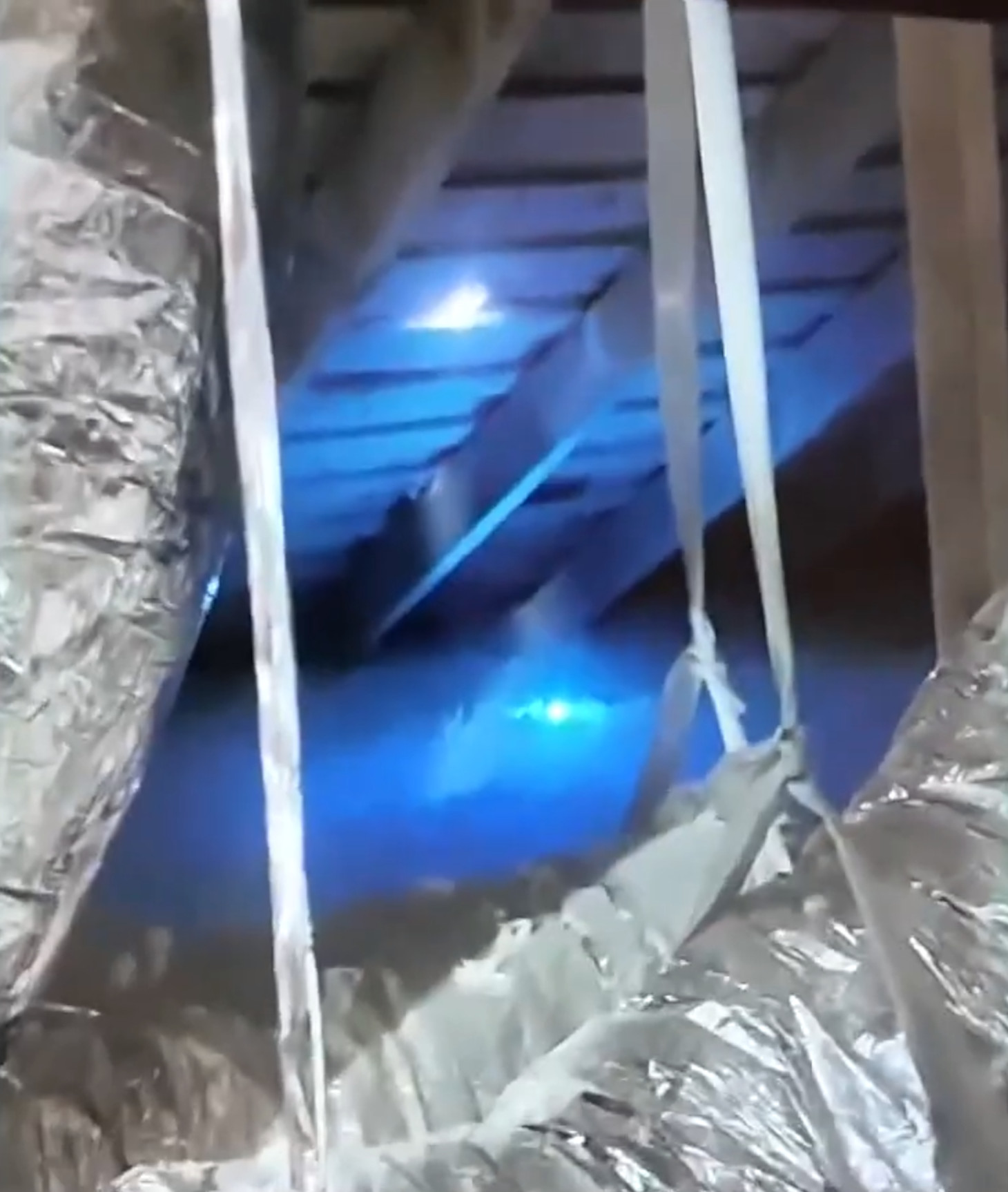
A view at the impact hole from within the attic. Photo: S. James / KPRC 2 Houston
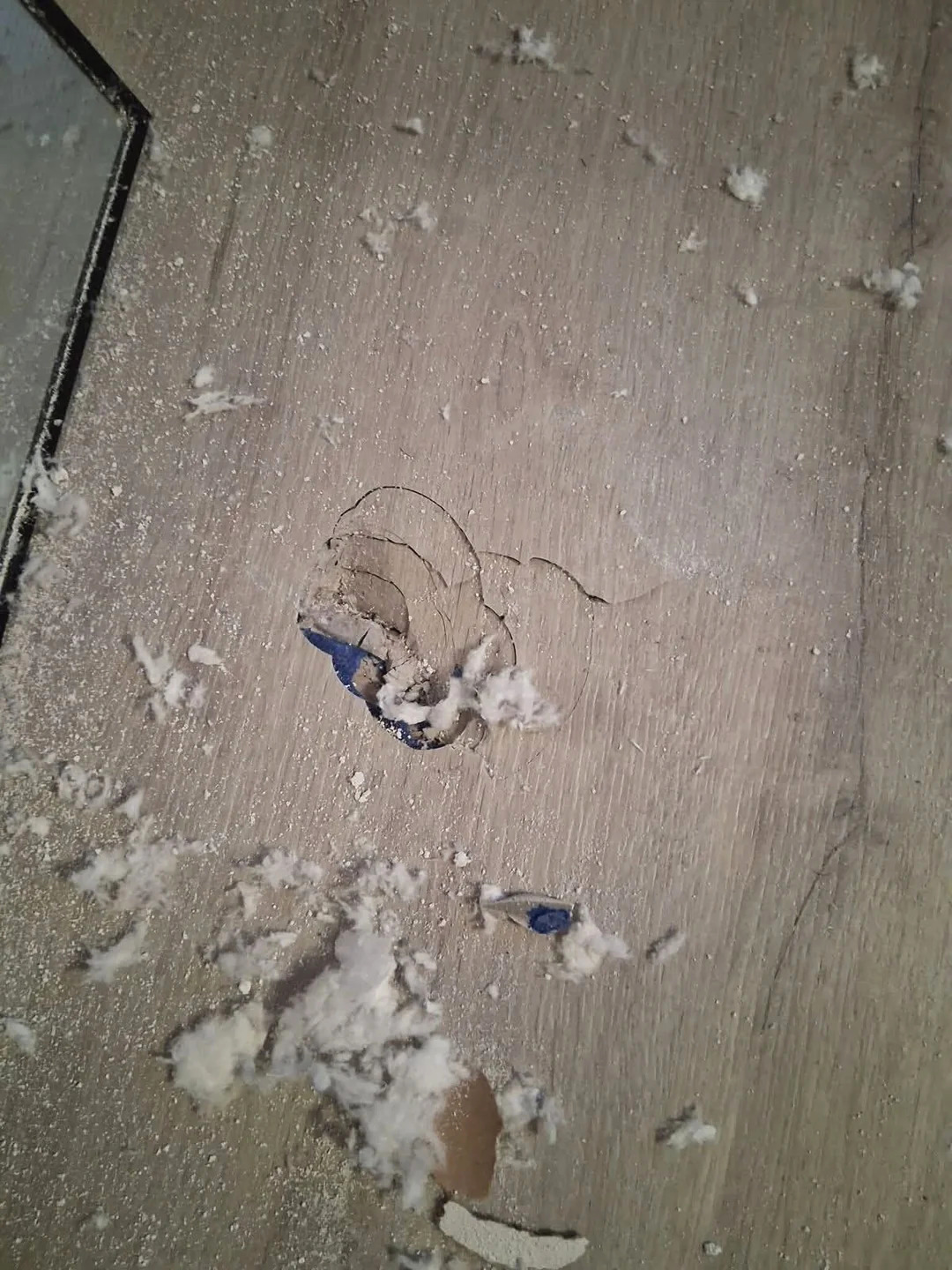
The impact hole on the floor of the daughter’s bedroom. Photo: Sherrie A James
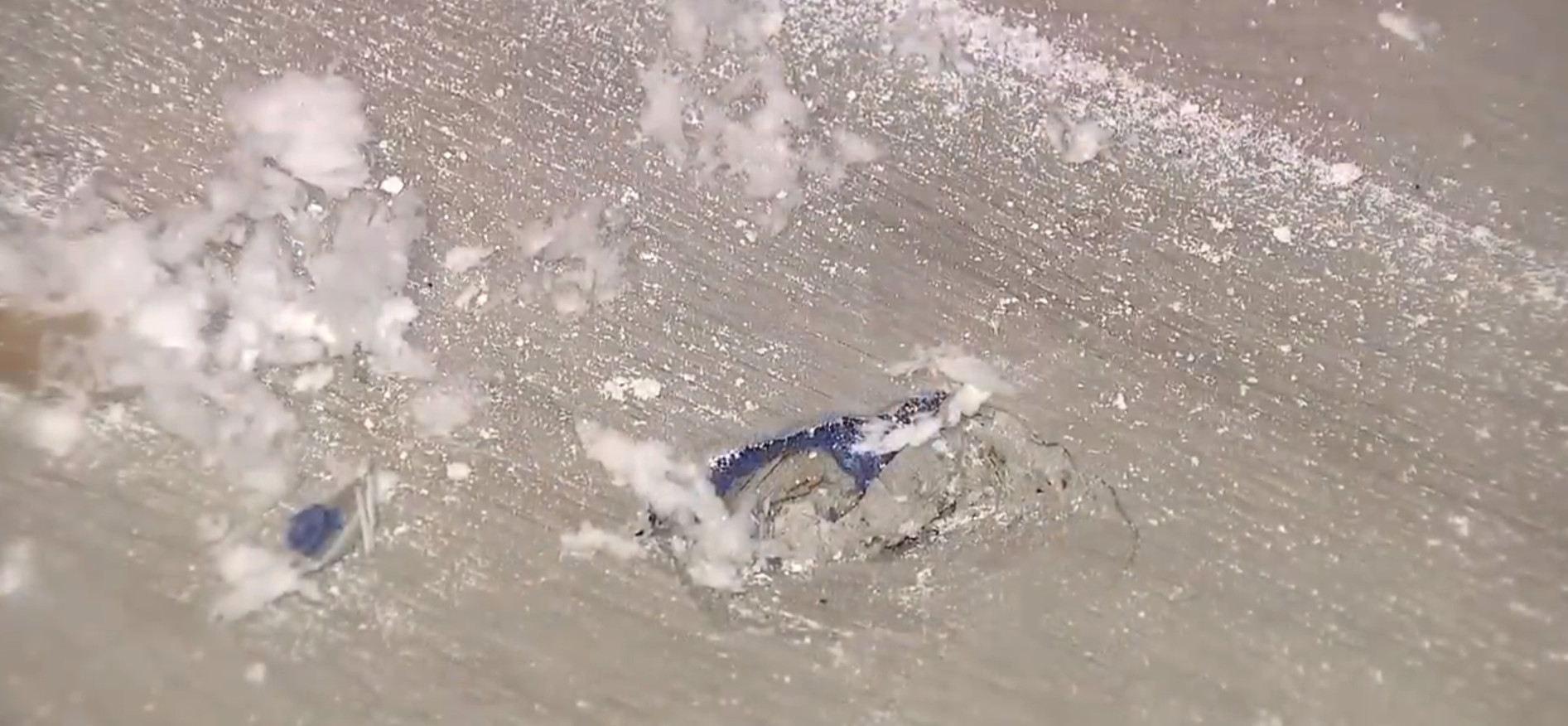
The impact hole on the floor of the daughter’s bedroom. Photo: Sherrie A James
Additional finds
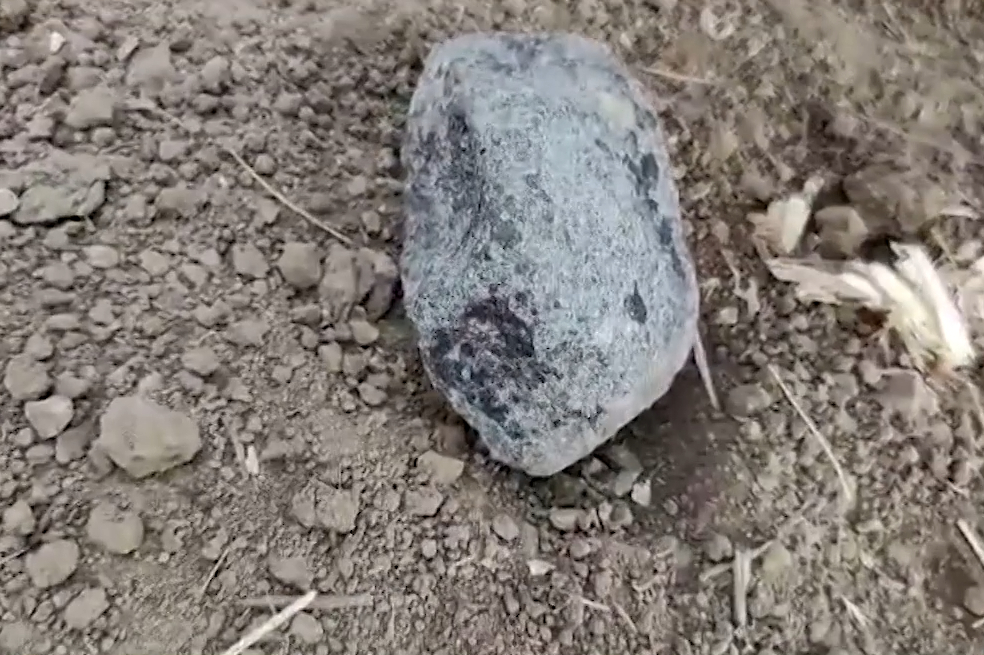
Meredith Howse reports having found a 6.99-gram specimen on 22 March 2026.
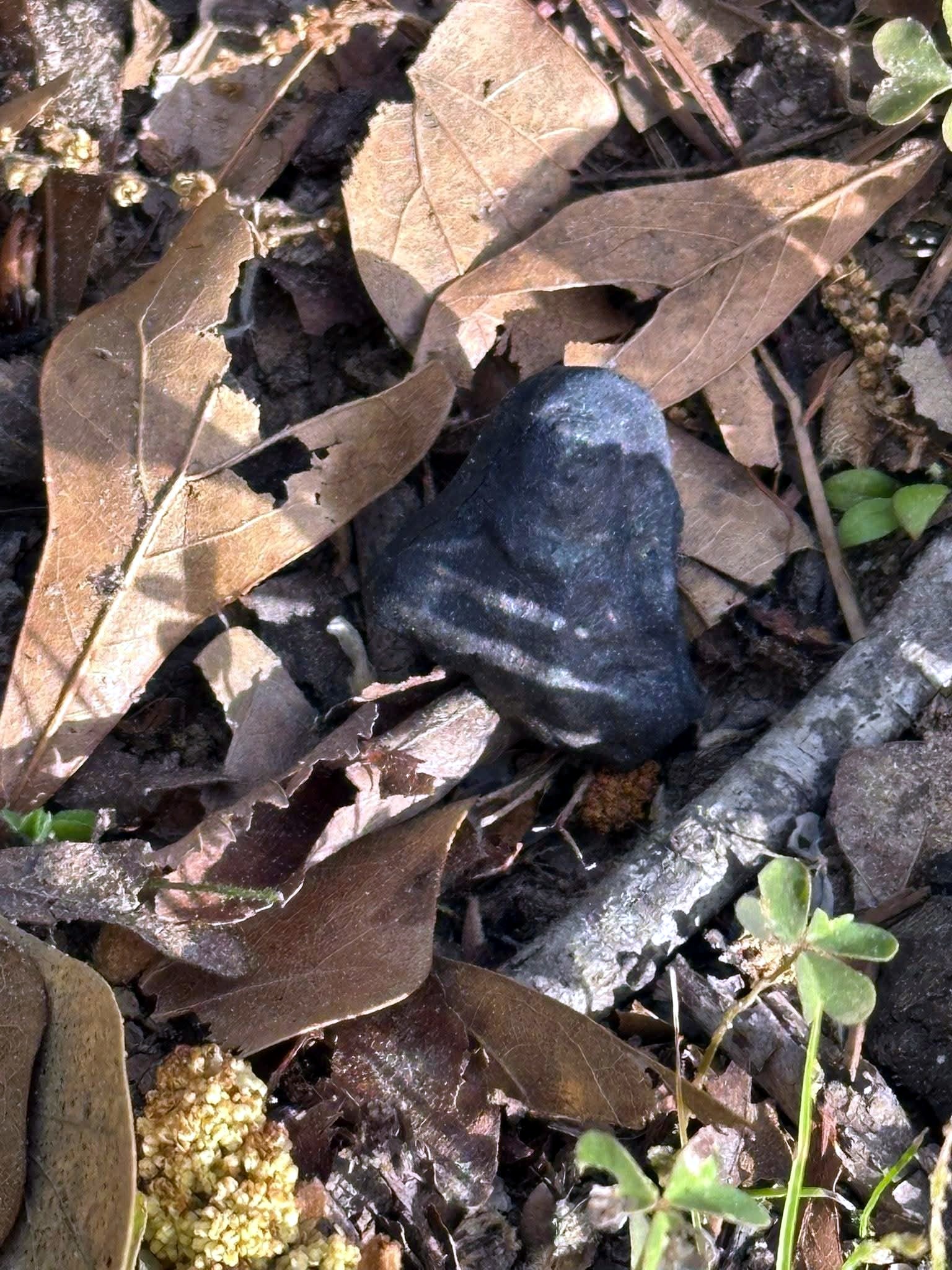
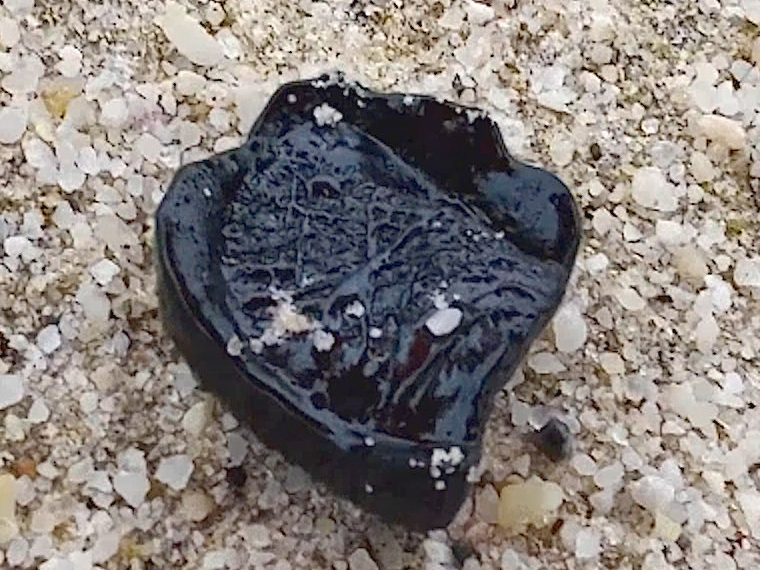
A 6.99-gram specimen in situ. Photo: Meredith Howse
David Gonzales reports having found three partly fragmented specimens in and around Collins Park on 23 March 2026. Gonzales has kindly donated two samples of his finds to Rice University’s RARE lab for research.
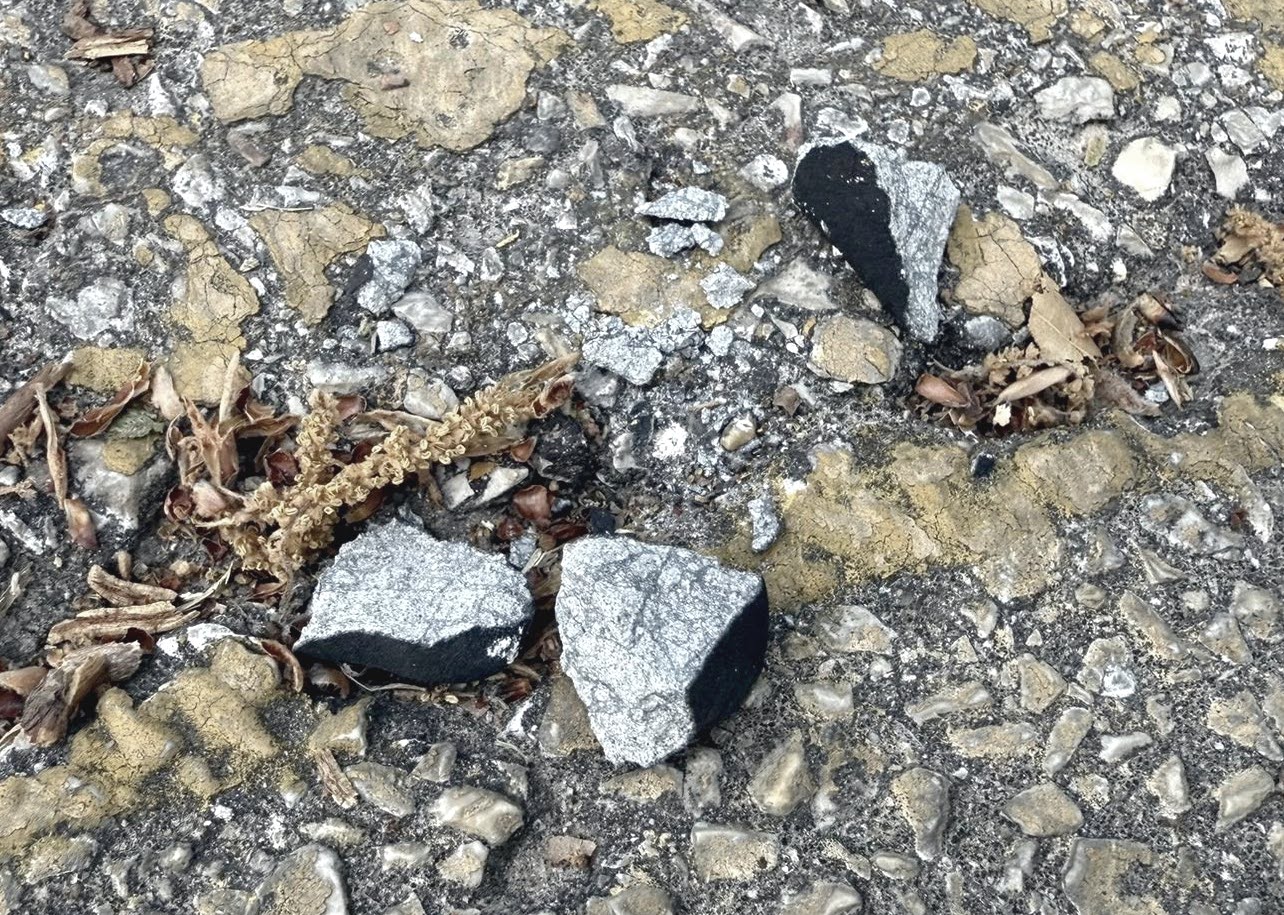
Gonzales’s first find. Photo: David Gonzales (23 March 2026)
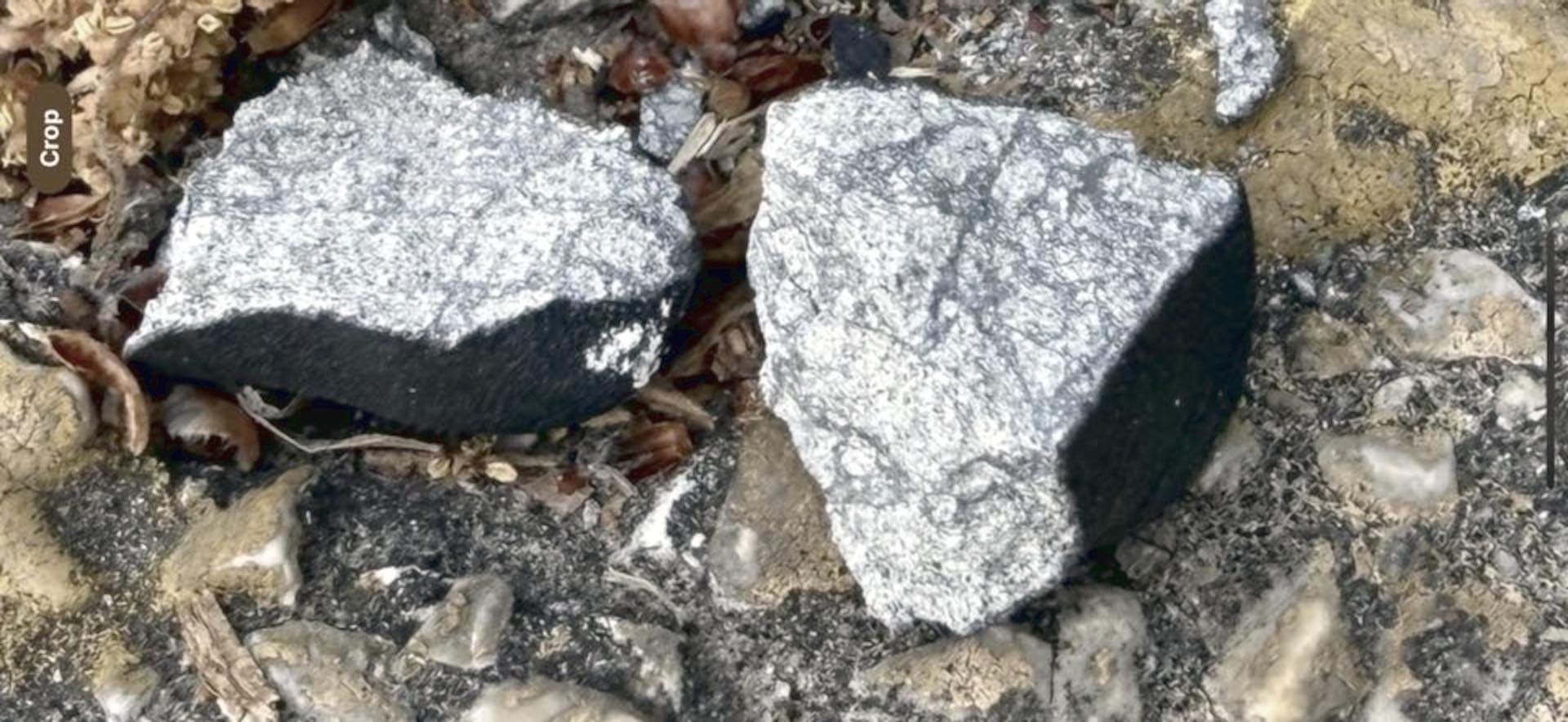
Gonzales’s first find. Photo: David Gonzales (23 March 2026)
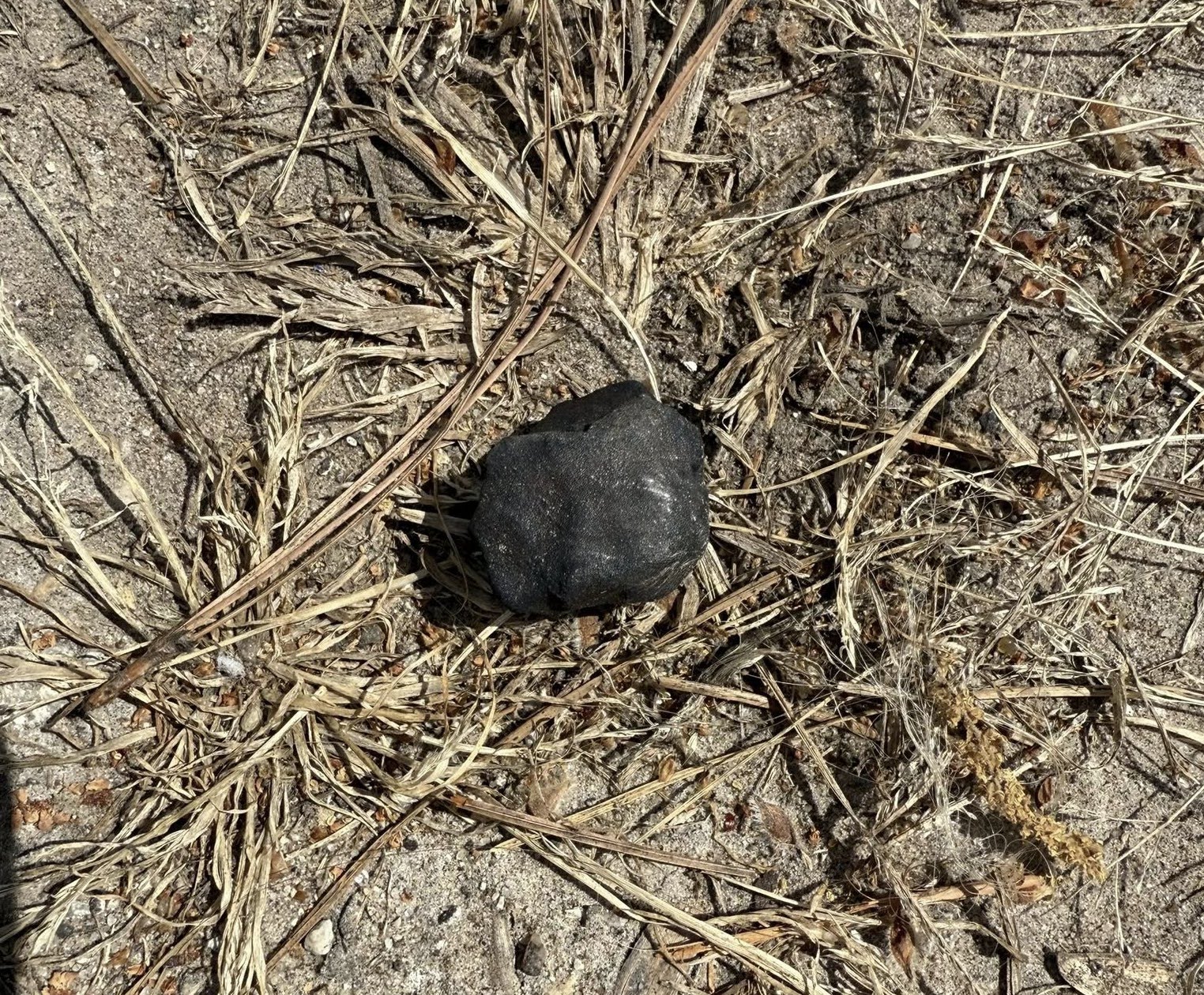
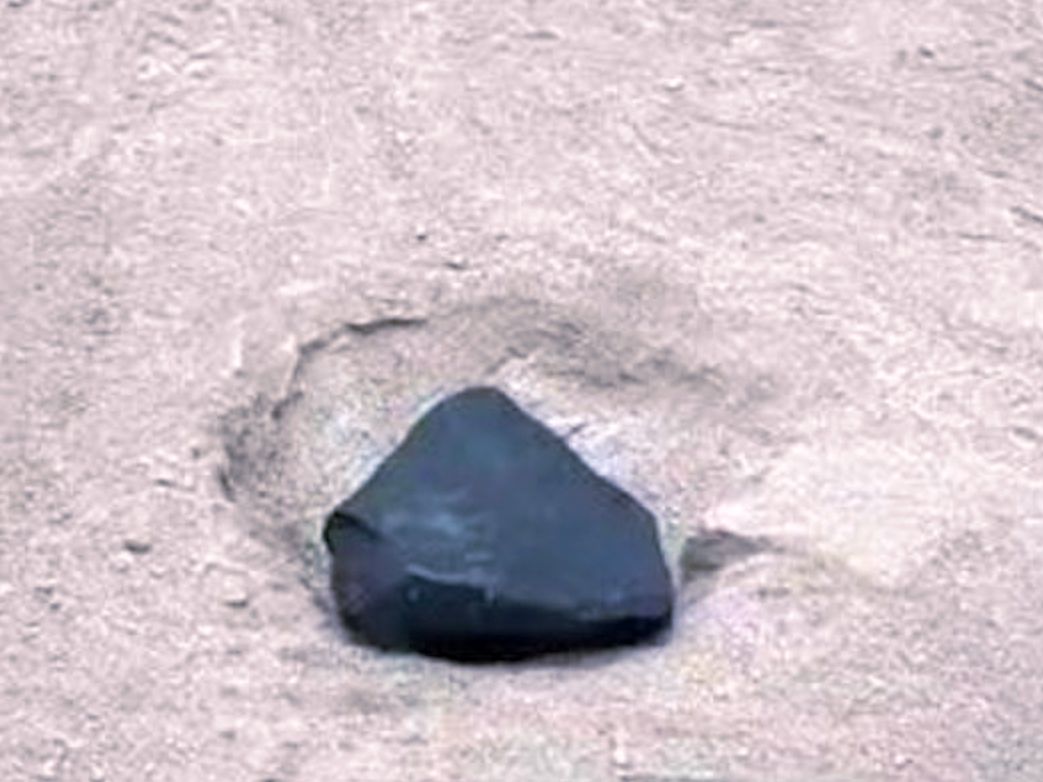
Gonzales’s second find in situ. Photo: David Gonzales (23 March 2026)
Reported finds in Collins Park on 29 March 2026
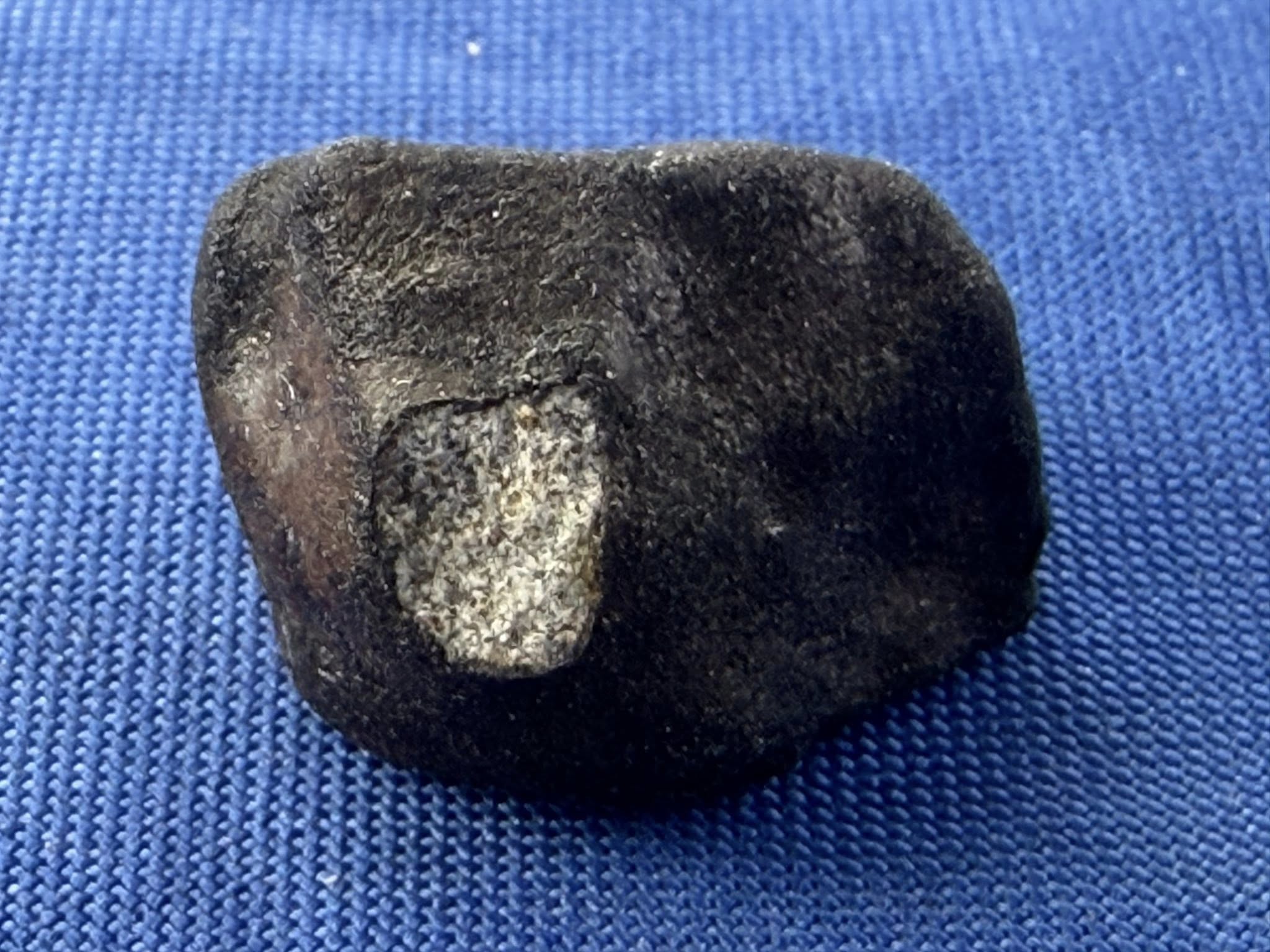
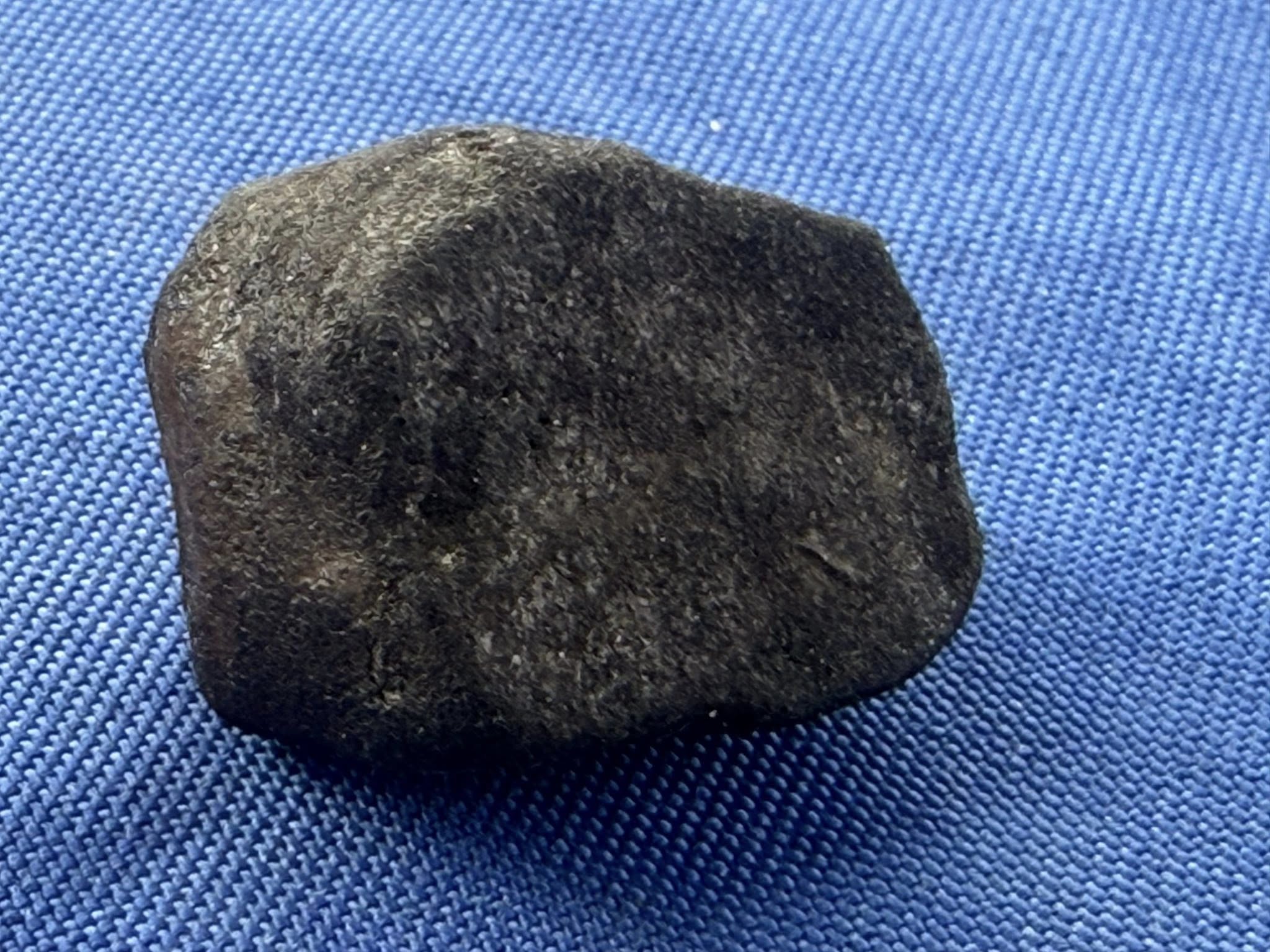
Small thumb-sized specimen (10.8 grams) which was found by Lynsey Duffy (and Steve Dee) and inspected in Collins Park on 29 March 2026. Photo: Alan Morgan
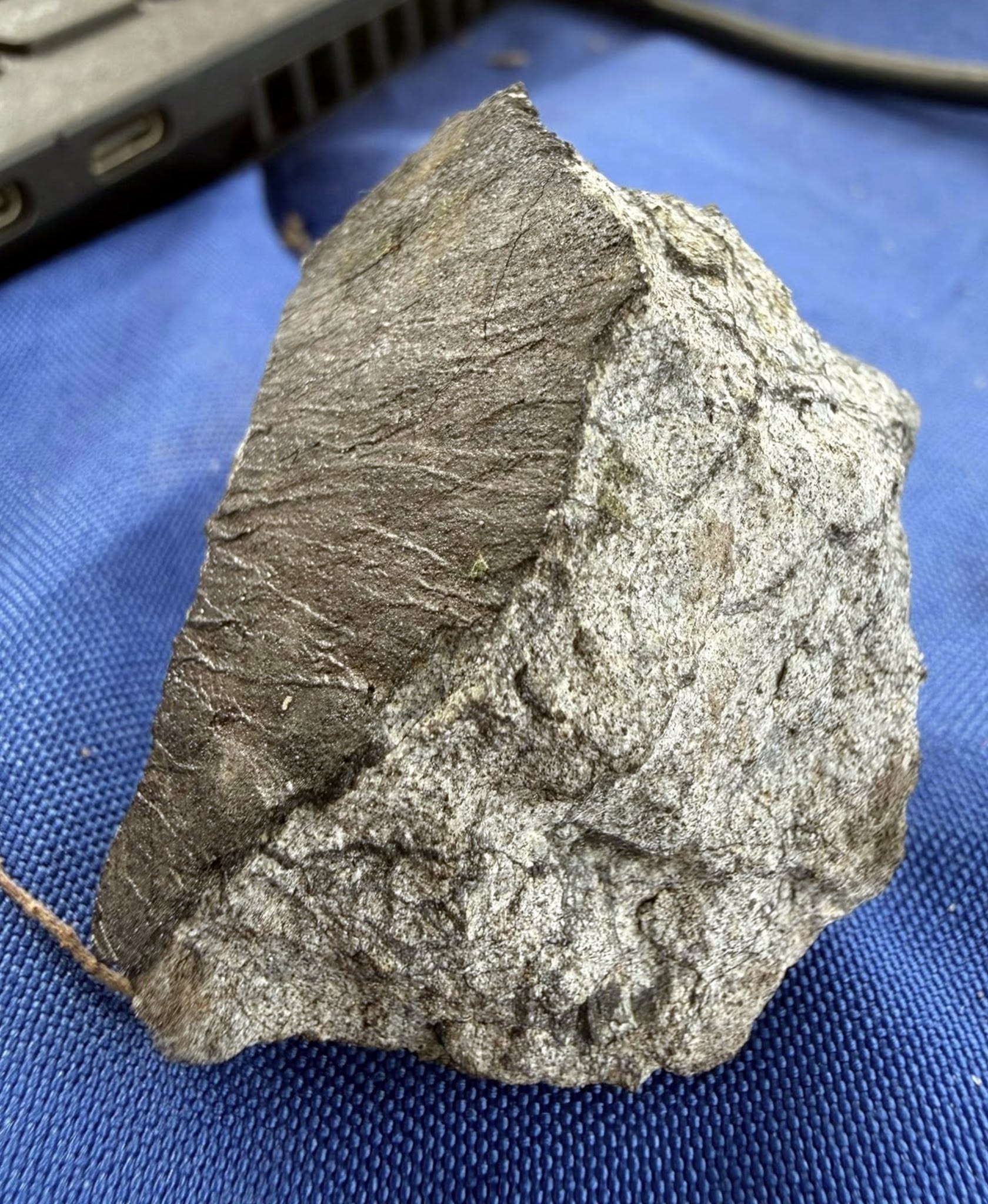
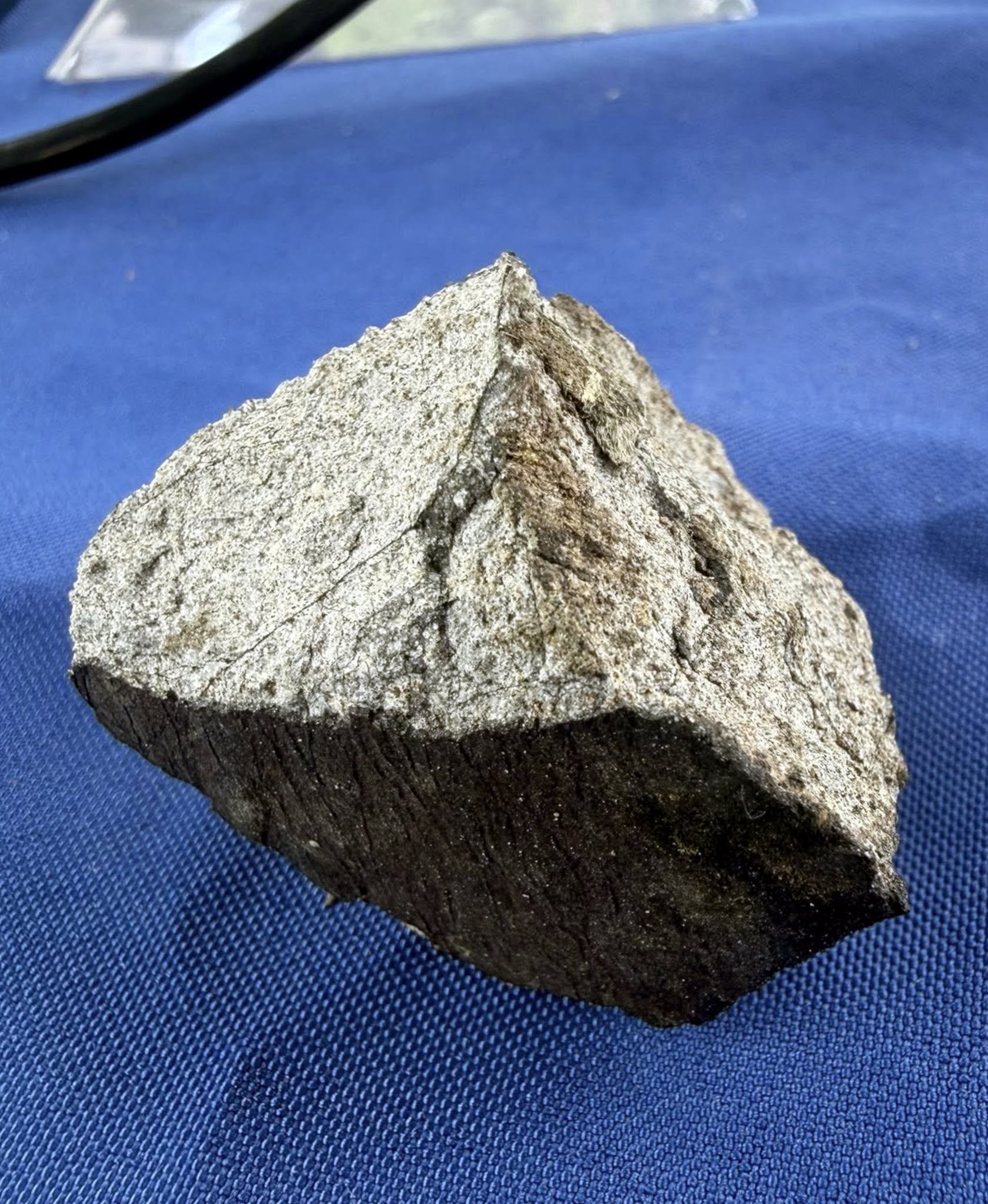
Fragment (61 grams) which was found by Lynsey Duffy (and Steve Dee) and inspected in Collins Park on 29 March 2026. Photos: Alan Morgan
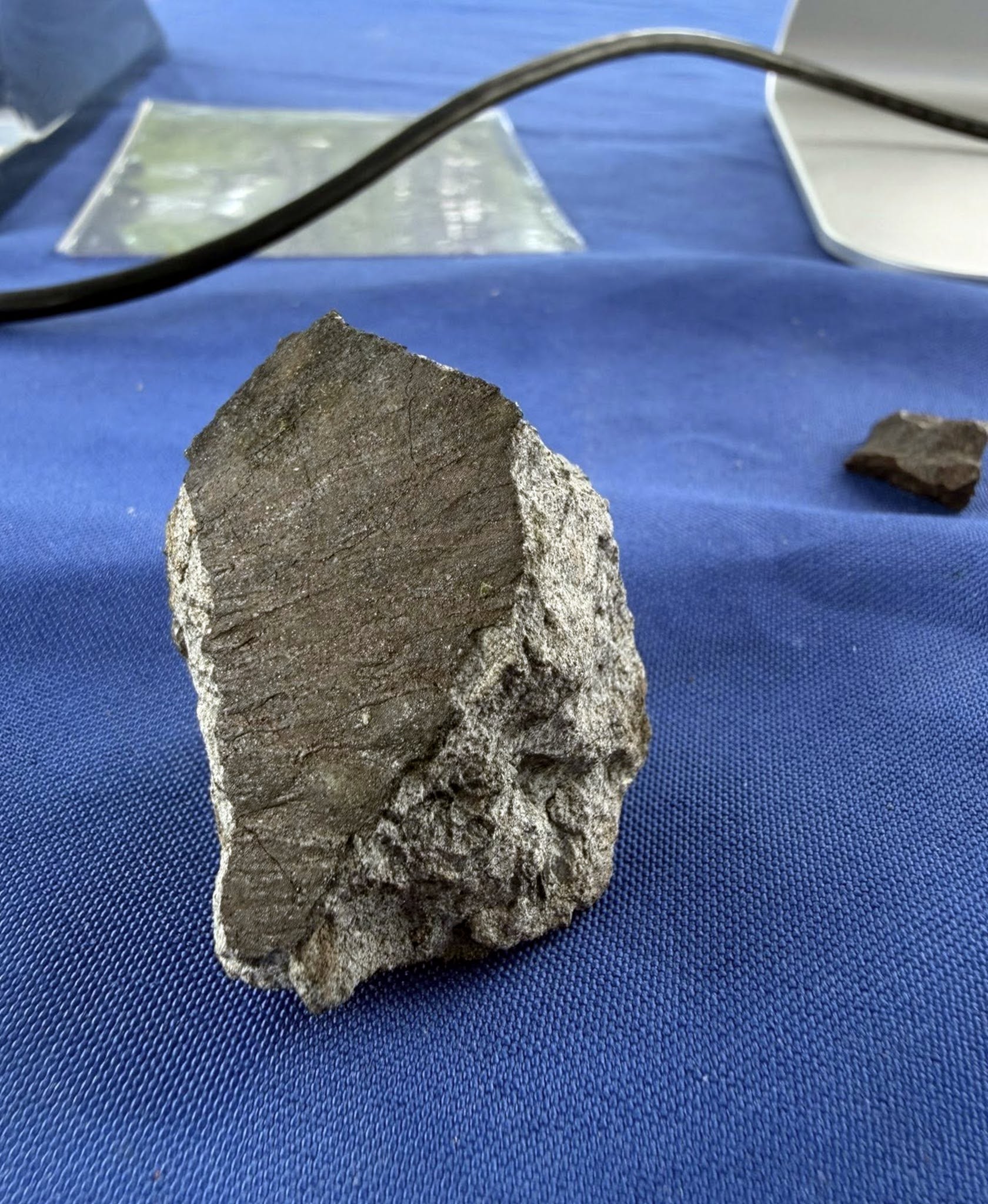
Fragment (61 grams) which was found by Lynsey Duffy (and Steve Dee) and inspected in Collins Park on 29 March 2026. The small fragment in the photo above could be the fitting 14 gram fragment found by another searcher on the same day. Photo: Alan Morgan
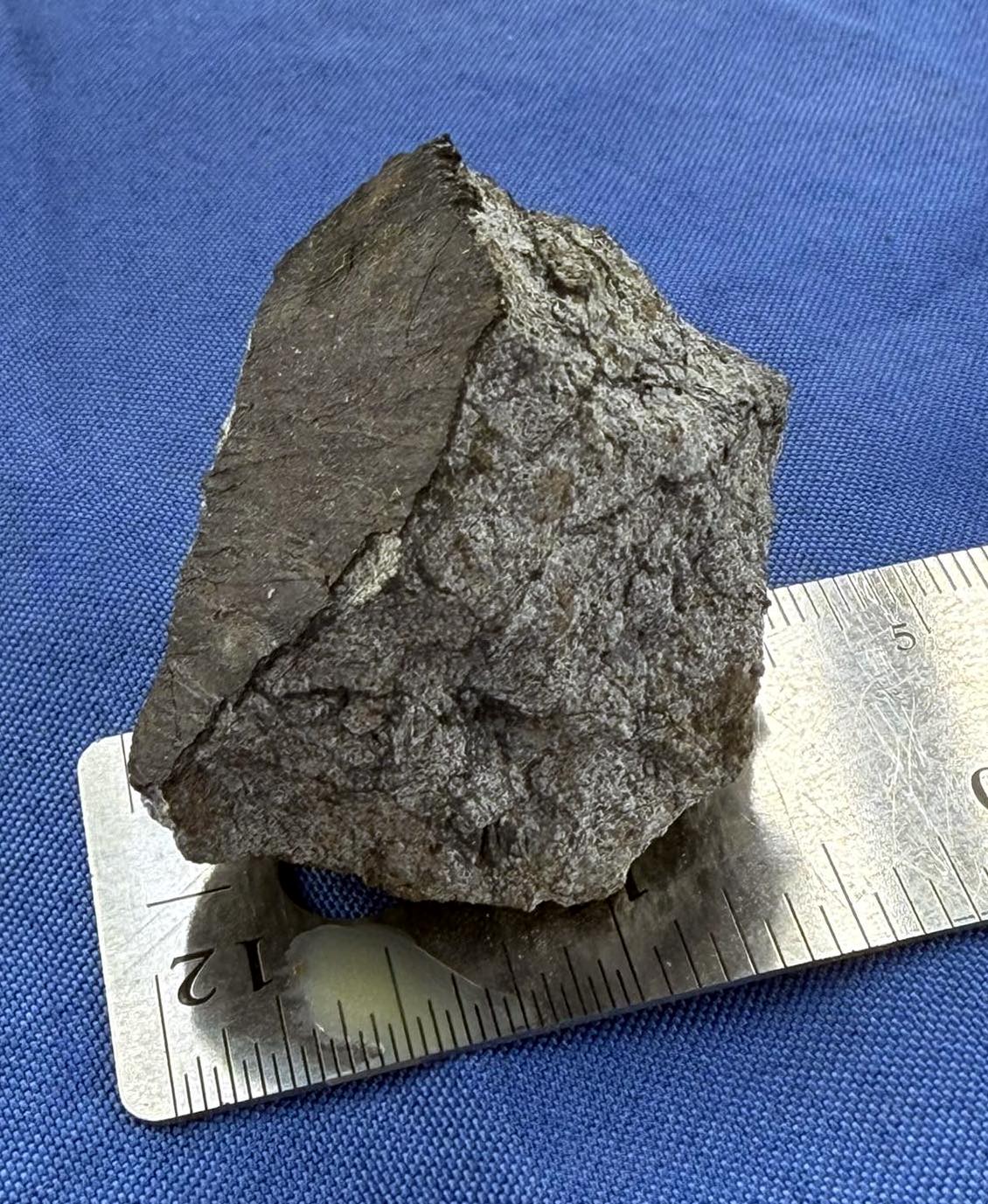
Fragment (61 grams) which was found by Lynsey Duffy (and Steve Dee). Photo: Katy Rock Shop
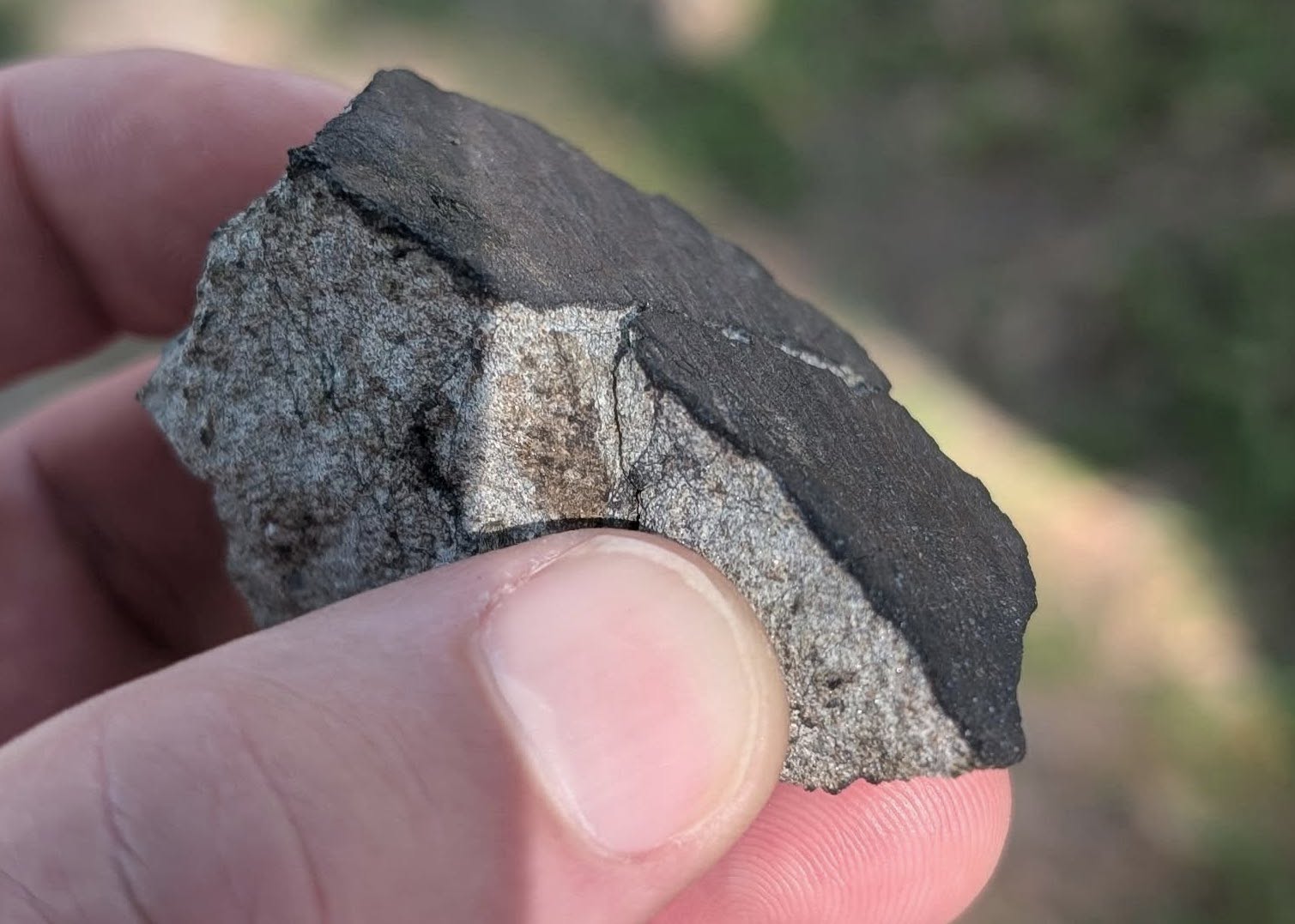
The 61-gram fragment united with the 14-gram one. Photo: Katy Rock Shop
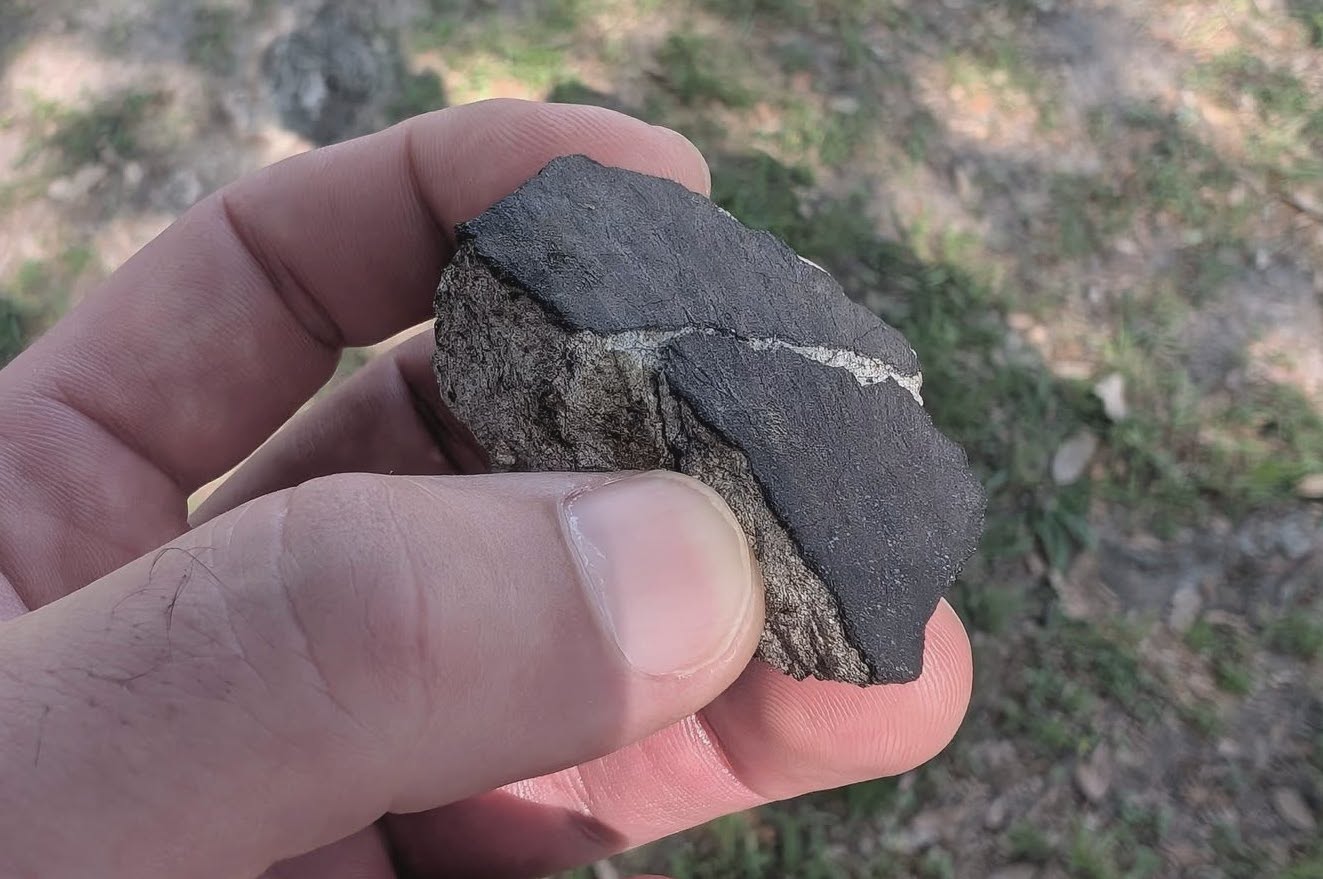
The 61-gram fragment united with the 14-gram one. Photo: Steve Dee
The 46.18-gram specimen found by Marc Fries (found on or before 31 March 2026)
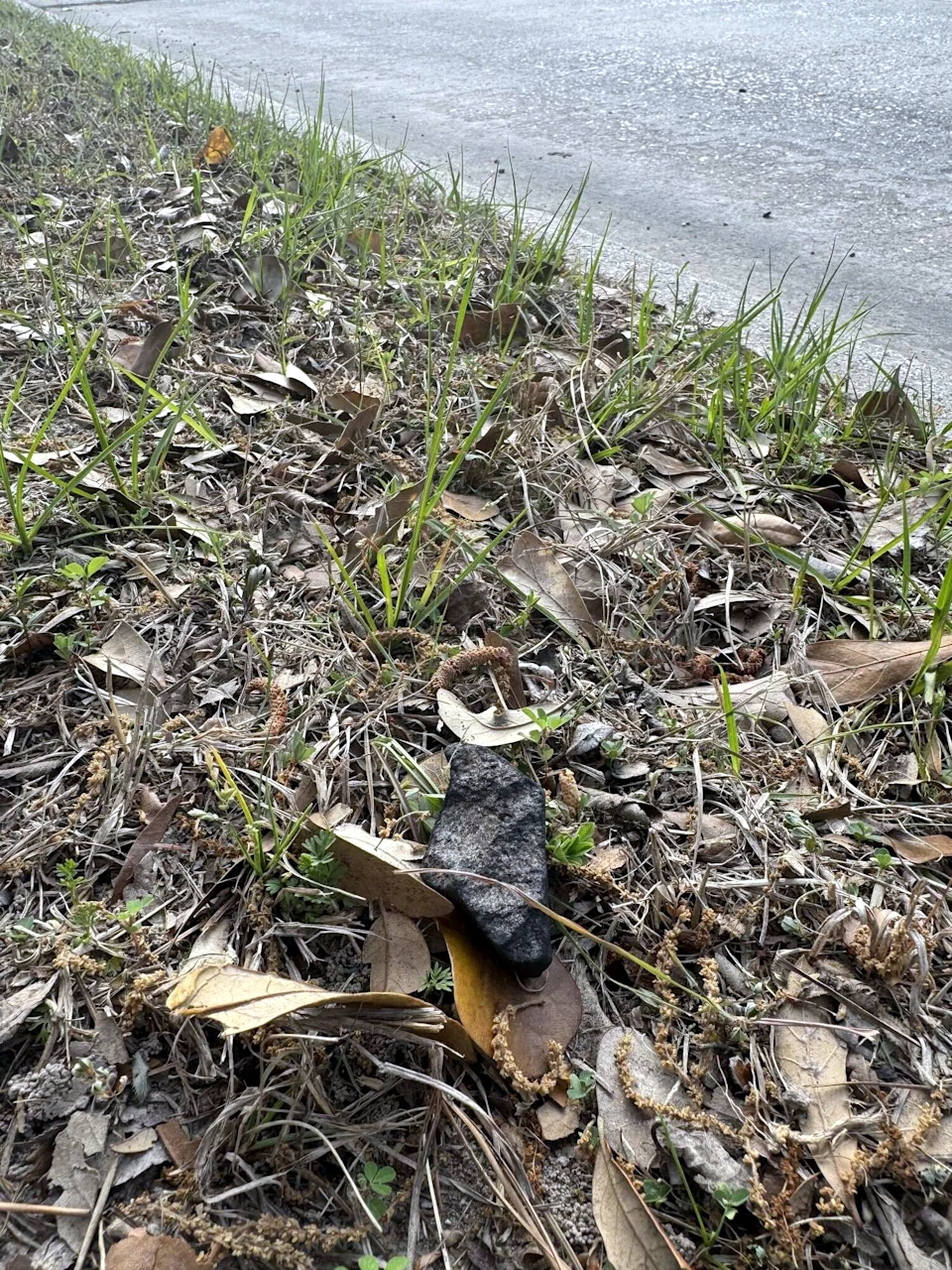
A 46.1-gram specimen in situ. It was found by Marc Fries in the grass next to Cypresswood Drive near Barbara Bush Branch Library, somewhere around location 30°00’46.4″N, 95°30’39.6″W, near Collins Park. Photo: Marc Fries
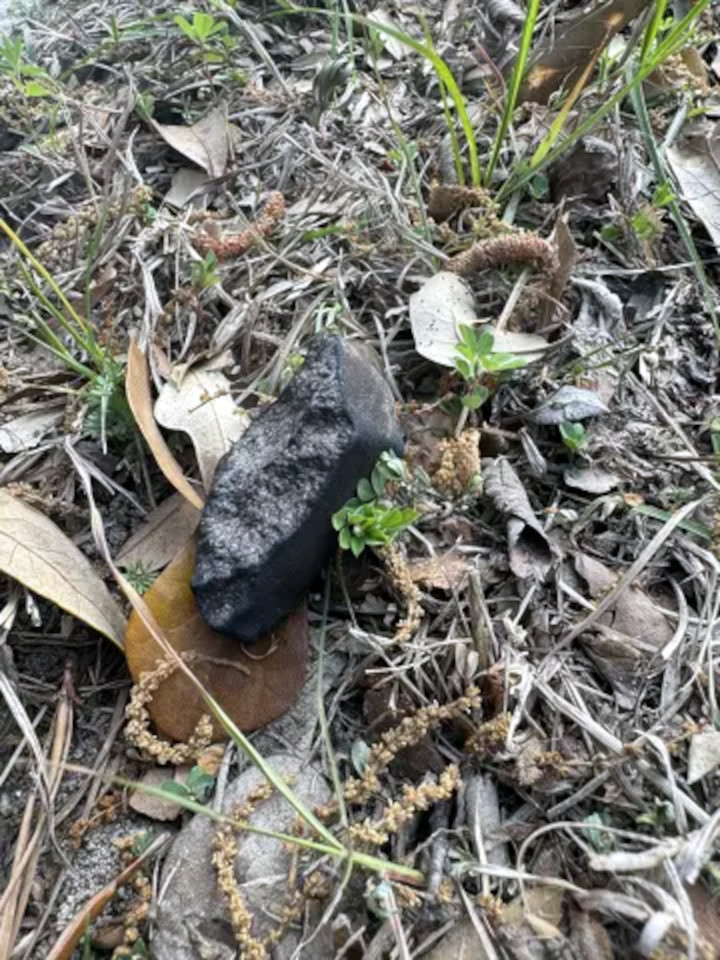
A 46.1-gram specimen in situ in the grass next to Cypresswood Drive near Barbara Bush Branch Library. Photo: Marc Fries
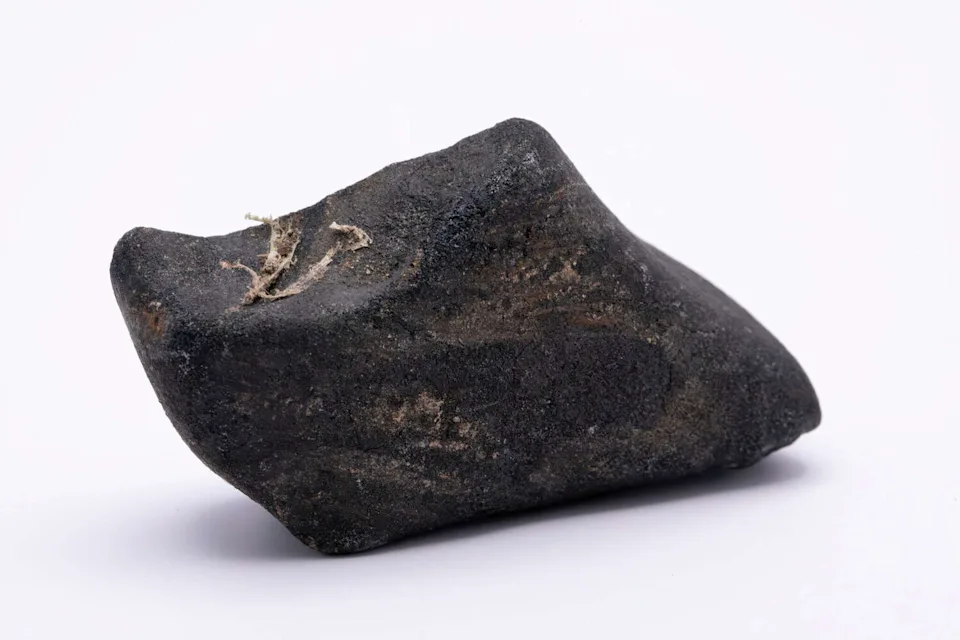
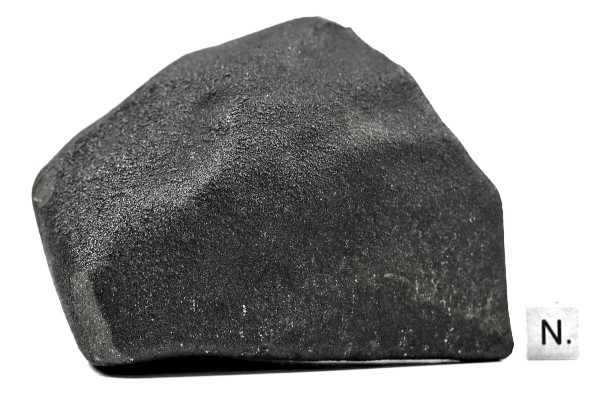
The 46.1-gram specimen (leading side) found by Marc Fries. Photo: Linda Welzenbach, Rice University
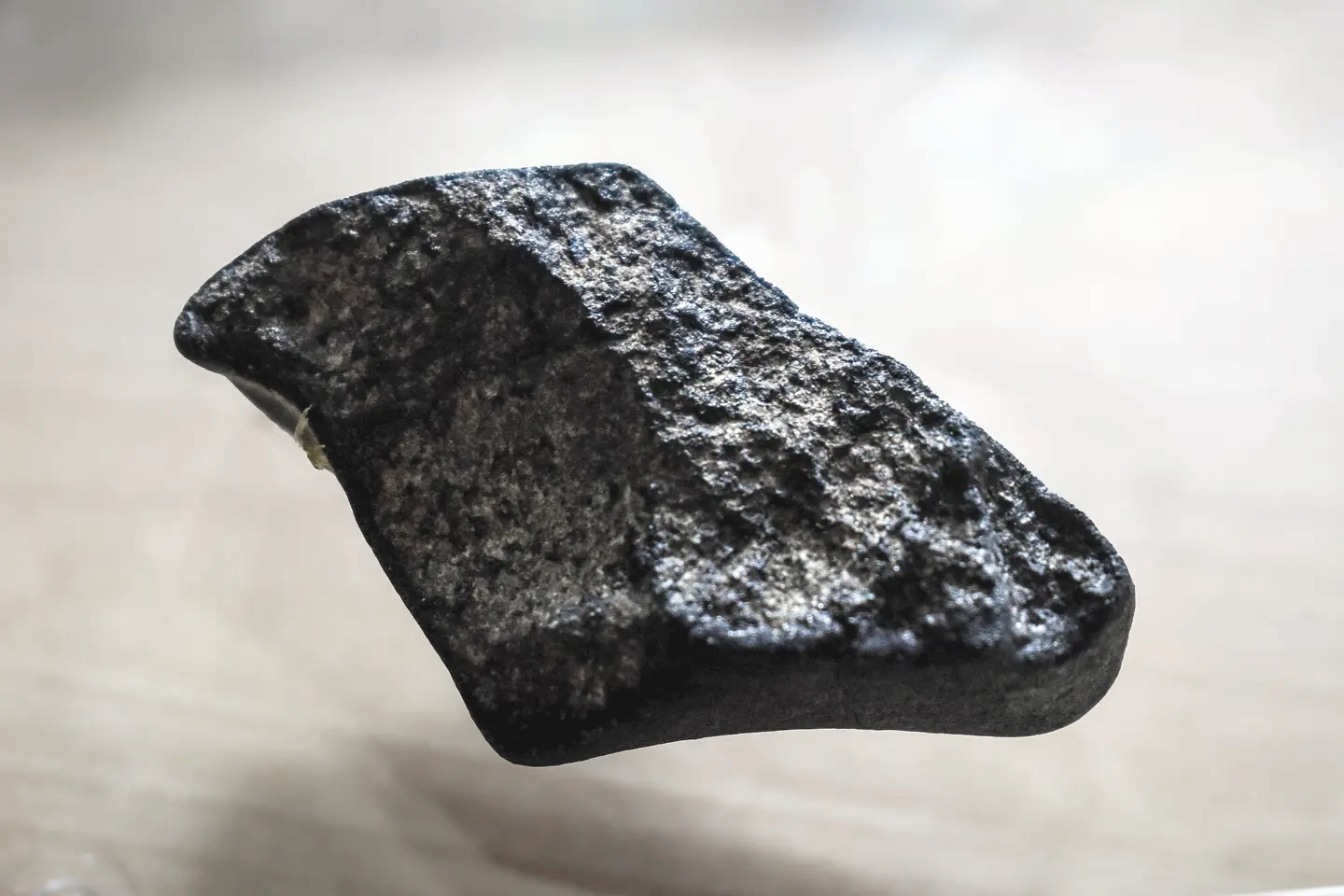
The 46.1-gram specimen (trailing side) found by Marc Fries. Photo: Ariana Garcia
Neeraja Chinchalkar’s ~3-gram specimen
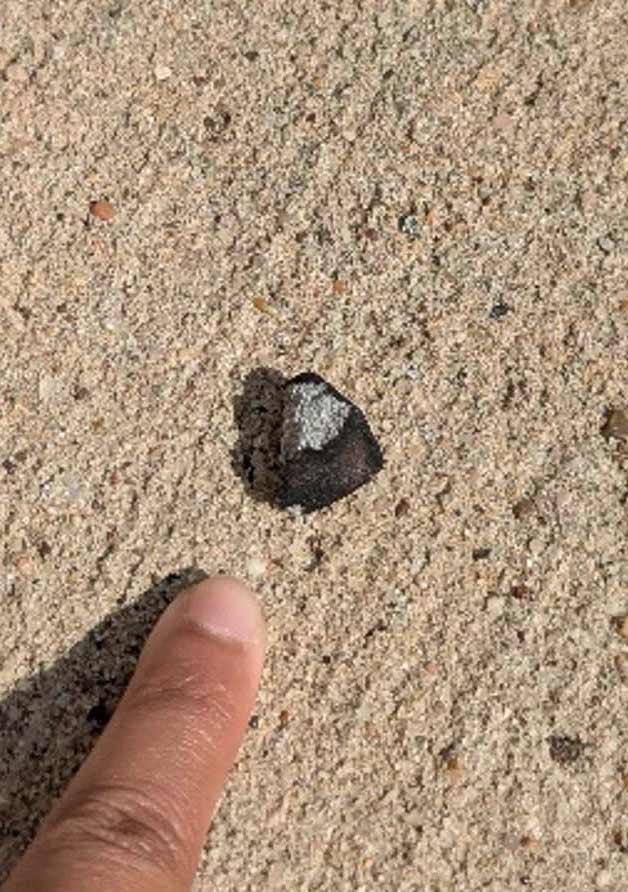
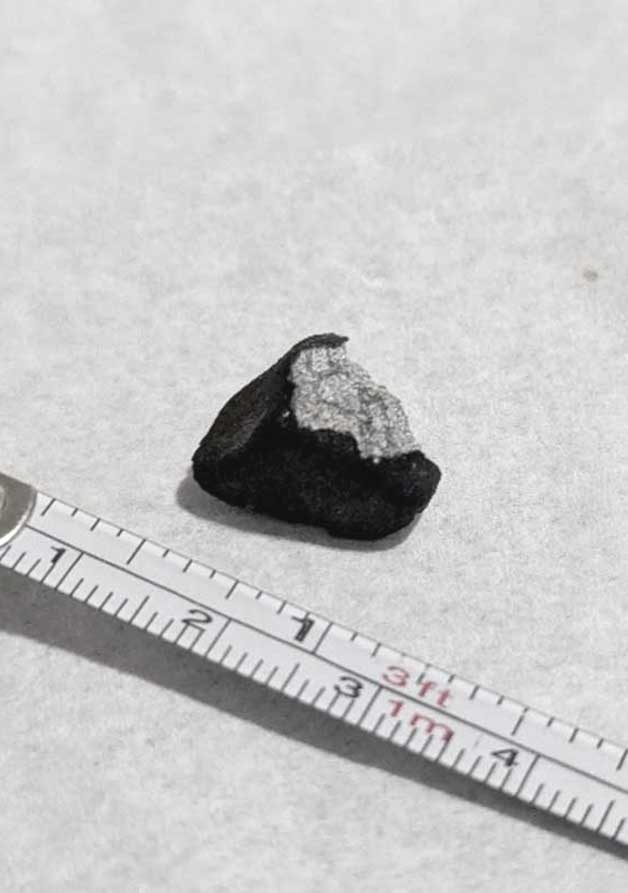
Neeraja Chinchalkar’s ~3-gram find, in situ and while being measured. Photos: Neeraja Chinchalkar
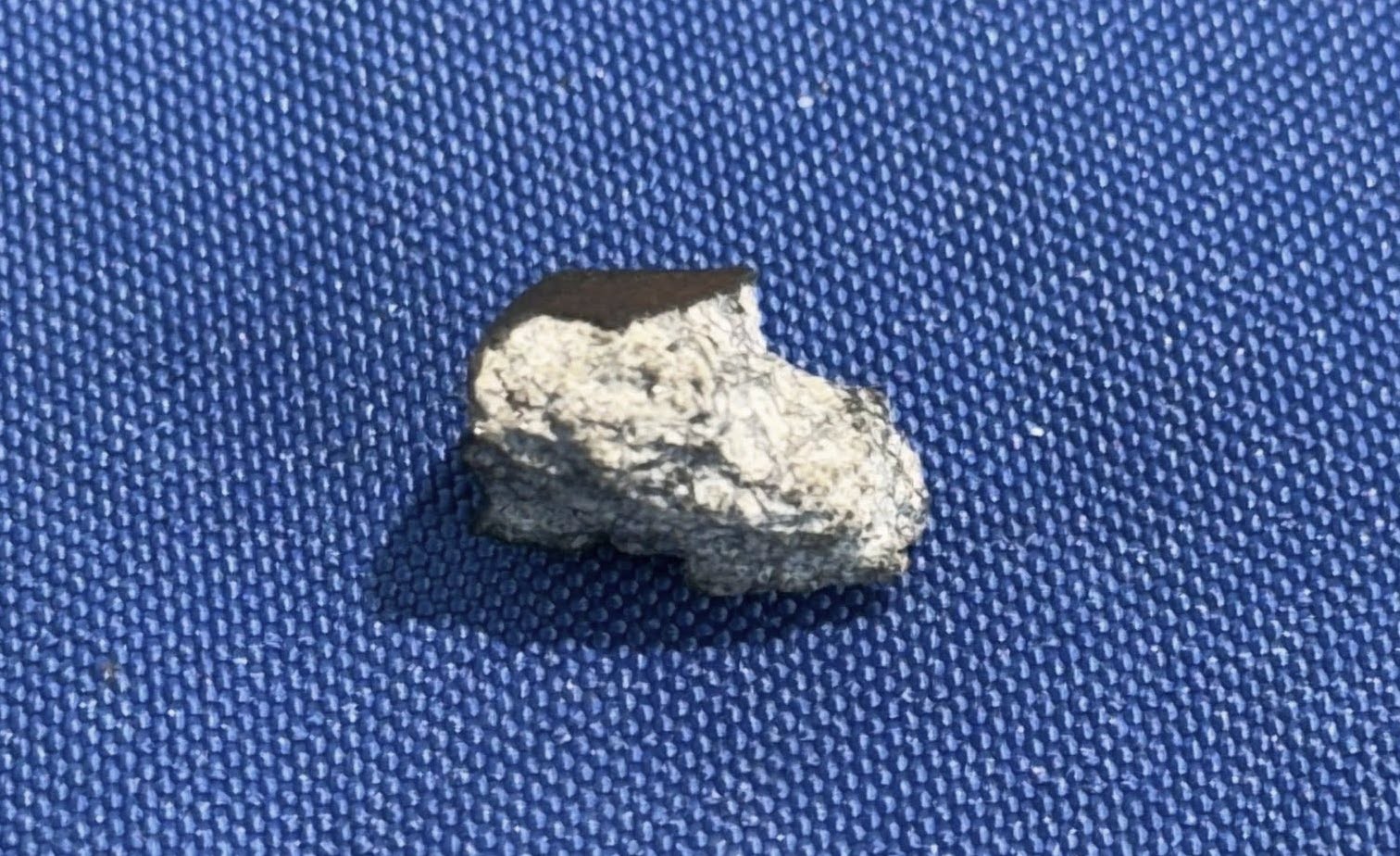
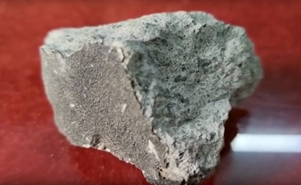
A smaller fragment being inspected on 29 March 2026 in Collins Park. Photo: Katy Rock Shop
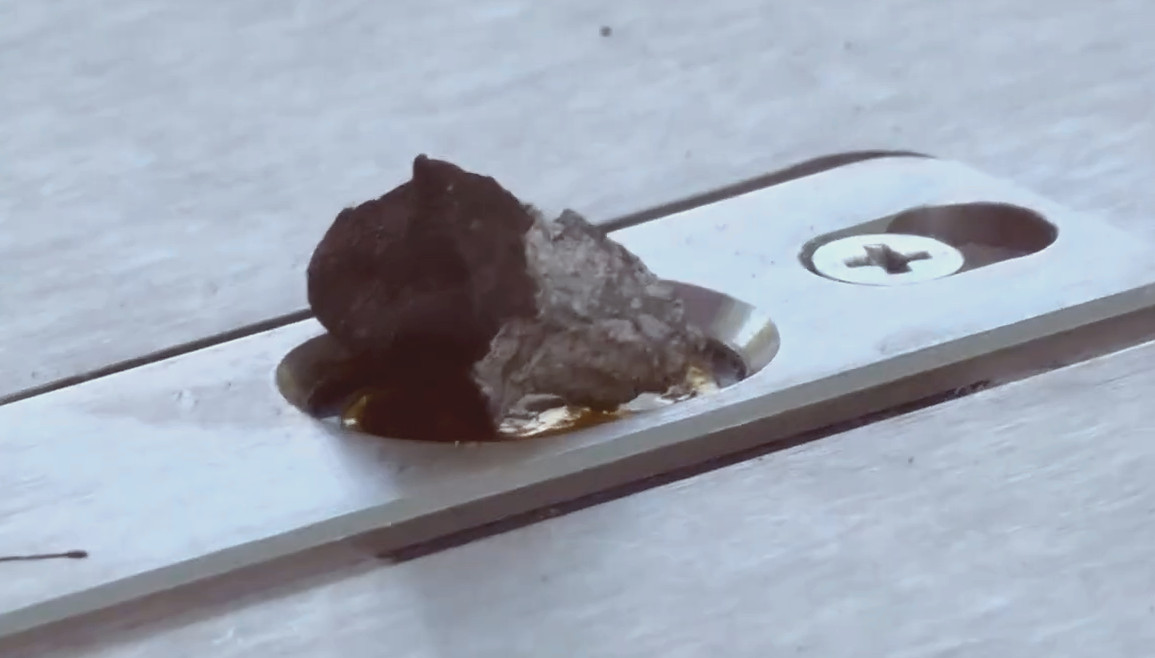
The same fragment being analysed on 29 March 2026 in Collins Park. Image: KHOU 11
Calculated fall zone
(Map below last updated on 30 April 2026)
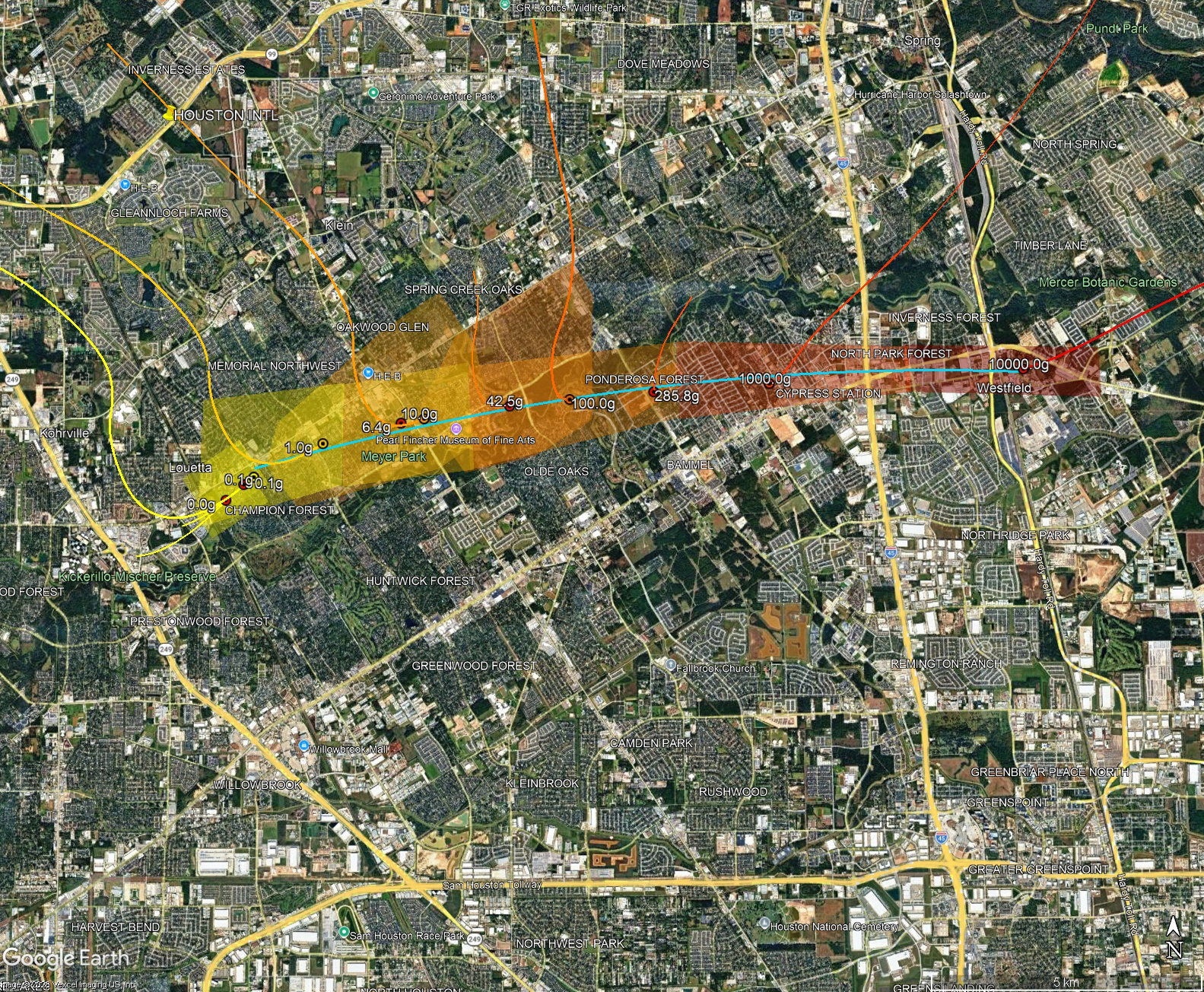
Simplified estimate of where meteorites landed. Red is where meteorites in the 1 kg range landed, then 100g (dark orange), 10g (light orange) and 1g (yellow). Meteorite finds to date lie on blue line. (Image: NASA)
“The fireball passed directly over Klein Cain High School and terminated just east of there, near Memorial Chase subdivision. The “terminus” is where a fireball “goes dark” as the falling meteorites decelerate to less than ~3 km/s and are no longer able to sustain an optically bright fireball. This produced a spray of meteorites of a range of sizes, to include one ~800g piece that continued 9.5 km (5.9 miles) downrange to strike a house. That occurred about a minute and a half after the terminus. For the next 8 or 9 minutes, meteorites of different sizes reached the ground and anyone in the strewn field would have heard a succession of loud thumps ranging through quieter dings as progressively smaller meteorites reached the ground. We now know that Cypress Creek Christian Church was struck by at least two small meteorites, and stones of a range of sizes fell in and around Collins Park.” (NASA)
In the map below we have added three confirmed find locations of meteorites. The James mass (small yellow dot), the first Gonzales find (small red dot) and another further north by an unknown finder (small red dot). Last update: 31 March 2026 (15:00 CEST)
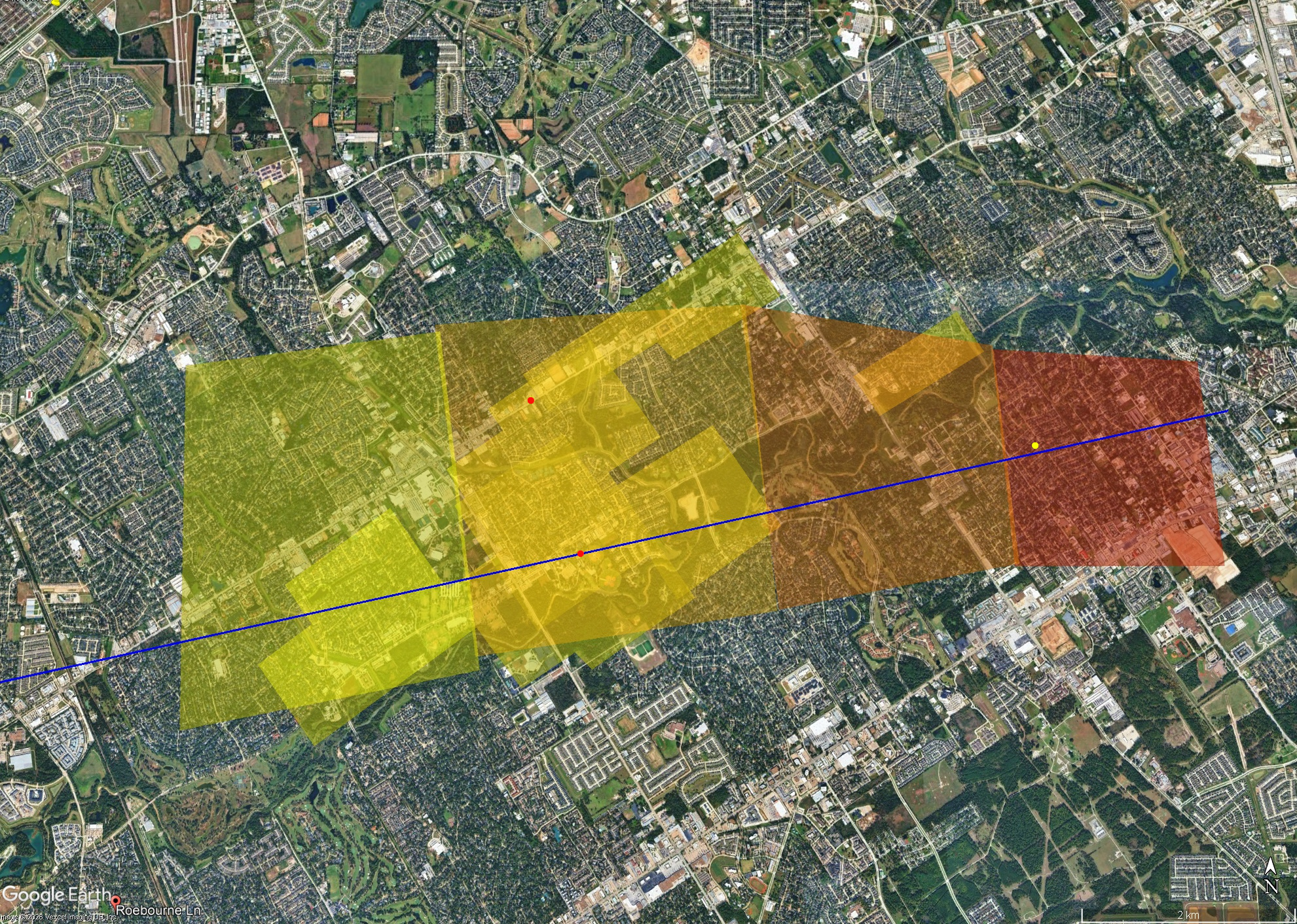
Simplified estimate of where meteorites landed (Version: 31 March 2026). Red is where meteorites in the 1 kg range landed, then 100g (dark orange), 10g (light orange) and 1g (yellow). Meteorite finds to date lie on blue line. (Image: NASA)
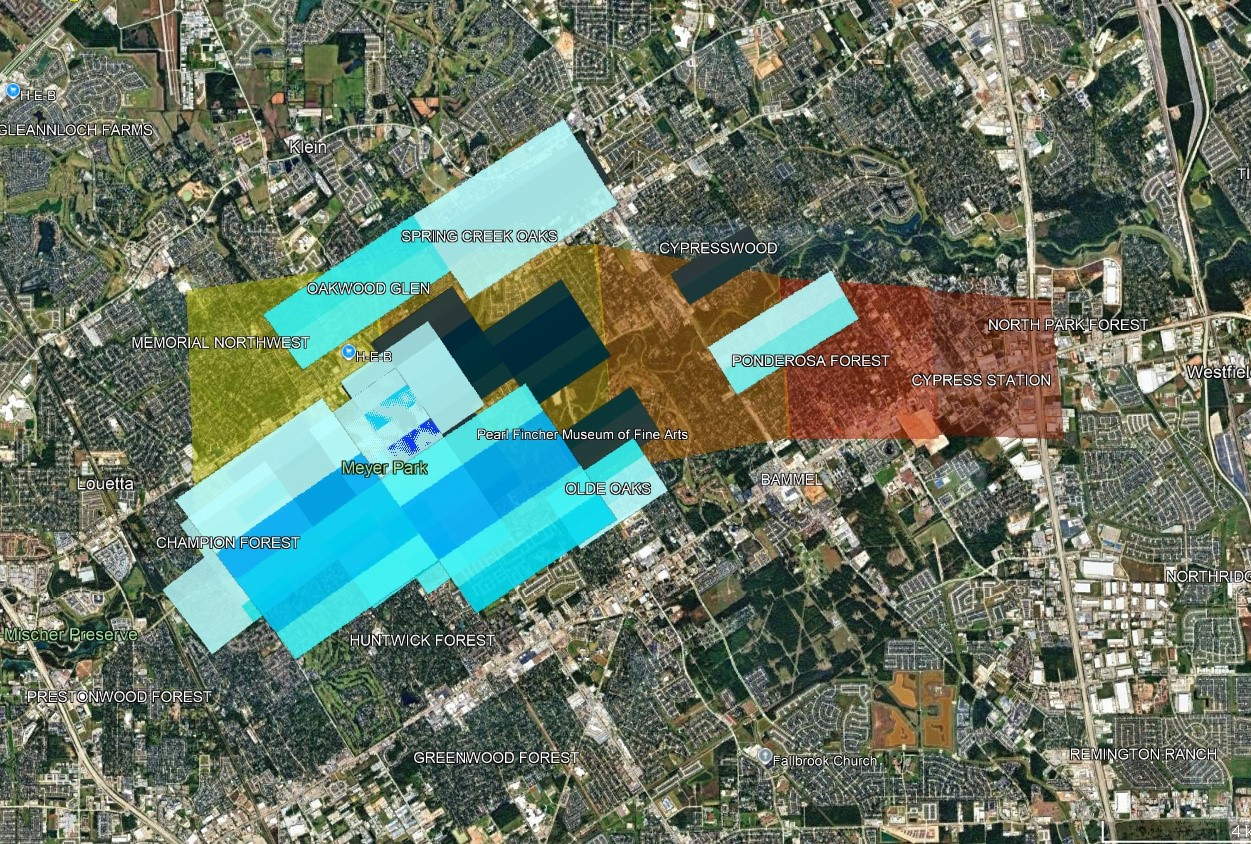
Perspective view of radar signatures of falling meteorites. The blue-gray pixels are radar signatures of falling meteorites from the KHGX and TIAH weather radars. Image: NASA
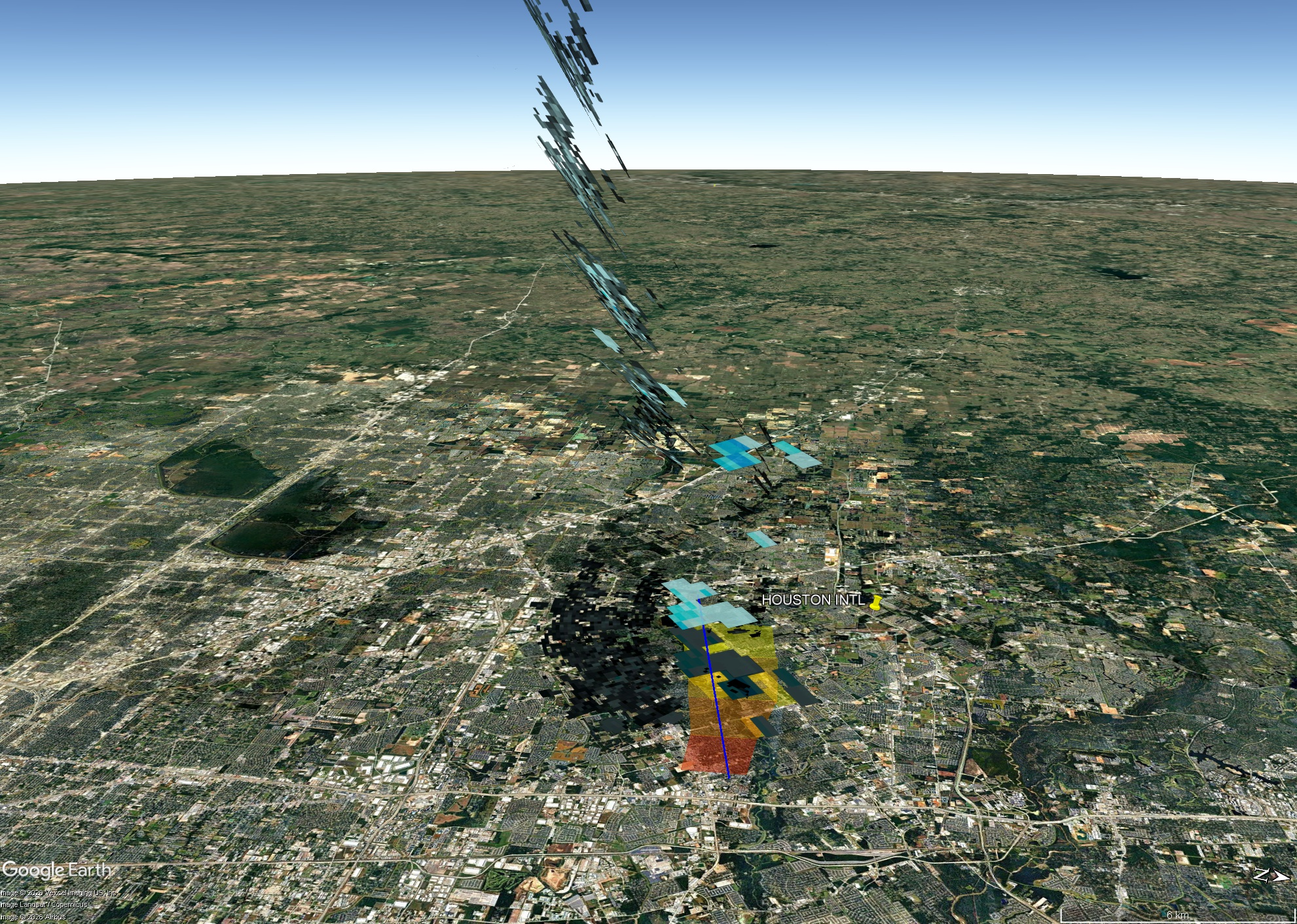
Perspective view of radar signatures of falling meteorites. The blue-gray pixels are radar signatures of falling meteorites from the KHGX and TIAH weather radars. Image: NASA
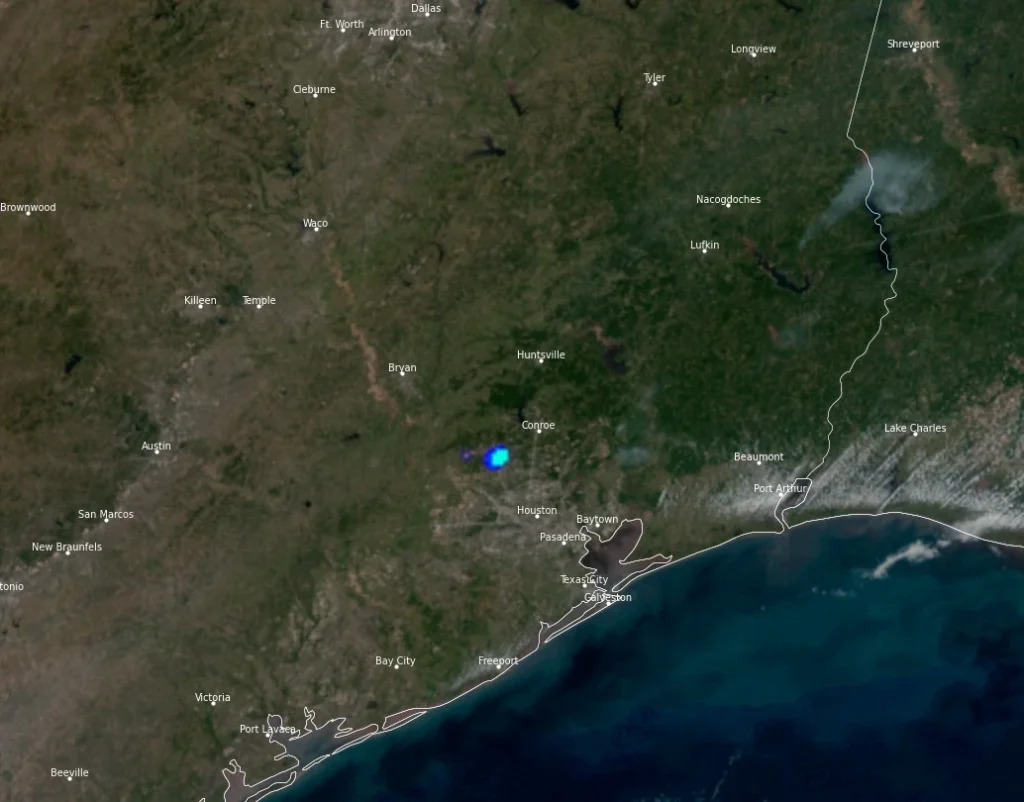
GOES-19 satellite’s GLM detection of the bolide. Image: NOAA/GOES-East
GOES-19 satellite’s GLM detection of the bolide. Animation: NOAA/GOES-East
The bolide
John Marrs recorded the bolide while driving north on 288, just outside of Angleton. Video: John Marrs
Bolide recorded while driving on I-10 at the El Campo/Columbus exit. Video: KHOU 11
Video: Keith McMahan
Bolide recorded during a baseball match in East Bernard Community Park at location 29°32’09.2″N, 96°03’31.6″W, which is 79.08 kilometres southwest from the fall site of the meteorite. Video: Lucero Marquez de Rivera
Bolide recorded while driving south on I45 through Centerville, Texas. Video: Ashley McKnight-Bailey
MEDIA
Video: Fox26 Houston (21 March 2026)
Video: KHOU 11
Video: KPRS 2 Houston (22 March 2026)
Video: KPRS 2 Houston (22 March 2026)
Video: Katie Pavlich Tonight (24 March 2026)