Non-equilibrium condensation of the first Solar System solidsOPEN ACCESS
Sébastien Charnoz, Jérôme Aléon, Marc Chaussidon, Paolo A. Sossi, Yves Marrocchi & Patrick Franco
Nature, Volume 652, pages 925–930, Published: 22 April 2026
LINK (OPEN ACCESS)
PDF (OPEN ACCESS)
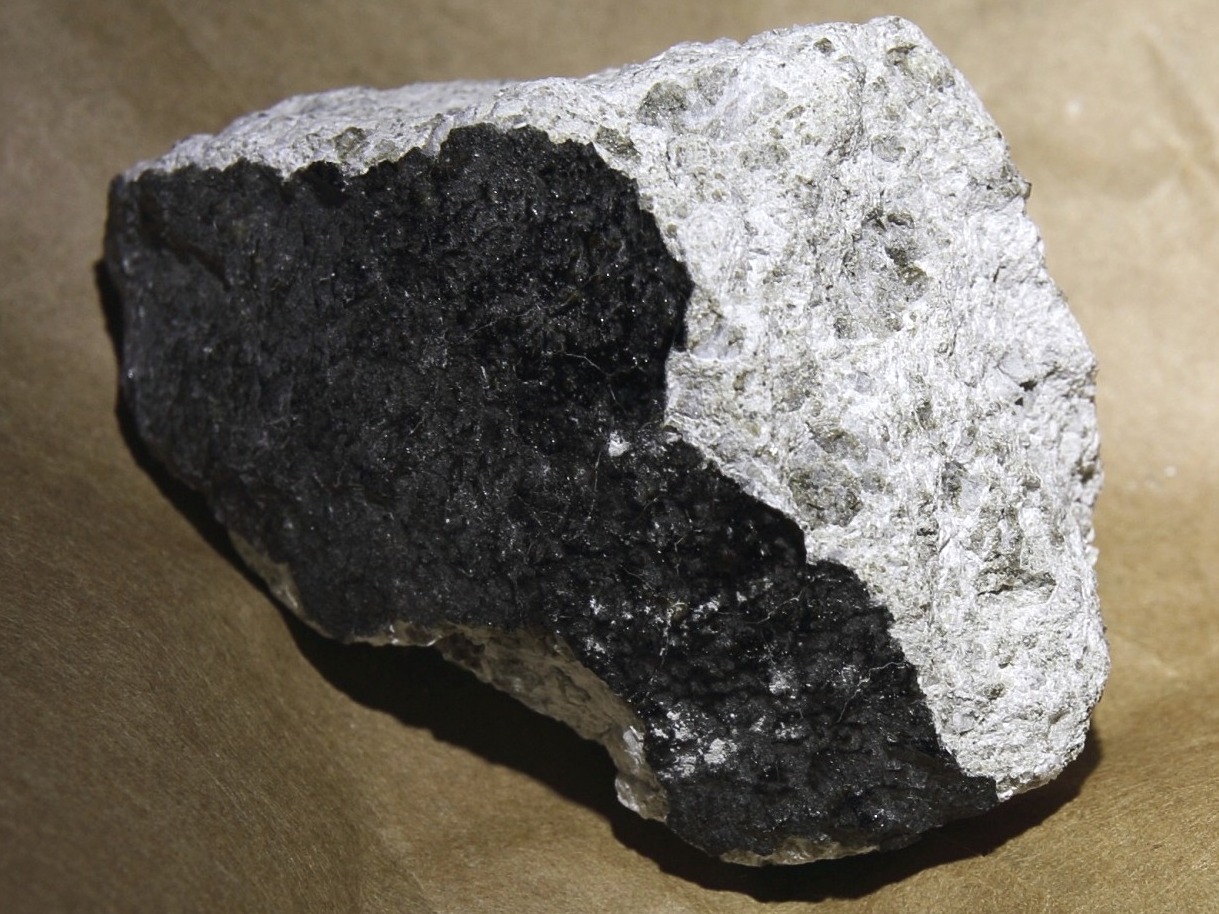
“Primitive meteorites (chondrites) consist of an out-of-equilibrium assemblage of minerals formed during the assembly of our solar nebula. The conditions under which their precursors condensed remain unclear as a result of subsequent reprocessing in the protoplanetary disk or in asteroidal parent bodies. Chondrites are classified into three main classes—enstatite, ordinary and carbonaceous—and these are distinguished by different bulk composition and oxidation state. Although equilibrium condensation models explain the composition of some of their refractory components, they do not explain the emergence of three mineralogical classes. Moreover, the low pressures, steep temperature gradients and short dynamical transport timescales in forming protoplanetary discs probably hindered equilibrium. Here we test the hypothesis that chondrite precursors formed via kinetic non-equilibrium condensation. Using a new time-dependent condensation model, we show that varying the cooling rate and pressure produce only three types of mineralogies. Departure from equilibrium yields increasingly oxidized and hydrous mineralogies. When projected into a Urey–Craig diagram, the predicted mineralogical types fall close to the redox states of enstatite, ordinary and carbonaceous chondrites. These results suggest that the mineralogical diversity of chondrites may reflect, in part, local condensation kinetics, offering an alternative to large-scale variations of oxidation conditions.”