Accreting protoplanets in the LkCa 15 transition disk
S. Sallum, K. B. Follette, J. A. Eisner, L. M. Close, P. Hinz + et al. Nature 527, 342–344 (18 November 2015) | doi:10.1038/nature15761 LINK “Exoplanet detections have revolutionized astronomy, offering new insights into solar…
Chondrule Formation via Impact Jetting Triggered by Planetary Accretion
Yasuhiro Hasegawa, Shigeru Wakita, Yuji Matsumoto, Shoichi Oshino accepted for publication in ApJ PDF (full text) abstract Update (Dec 21): LINK “Chondrules are one of the most primitive elements that can serve as a fundamental…
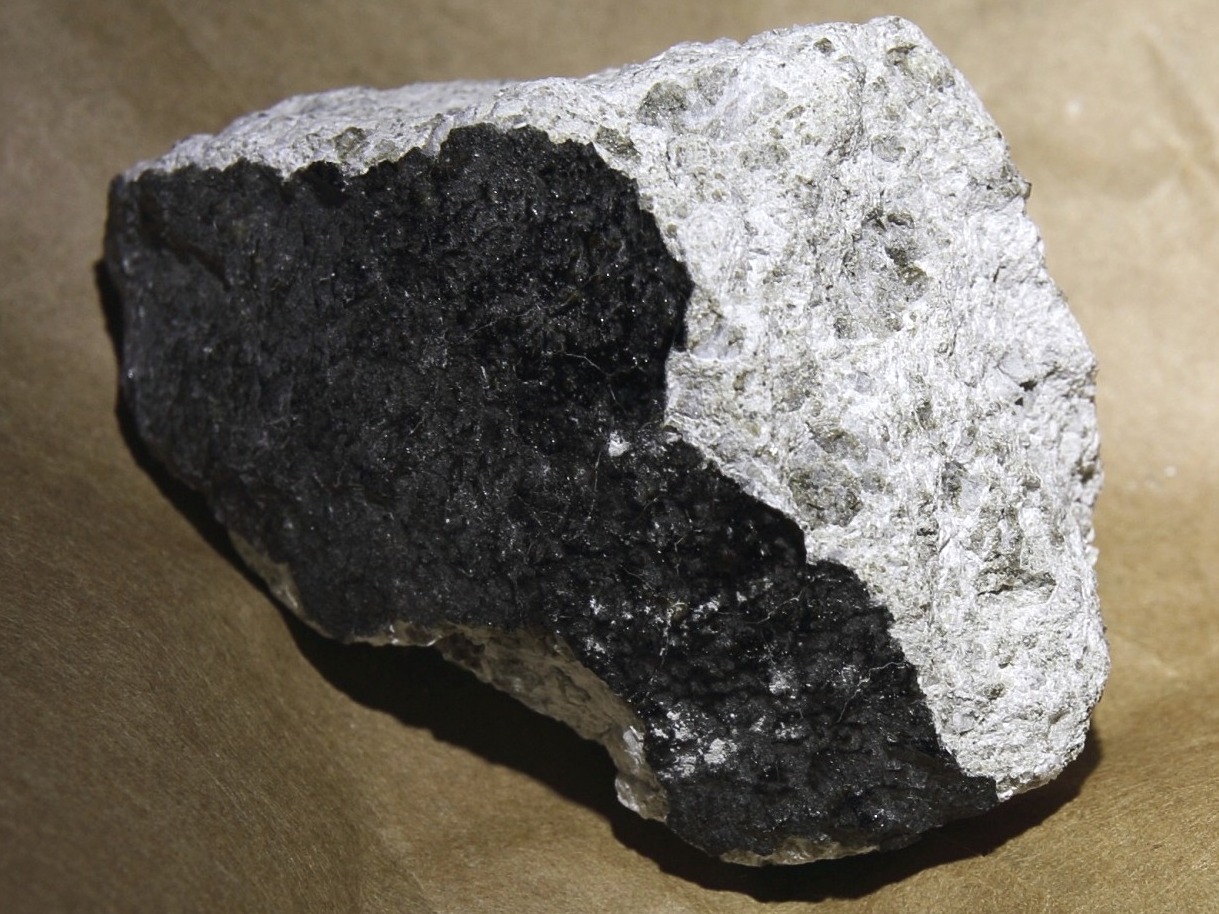
Effects of viewing geometry, aggregation state, and particle size on reflectance spectra of the Murchison CM2 chondrite deconvolved to Dawn FC band passes
Matthew R.M. Izawa, Tanja Schäfer, Valerie B. Pietrasz, Edward A. Cloutis, Paul Mann, Andreas Nathues, Kurt Mengel, Michael Schäfer, Guneshwar Thangjam, Martin Hoffmann, Kimberly T. Tait, Daniel M. Applin Icarus In Press, Accepted Manuscript, Available…
Spectral Parameters for Dawn FC Color Data: Carbonaceous Chondrites and Aqueous Alteration Products as Potential Cerean Analog Materials
Tanja Schäfer, Andreas Nathues, Kurt Mengel, Matthew R.M. Izawa, Edward A. Cloutis, Michael Schäfer, Martin Hoffmann Icarus In Press, Accepted Manuscript, Available online 23 October 2015 doi:10.1016/j.icarus.2015.10.005
The growth of planets by pebble accretion in evolving protoplanetary discs
Bertram Bitsch, Michiel Lambrechts and Anders Johansen A&A Volume 582, October 2015, A112 Published online: 20 October 2015 DOI: http://dx.doi.org/10.1051/0004-6361/201526463 LINK
The Pluto system: Initial results from its exploration by New Horizons
S. A. Stern, F. Bagenal, K. Ennico, G. R. Gladstone, W. M. Grundy, W. B. McKinnon, J. M. Moore, C. B. Olkin, J. R. Spencer, H. A. Weaver, L. A. Young, T. Andert, J. Andrews,…
147Sm-143Nd and 176Lu-176Hf systematics of eucrite and angrite meteorites.
Bouvier, A., Blichert-Toft, J., Boyet, M. and Albarède, F. Meteoritics & Planetary Science. doi: 10.1111/maps.12553 LINK “Comparative planetary geochemistry provides insight into the origin and evolutionary paths of planetary bodies in the inner solar system….
Predictions for impactor contamination on Ceres based on hypervelocity impact experiments
R. Terik Daly and Peter H. Schultz Geophys. Res. Lett., 42, doi:10.1002/2015GL065601 Article first published online: 13 OCT 2015 LINK “New experiments predict that Ceres should be extensively contaminated with meteoritic debris derived from the…
Growing the terrestrial planets from the gradual accumulation of sub-meter sized objects
Harold F. Levison, Katherine A. Kretke, Kevin Walsh, William Bottke Accepted for PNAS arXiv:1510.02095 PDF (full text) abstract “Building the terrestrial planets has been a challenge for planet formation models. In particular, classical theories have…
The abundance of 26Al-rich planetary systems in the Galaxy
Matthieu Gounelle Astronomy & Astrophysics, Volume 582, October 2015 Published online: 30 September 2015 LINK “One of the most puzzling properties of the solar system is the high abundance at its birth of 26Al, a…
Compositional evolution during rocky protoplanet accretion
Philip J. Carter, Zoë M. Leinhardt, Tim Elliott, Michael J. Walter, Sarah T. Stewart Accepted for publication in ApJ. PDF (full text) abstract Animations to accompany selected figures in the paper “The Earth appears non-chondritic…
Silicates on Iapetus from Cassini’s Composite Infrared Spectrometer
Cindy L. Young, James J. Wray, Roger N. Clark, John R. Spencer, Donald E. Jennings, Kevin P. Hand, Michael J. Poston, and Robert W. Carlson The Astrophysical Journal Letters, Volume 811, Number 2 Published 2015…
The chlorine isotope fingerprint of the lunar magma ocean
By Jeremy W. Boyce, Allan H. Treiman, Yunbin Guan, Chi Ma, John M. Eiler, Juliane Gross, James P. Greenwood, Edward M. Stolper Science Advances 25 Sep 2015: Vol. 1, no. 8, e1500380 DOI: 10.1126/sciadv.1500380 LINK…
Cosmochemical fractionation by collisional erosion during the Earth’s accretion
Asmaa Boujibar, Denis Andrault, Nathalie Bolfan-Casanova, Mohamed Ali Bouhifd & Julien Monteux Nature Communications 6, Article number: 8295 doi:10.1038/ncomms9295 Published 23 September 2015 LINK (open access) Supplementary information (PDF) “Early in the Solar System’s history,…
Differentiation processes in FeO-rich asteroids revealed by the achondrite Lewis Cliff 88763.
Day, J. M. D., Corder, C. A., Rumble, D., Assayag, N., Cartigny, P. and Taylor, L. A. (2015) Meteoritics & Planetary Science. doi: 10.1111/maps.12509 LINK “Olivine-dominated (70–80 modal %) achondrite meteorite Lewis Cliff (LEW) 88763…
Planetesimal differentiation revealed by the Hf–W systematics of ureilites
Gerrit Budde, Thomas S. Kruijer, Mario Fischer-Gödde, Anthony J. Irving, Thorsten Kleine Earth and Planetary Science Letters Volume 430, 15 November 2015, Pages 316–325 LINK
Thermal Stability of Ice on Ceres with Rough Topography
P. O. Hayne , O. Aharonson Journal of Geophysical Research: Planets DOI: 10.1002/2015JE004887 LINK
Growing the gas-giant planets by the gradual accumulation of pebbles
Harold F. Levison Katherine A. Kretke Martin J. Duncan Nature 524, 322–324 (19 August 2015) | doi:10.1038/nature14675 LINK
Terrestrial Planet Formation Constrained by Mars and the Structure of the Asteroid Belt
André Izidoro, Sean N. Raymond, Alessandro Morbidelli, Othon C. Winter Accepted for publication in MNRAS update (Sept 9): MNRAS (November 11, 2015) 453 (4): 3619-3634. doi: 10.1093/mnras/stv1835 First published online September 9, 2015 PDF (full…
A particle-based hybrid code for planet formation
Ryuji Morishima Icarus In Press, Accepted Manuscript, Available online 29 July 2015 LINK
Photometric Properties of Ceres from Telescopic Observations using Dawn Framing Camera Color Filters
Vishnu Reddy, Jian-Yang Li, Bruce L. Gary, Juan A. Sanchez, Robert D. Stephens, Ralph Megna, Daniel Coley, Andreas Nathues, Lucille Le Corre, Martin Hoffmann Icarus In Press, Available online 17 July 2015 LINK Updated (Oct…
Planetary and meteoritic Mg/Si and d30Si variations inherited from solar nebula chemistry
Nicolas Dauphas, Franck Poitrasson, Christoph Burkhardt, Hiroshi Kobayashi, Kosuke Kurosawa Accepted in Earth and Planetary Science Letters arXiv:1507.02922 PDF abstract
Pluto’s atmosphere
updated: 24 July, 23:00 CEST LINK LINK LINK Pluto starts to reveal its geological features LINK
Brief Follow-up on Recent Studies of Theia’s Accretion
Nathan A. Kaib, Nicolas B. Cowan accepted to Icarus arXiv:1506.06132 PDF LINK abstract
Xenon in the Protoplanetary Disk (PPD-Xe)
K. Marti and K. J. Mathew The Astrophysical Journal Letters Volume 806 Number 2 ApJ 806 L30. doi:10.1088/2041-8205/806/2/L30 Received 9 April 2015, accepted for publication 27 Mai 2015. Published 18 Juni 2015. LINK
26Al-26Mg Systematics of Ungrouped Achondrites: Implications for Timing of Planetesimal Differentiation
Dunlap D. R., Wadhwa M., Romaniello S. J., Souders A. K., Hines R. 78th Annual Meeting of the Meteoritical Society (2015) Berkeley, USA July 27-31 2015 PDF (abstract)
Dynamics of hypervelocity jetting during oblique impacts of spherical projectiles investigated via ultrafast imaging
Kosuke Kurosawa, Yoichi Nagaoka, Hiroki Senshu, Koji Wada, Sunao Hasegawa, Seiji Sugita and Takafumi Matsui Journal of Geophysical Research: Planets Accepted manuscript online: 4 JUN 2015 12:58AM EST | DOI: 10.1002/2014JE004730 LINK Update (September 3,…
Low-Temperature reflectance spectra of brucite and the primitive surface of 1-Ceres?
P. Beck, B. Schmitt, E.A. Cloutis, P. Vernazza Icarus, In Press, Accepted Manuscript, Available online 3 June 2015 LINK
The molecular composition of impact-generated atmospheres on terrestrial planets during the post-accretion stage
Hideharu Kuwahara, Seiji Sugita Icarus In Press, Accepted Manuscript, Available online 21 May 2015 doi:10.1016/j.icarus.2015.05.007 LINK
Toward an Understanding of Phyllosilicate Mineralogy in the Outer Main Asteroid Belt
Driss Takir, Joshua P. Emery, Harry Y. McSween Icarus available online 13 May 2015 doi:10.1016/j.icarus.2015.04.042 LINK Proposed mineralogical linkages between CM/CI carbonaceous chondrites and outer Main Belt asteroids remain uncertain due to a dearth of…
The sunlit northern terrain of Ceres / Dawn in science orbit
” images taken on April 14 and 15 from a vantage point 14,000 miles (22,000 kilometers) above Ceres’ north pole.” photo animated photo extra information extra information
Dawn’s First Color Map of Ceres
LINK LINK LINK
Early accretion of protoplanets inferred from a reduced inner solar system 26Al inventory
Martin Schiller, James N. Connelly, Aslaug C. Glad, Takashi Mikouchi, Martin Bizzarro Earth and Planetary Science Letters Volume 420, 15 June 2015, Pages 45–54 doi:10.1016/j.epsl.2015.03.028 LINK
Is Vesta an Intact and Pristine Protoplanet?
G.J. Consolmagno, G.J. Golabek, D. Turrini, M. Jutzi, S. Sirono, V. Svetsov, K. Tsiganis Icarus available online 1 April 2015 doi:10.1016/j.icarus.2015.03.029 LINK
Darkening of Mercury’s surface by cometary carbon
Megan Bruck Syal, Peter H. Schultz, Miriam A. Riner Nature Geoscience (2015) doi:10.1038/ngeo2397 published online 30 March 2015 LINK
Growth of asteroids, planetary embryos and Kuiper belt objects by chondrule accretion
Anders Johansen, Mordecai-Mark Mac Low, Pedro Lacerda Science Advances arXiv:1503.07347 accepted for publication, submitted 25 March 2015 LINK PDF (full text) Chondrules are millimeter-sized spherules that dominate primitive meteorites (chondrites) originating from the asteroid belt….
Jupiter’s decisive role in the inner Solar System’s early evolution
Konstantin Batygin and Greg Laughlin PNAS 2015 ; published ahead of print March 23, 2015, doi:10.1073/pnas.1423252112 LINK Supporting Information (PDF)
Impact vaporization of planetesimal cores in the late stages of planet Formation
Richard G. Kraus, Seth Root, Raymond W. Lemke, Sarah T. Stewart, Stein B. Jacobsen, Thomas R. Mattsson Nature Geoscience 8, 269–272 doi:10.1038/ngeo2369 LINK Supplementary Information(PDF)
The two views of Ceres
PHOTO More information
Dawn probe to look for a habitable ocean on Ceres
Eric Hand Science 20 February 2015: Vol. 347 no. 6224 pp. 813-814 DOI: 10.1126/science.347.6224.813 LINK
Earth and Terrestrial Planet Formation
Seth A. Jacobson, Kevin J. Walsh accepted for publication in Early Earth, an AGU Monograph edited by James Badro and Michael J. Walter PDF LINK (full text) LINK(abstract)
Ceres – seen by Dawn III
This animation showcases a series of images NASA’s Dawn spacecraft took on approach to Ceres on Feb. 4, 2015 at a distance of about 90,000 miles (145,000 kilometers) from the dwarf planet. Image Credit: NASA/JPL-Caltech/UCLA/MPS/DLR/IDA/PSI
Sulfidization of Iron in the Dynamic Solar Nebula and Implications for Planetary Compositions
Fred J. Ciesla The Astrophysical Journal Letters Volume 800 Number 1 ApJ 800 L6. doi:10.1088/2041-8205/800/1/L6 published 4 Februar 2015. LINK
The Feeding Zones of Terrestrial Planets and Insights into Moon Formation
Nathan A. Kaib, Nicolas B. Cowan Icarus, available online 29 January 2015 doi:10.1016/j.icarus.2015.01.013 PDF LINK (full text) LINK
Short-term variability on the surface of (1) Ceres. A changing amount of water ice?
D. Perna, Z. Kaňuchová, S. Ieva, S. Fornasier, M. A. Barucci, C. Lantz, E. Dotto, G. Strazzulla PDF LINK (full text) LINK
Ceres – seen by Dawn spacecraft II
This animation of the dwarf planet Ceres was made by combining images taken by NASA’s Dawn spacecraft on January 25, 2015. The spacecraft’s framing camera took these images, at a distance of about 147,000 miles…
Measurement of Thermal Properties of the Ordinary Chondrites Relevant to Planet-Forming Processes
K. A. McCain, F. J. Ciesla, P. R. Heck, S. S. Rout, M. Pellin, C. Malliakas, J. F. Mitchell 46th Lunar and Planetary Science Conference (2015), Abstract #2730 PDF LINK
Shock compression of stishovite and melting of silica at planetary interior conditions
M. Millot, N. Dubrovinskaia, A. Černok, S. Blaha, L. Dubrovinsky, D. G. Braun, P. M. Celliers, G. W. Collins, J. H. Eggert, and R. Jeanloz Science , Vol. 347 no. 6220 p. 443 , 23…
Ceres – seen by Dawn spacecraft
The Dawn spacecraft observed Ceres for an hour on Jan. 13, 2015, from a distance of 238,000 miles (383,000 kilometers). A little more than half of its surface was observed at a resolution of 27…
Gas composition of major volatile elements in protoplanetary discs and its implication for planet formation
Thiabaud Amaury, Marboeuf Ulysse, Alibert Yann, Leya Ingo, Mezger Klaus arXiv:1412.5784 PDF LINK LINK
The multifaceted planetesimal formation process
Anders Johansen, Jürgen Blum, Hidekazu Tanaka, Chris Ormel, Martin Bizzarro, Hans Rickman Final version of chapter in Protostars and Planets VI, University of Arizona Press (2014), eds. H. Beuther, R. Klessen, C. Dullemond, Th. Henning…
Dawn’s new photo of Ceres
taken 1 December 2014 from a distance of 740,000 miles (1.2 million kilometers) Image credit: NASA/JPL-Caltech/UCLA/MPS/DLR/IDA Image credit: NASA/JPL-Caltech/UCLA/MPS/DLR/IDA
Silicon isotopes in angrites and volatile loss in planetesimals
Emily A. Pringle, Frédéric Moynier, Paul S. Savage, James Badro, and Jean-Alix Barrat PNAS2014 111 (48)17029-17032; published ahead of print November 17, 2014, doi:10.1073/pnas.1418889111 LINK Supporting Information (PDF)
High-temperature miscibility of iron and rock during terrestrial planet formation
Sean M. Wahl, Burkhard Militzer Earth and Planetary Science Letters Volume 410, 15 January 2015, Pages 25–33 LINK
Calcium isotopic composition of planetary materials
Keiji Misawa (NIPR, SOKENDAI), Tatsunori Yokoyama (NMNS), Shigekazu Yoneda (NMNS) PDF LINK
Importance of water and organics in the early Solar System: From interstellar inheritance to planet formation
Conel M.O’D. Alexander (DTM, Carnegie Institution of Washington) PDF LINK
Crystal chemistry of merrillite from Martian meteorites: Mineralogical recorders of magmatic processes and planetary differentiation
C. K. Shearer, P. V. Burger, J. J. Papike, F. M. McCubbin and A. S. Bell Meteoritics & Planetary Science, article first published online: 18 NOV 2014 | DOI: 10.1111/maps.12355 LINK
Episodic warming of early Mars by punctuated volcanism
Itay Halevy, James W. Head III Nature Geoscience (2014) doi:10.1038/ngeo2293 published online 17 November 2014 LINK
Late Accretion and the Late Veneer
Alessandro Morbidelli, Bernard Wood In press as a review chapter of the AGU Monograph “The Early Earth”, J. Badro and M. Walter Eds ; arXiv:1411.4563 PDF LINK LINK
Macroscopic Dust in Protoplanetary Disks—from Growth to Destruction
J. Deckers and J. Teiser The Astrophysical Journal 2014 ApJ 796 99. doi:10.1088/0004-637X/796/2/99 LINK
Compositional diapirism as the origin of the low albedo terrain and vaporization at mid-latitude on Ceres
D. Shoji and K. Kurita Journal of Geophysical Research: Planets doi: 10.1002/2014JE004695 LINK
Science goals and mission concept for the future exploration of Titan and Enceladus
G. Tobie, N.A. Teanby, A. Coustenis, R. Jaumann, F. Raulin, J. Schmidt, N. Carrasco, A.J. Coates, D. Cordier, R. De Kok, W.D. Geppert, J.-P. Lebreton, A. Lefevre, T.A. Livengood, K.E. Mandt, G. Mitri, F. Nimmo,…
Accretion and differentiation of the terrestrial planets with implications for the compositions of early-formed Solar System bodies and accretion of water
Accretion and differentiation of the terrestrial planets with implications for the compositions of early-formed Solar System bodies and accretion of water D.C. Rubie, S.A. Jacobson, A. Morbidelli, D.P. O’Brien, E.D. Young, J. de Vries, F….
Atmospheric mass loss during planet formation: The importance of planetesimal impacts
Hilke E. Schlichting, Re’em Sari, Almog Yalin Icarus DOI: 10.1016/j.icarus.2014.09.053 LINK
The Case of the Missing Ceres Family
Andrew S. Rivkin Erik Asphaug, William F. Bottke Icarus DOI: 10.1016/j.icarus.2014.08.007 available online 23 August 2014 LINK
Water Delivery and Giant Impacts in the ‘Grand Tack’ Scenario
O’Brien DP, Walsh KJ, Morbidelli A, Raymond SN and Mandell AM (in press) Icarus Volume 239, 1 September 2014, Pages 74–84 LINK
Carbon-rich Planet Formation in a Solar Composition Disk
Ali-Dib M, Mousis O, Jean-Marc Petit J-M and Lunine JI (2014) The Astrophysical Journal 785:125. ApJ 785 125. doi:10.1088/0004-637X/785/2/125 LINK
Alpha-decay of 184Os revealed by radiogenic 180W in meteorites: Half life determination and viability as geochronometer
Peters STM, Münker C, Becker H and Schulz T (2014) Earth and Planetary Science Letters Volume 391, 1 April 2014, Pages 69–76 LINK
Localized sources of water vapour on the dwarf planet (1) Ceres
Küppers et al. Nature 505, 525–527 (23 January 2014) doi:10.1038/nature12918 LINK
Terrestrial planet formation
K. Righter and D. P. O’Brien PNAS 2011 108 (48) 19165-19170; published ahead of print June 27, 2011, doi:10.1073/pnas.1013480108 PDF LINK LINK (Supporting Information)