Micromechanical properties of Chang’e-5 lunar soil minerals: Comparison with meteorite and terrestrial analogs
Sijia Qiao, Lihui Li, Beixiu Huang, Heng-Ci Tian
Icarus
In Press, Journal Pre-proof, Available online 1 November 2025
“Highlights
- Minimally destructive tests reveal the lunar soil micromechanical properties.
- Chang’e-5 soil minerals show notable variations in elastic modulus and hardness.
- Identical mineral groups from different samples exhibit varying mechanical responses.
- Effect of weathering processes on mechanical properties can down to microscale.”
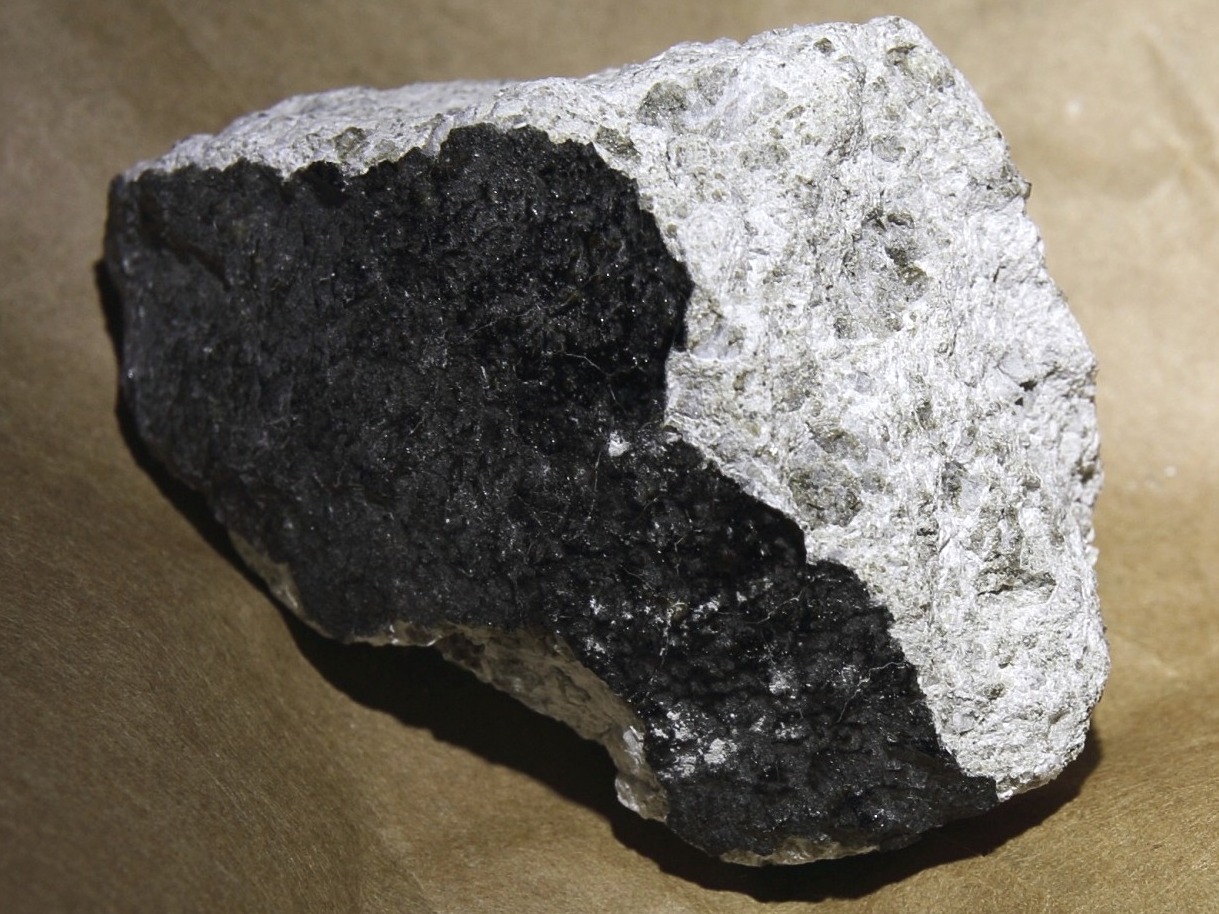
“The mechanical behavior of lunar materials holds significant engineering implications for lunar base construction and deep space exploration. However, the unique space weathering environment and complex regolith microstructure compromise the credibility of mechanical studies by terrestrial analogs, and the scarcity of returned lunar soil samples precludes repetitive macroscale laboratory testing. In this study, minimally destructive techniques—mineral identification and nanoindentation tests—were integrated to measure the microscale elastic modulus (E) and hardness (H) of Chang’e-5 lunar soil (5–054CE), lunar meteorite (NWA 4734), and terrestrial analog (CR-1). Results demonstrated notable variations in E (87.1–173.2 GPa) and H (6.89–9.67 GPa) among 5–054CE minerals, with olivine showing the highest E* and pyroxene showing the highest H. Differential mechanical responses were also observed for identical mineral group from different samples, where 5–054CE exhibited intermediate values versus NWA 4734 and CR-1. These discrepancies probably stem from their weathering processes that lunar meteorite experienced more intense impacts than lunar soil, followed by terrestrial rock. This suggests that the significant influence of weathering processes on mechanical properties extends down to the microscale, inherently altering macroscale mechanical behavior. By characterizing the micromechanical properties of lunar soil, this study provides foundational data for lunar engineering design while advancing our understanding of mechanical property evolution through space weathering processes.”