Nakhlite Emplacement as Constrained by X-Ray Computed Tomography and 3D Quantitative Textural and Petrofabric AnalysesOPEN ACCESS
Sierra R. Ramsey, Piper Irvin, Arya Udry, Scott A. Eckley, Amanda Ostwald, Richard A. Ketcham
JGR Planets, First published: 30 November 2025
LINK (OPEN ACCESS)
PDF (OPEN ACCESS)
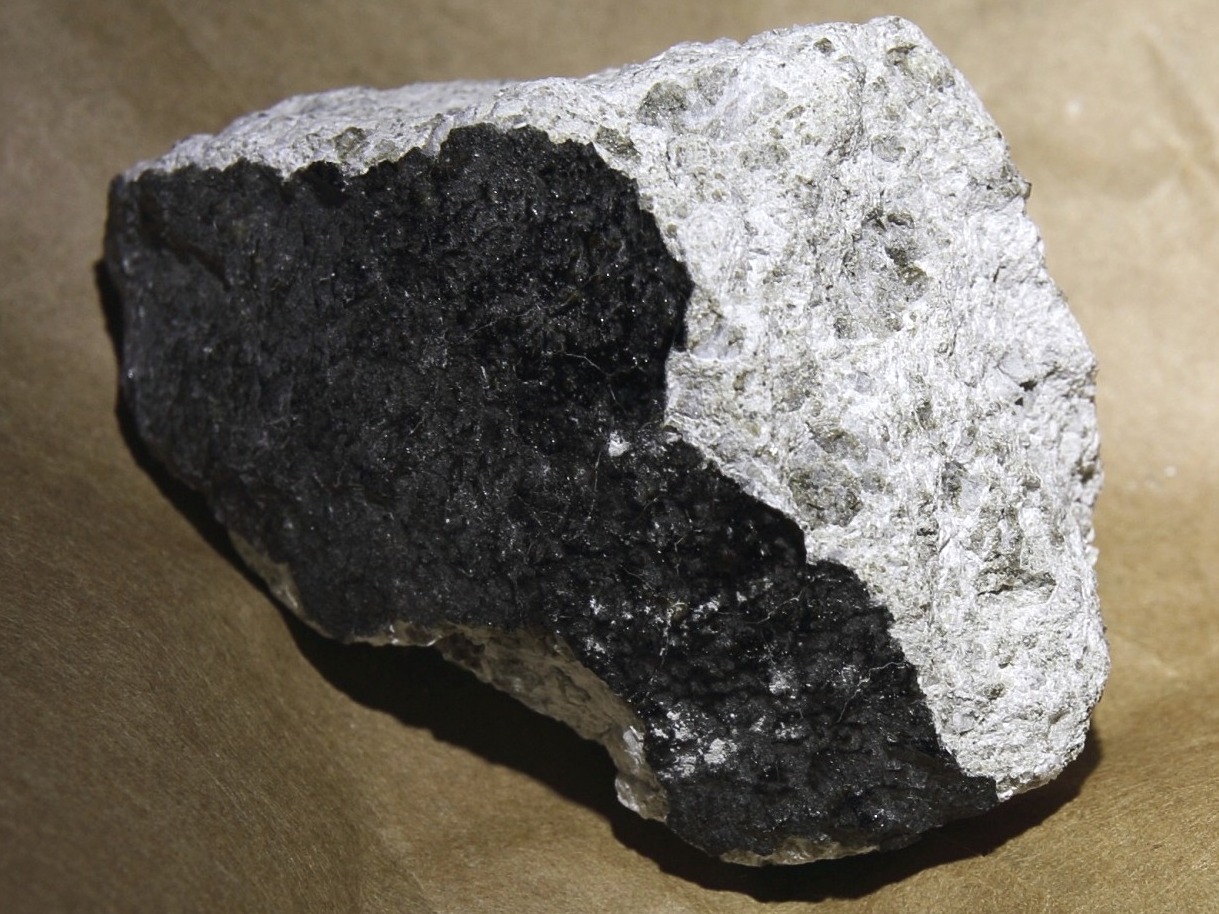
“Nakhlites, clinopyroxene-rich rocks, are the largest single-origin suite of samples from Mars. Despite extensive study to discern their petrogenetic histories, nakhlite emplacement mechanisms and environments are not well-constrained, and it is unknown whether they represent intrusive or extrusive igneous rocks, or a combination. Here, we use X-ray computed microtomography (XCT) and three-dimensional (3D) quantitative textural analyses (e.g., 2D–3D modal abundances, crystal size distributions [CSDs], and petrofabrics) to place additional constraints on nakhlite formation and emplacement. Modal abundances between and within the nakhlites are variable on both a 2D and 3D basis, highlighting the significance of XCT and 3D analyses when studying these samples. All nakhlites in our study have similar crystallization conditions and histories based on 3D CSDs. Cumulus phases (=olivine and pyroxene) crystallized from magma(s) with high nucleation densities, likely related to effective undercooling, and subsequently underwent a period of magma storage. The CSD profiles record evidence for magma recharge events. Pyroxene long-axis orientations in the nakhlites studied here exhibit a magmatic foliation, which likely developed during crystal settling and accumulation in low-to-no flow settings, such as magma chambers, shallow intrusions (e.g., sills and dikes), lava lake or pond infills, or thick lava flows. We also show that the pyroxenitic layer of Theo’s Flow (Canada) may not be an appropriate terrestrial analog for the nakhlites due to differences in emplacement mechanisms and conditions. Our findings suggest that lava flows may be less prevalent in the martian meteorite collection, while intrusive bodies and rocks may be more common than initially thought.”