Description and modeling of the Jiddat al Harasis 091 L5 strewn fieldOPEN ACCESS
Karl Wimmer, Edwin Gnos, Beda Hofmann, Sandro Boschetti, Jan Walbrecker, Hansruedi Maurer
MAPS, First published: 02 December 2025
LINK (OPEN ACCESS)
PDF (OPEN ACCESS)
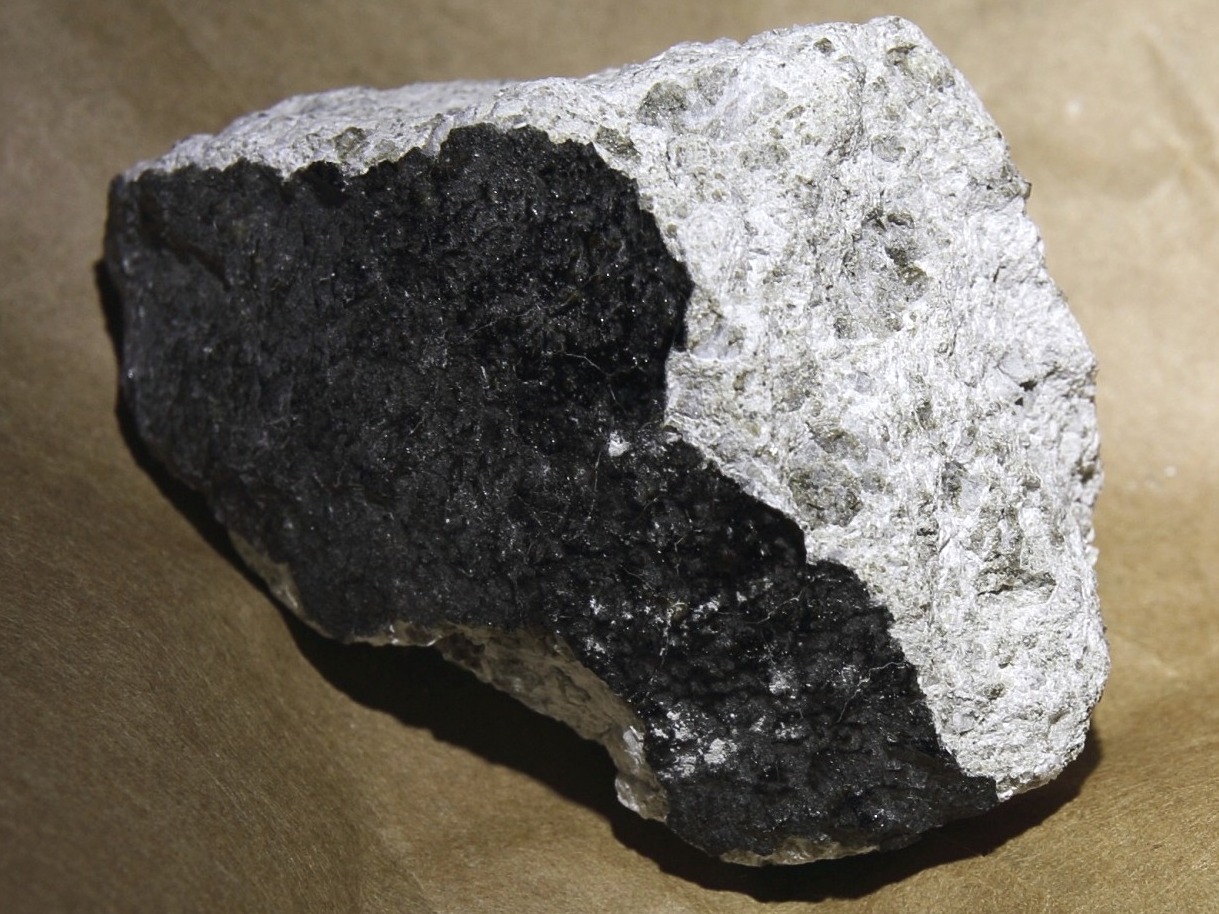
“With a size of 51.2 × 7.2 km, the 10.9 ± 1.7 ka old Jiddat al Harasis 091 L5 chondrite strewn field is the largest known in Oman. It consists of more than 700 meteorites with a total mass of >4.5 tons from which the largest six stones of >100 kg to 1.5 tons make up two thirds of the total mass. Small stones are underrepresented, consistent with a fracturing behavior of a meteor with low shock level. Modeling yields that a bolide with 28 ± 12 tons (115 ± 15 cm radius) entered the atmosphere at a shallow angle of 22° ± 2° with a velocity of about 16 kms−1. For ~16 s, it produced a spectacular meteor along a luminous path of ~200 km length. Mass mixing within the rather straight and narrow strewn field indicates a sequence of multiple fragmentations from below 50 km down to 7 km altitude. This can be resolved adopting a wind profile from nowadays winter season, as the weather patterns with alternating Monsoon and Passat winds in the region are rather well known and repeatable since the last ice age. The largest masses with 1447 and 842 kg, respectively, produced impact breccia consisting of limestone and meteorite fragments. According to the model, the biggest mass hit the ground at a velocity of 175 ms−1 and released an impact energy of 22 MJ, corresponding to 5.3 kg TNT. This may have produced an impact crater of ~1 m diameter which, however, is not preserved. Breccia found below a much smaller mass of 68 kg deserves an explanation beyond impact energy.”