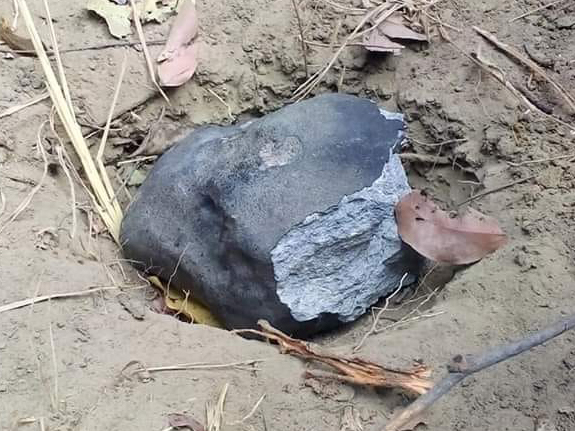
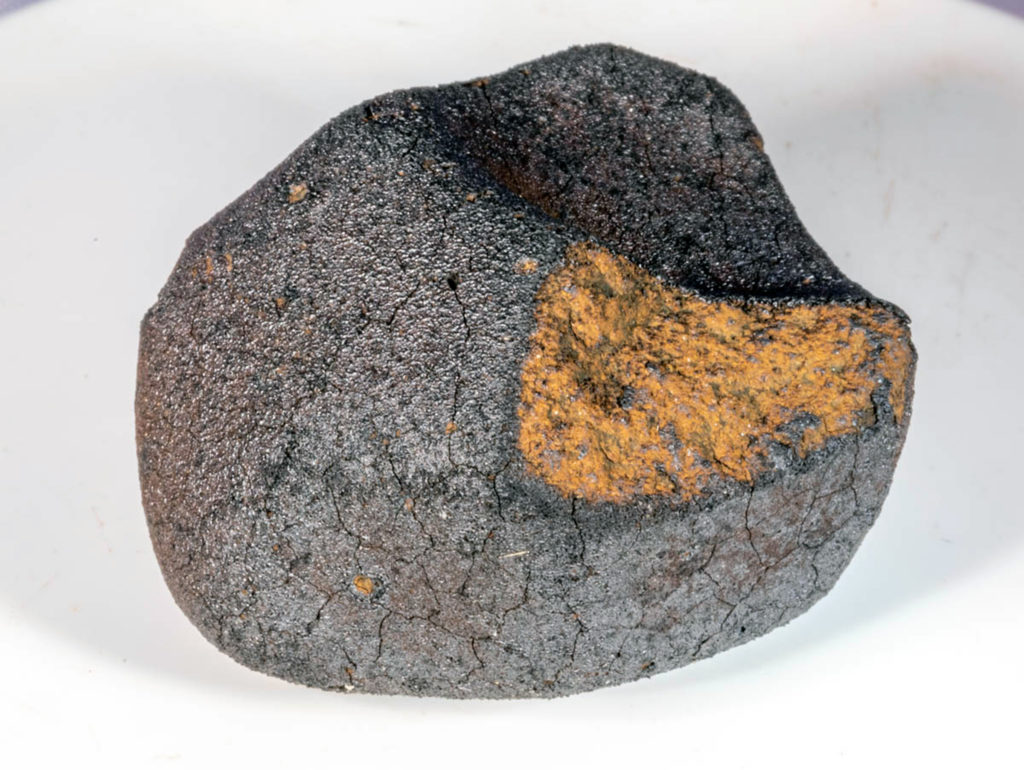
Nanoscale chemistry of magnetite framboids in the tarda meteorite: a proxy for fluid chemistry
B.J.K. Wilson, G.A. Arcuri, T. Casagrande, C.M. Andrei, B. Langelier, K.T. Tait, M.G. Daly
Geochimica et Cosmochimica Acta, In Press, Journal Pre-proof, Available online 23 September 2026
“Tarda is a C2-ungrouped carbonaceous chondrite that preserves a record of low-temperature aqueous alteration on its parent asteroid. While the original fluid has disappeared, constraining its composition is essential for understanding the chemical environment that influenced both secondary mineral formation and prebiotic organic chemistry. Magnetite framboids are an abundant aqueous alteration product in Tarda and likely recorded some of the chemical species from its mother solution, entrained within the framboidal magnetite grain boundaries. To investigate this, we conducted a nanoscale study on five magnetite framboids using transmission electron microscopy, energy dispersive x-ray spectroscopy, and atom probe tomography. Magnetite framboids in Tarda exhibit a wide range of textures, crystallite sizes, and packing arrangements, reflecting a progressive sequence of discrete nucleation and growth events likely occurring in isolated water droplets. Energy dispersive x-ray spectroscopy analysis of four interacting framboids reveals trace element enrichments of mostly Ti and Si along ∼5 nm thick grain boundaries, with the strongest enrichments observed in the framboids with smaller crystallites, which likely precipitated at the beginning and end of the local precipitation sequence. Using atom probe tomography, we captured a ∼5 nm thick planar feature enriched in trace abundances of Na, Mg, Ca, Mn, and Si, likely corresponding to a magnetite boundary. These findings suggest that magnetite framboids in Tarda formed from a generally alkaline fluid that contained a diverse suite of cations and evolved as water–rock interaction progressed. While the fluid composition inferred here resembles alkaline, metal-containing fluids known to promote organic synthesis on Earth, experimental work is needed to determine how such conditions could influence complex organic synthesis in asteroid environments.”