Dehydroxylate I formation from the thermal decomposition of serpentine on c-complex asteroids: similarities to carlosturaniteOPEN ACCESS
Laura E. Jenkins, Ashley J. King, Martin R. Lee, Luke Daly, Konstantin Ignatyev, Cameron J. Floyd & Pierre-Etienne M. C. Martin
Earth, Planets and Space , Volume 77, article number 191, Published: 09 December 2025
LINK (OPEN ACCESS)
PDF (OPEN ACCESS)
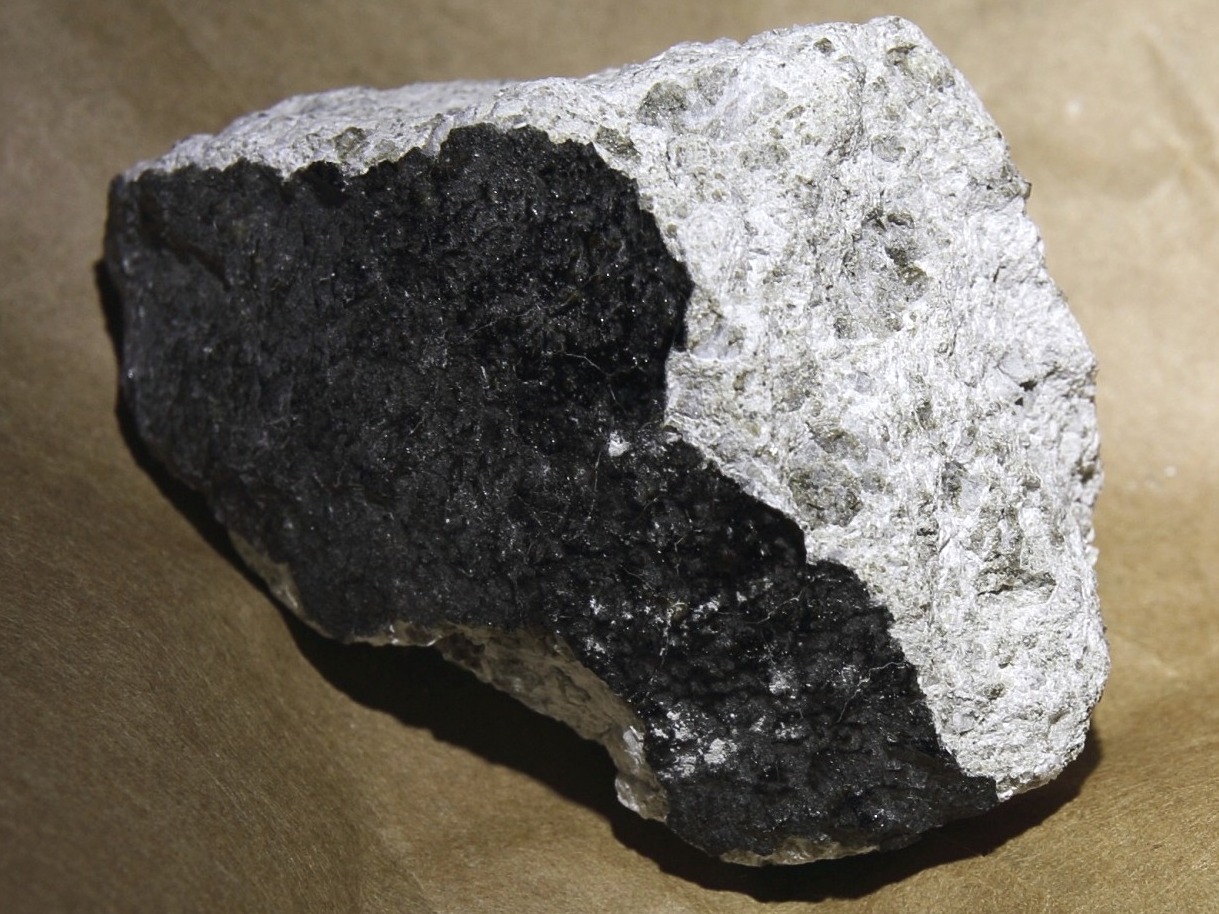
“Dehydroxylate I, a product of the thermal decomposition of serpentine, has been observed in heated carbonaceous chondrite meteorites. To better understand the occurrence of dehydroxylate I on carbonaceous asteroids, we have experimentally heated the carbonaceous chondrite Murchison from 400 to 550 °C at 25°C temperature steps, during which in situ micro X-ray diffraction (µXRD) patterns were collected using synchrotron radiation. µXRD was utilized such that the dehydroxylate I’s diffraction pattern could be isolated and characterized. This was successfully achieved, with the phase being detected at 400 °C. A diffraction pattern for dehydroxylate I was isolated at 525 °C, where it displayed crystallographic similarities to the mineral carlosturanite. We propose dehydroxylate I is produced when gaps form in serpentine’s tetrahedral sheet during its breakdown, which is consistent with previous studies on serpentine decomposition. The d-spacings for dehydroxylate I described here can be used to better identify it in natural and experimentally heated terrestrial and meteoritic samples.”