New insights into Erg Chech 002 analogues in the main belt from near-infrared spectroscopyOPEN ACCESS
M. Galinier, C. Avdellidou, M. Delbo, L. Galluccio
Icarus, In Press, Journal Pre-proof, Available online 23 March 2026
“Highlights
- Near-infrared observations with the IRTF of 20 previously identified potential analogues of Erg Chech 002, an andesitic meteorite that shows unique spectral features thought to have formed in the primitive crust of an early accreted and differentiated planetesimal.
- None of the observed asteroids match with the meteorite.
- Literature visible and near-infrared spectra of asteroids (10537) 1991 RY16 and (14390) 1990 QP10 match well with Erg Chech 002, they could belong to a new spectral class of andesitic objects along with asteroid (7472) Kumakiri.”
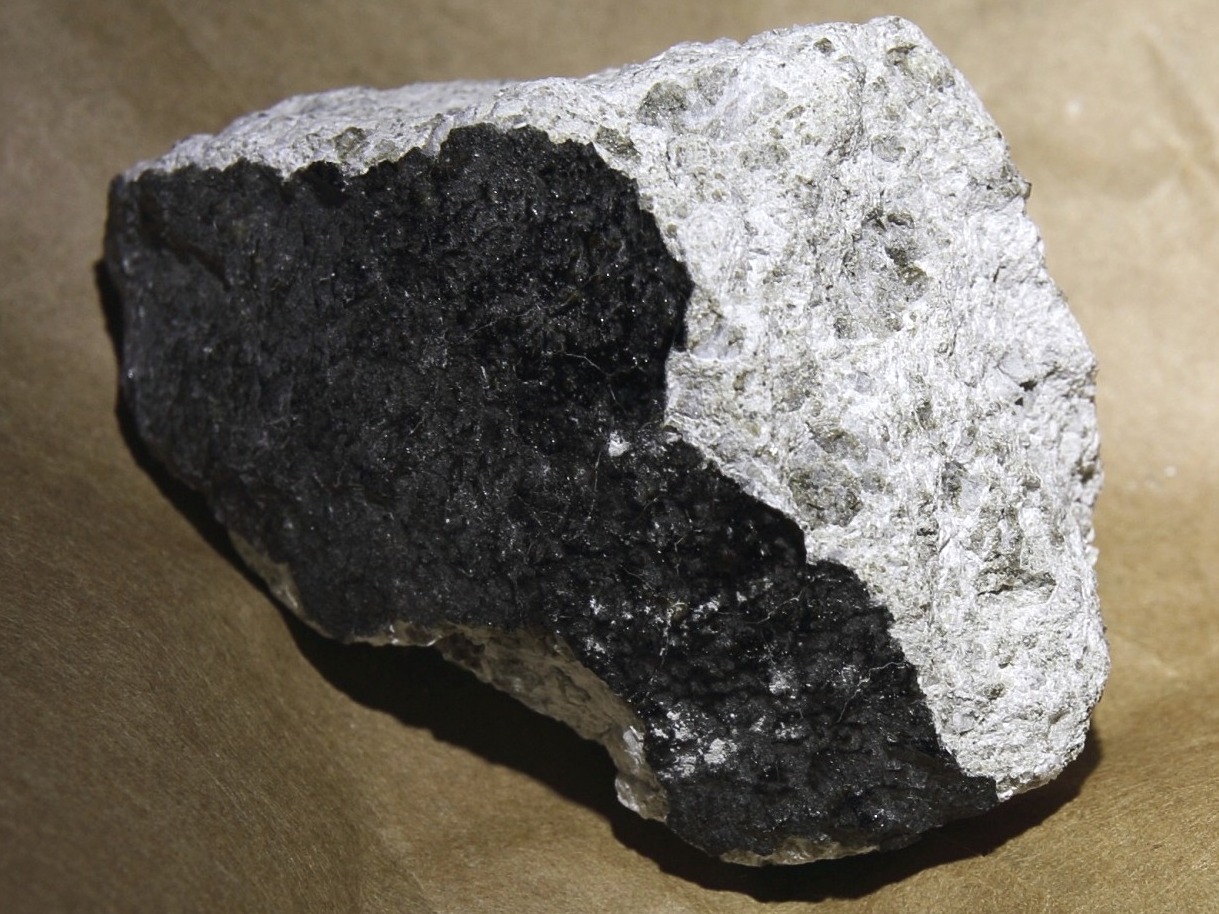
“Erg Chech 002 is an andesitic meteorite that formed early in the Solar System’s history, and that is thought to have been formed in the primitive crust of an early accreted and differentiated planetesimal. It shows unique spectral features, and no known asteroid spectral type was initially found to match with its compositional type. In the literature, asteroids (10537) 1991 RY16, (7472) Kumakiri and (14390) 1990 QP10 were found to show peculiar spectra, and were not classified in any known existing spectral class. These objects were hypothesised as well to be fragments of differentiated planetesimals. In a previous study, the Gaia Data Release 3 dataset of visible reflectance spectra of Solar System Objects was exploited to search for potential analogues of Erg Chech 002 in the main belt. As a result, 142 asteroids were found to potentially match this meteorite. In this work, we present NASA’s IRTF near-infrared observations of 20 main belt asteroids found as potential analogues of Erg Chech 002. We classified these asteroids based on their visible and near-infrared spectra, then studied and compared their diagnostic spectral features (band centres and band area ratios) with those of the laboratory spectra of Erg Chech 002. We classified 16 of the 20 observed asteroids as V-types, one as S-complex and one as A-type, and conclude that none of the observed objects match with Erg Chech 002. In addition, we show that asteroids (10537) 1991 RY16 and (14390) 1990 QP10 are good spectral matches to Erg Chech 002 based on the study of their diagnostic spectral features. Asteroid (7472) Kumakiri could match a more olivine-rich EC 002-like material, and cannot be completely ruled out as a match of the meteorite. This possible link between the meteorite and these asteroids is consistent with the theories regarding their formation, and these asteroids could be part of a new spectral class of andesitic bodies in the main belt.”