Spectral insights into carbonaceous chondrites origins: Correlating main-Belt asteroids with CV chondrites
A.P. Singh, S.S. Pillai, K.K. Marhas, K.V.N.G. Vikram, S. Bhattacharya
Icarus, In Press, Journal Pre-proof, Available online 11 March 2026
“Highlights
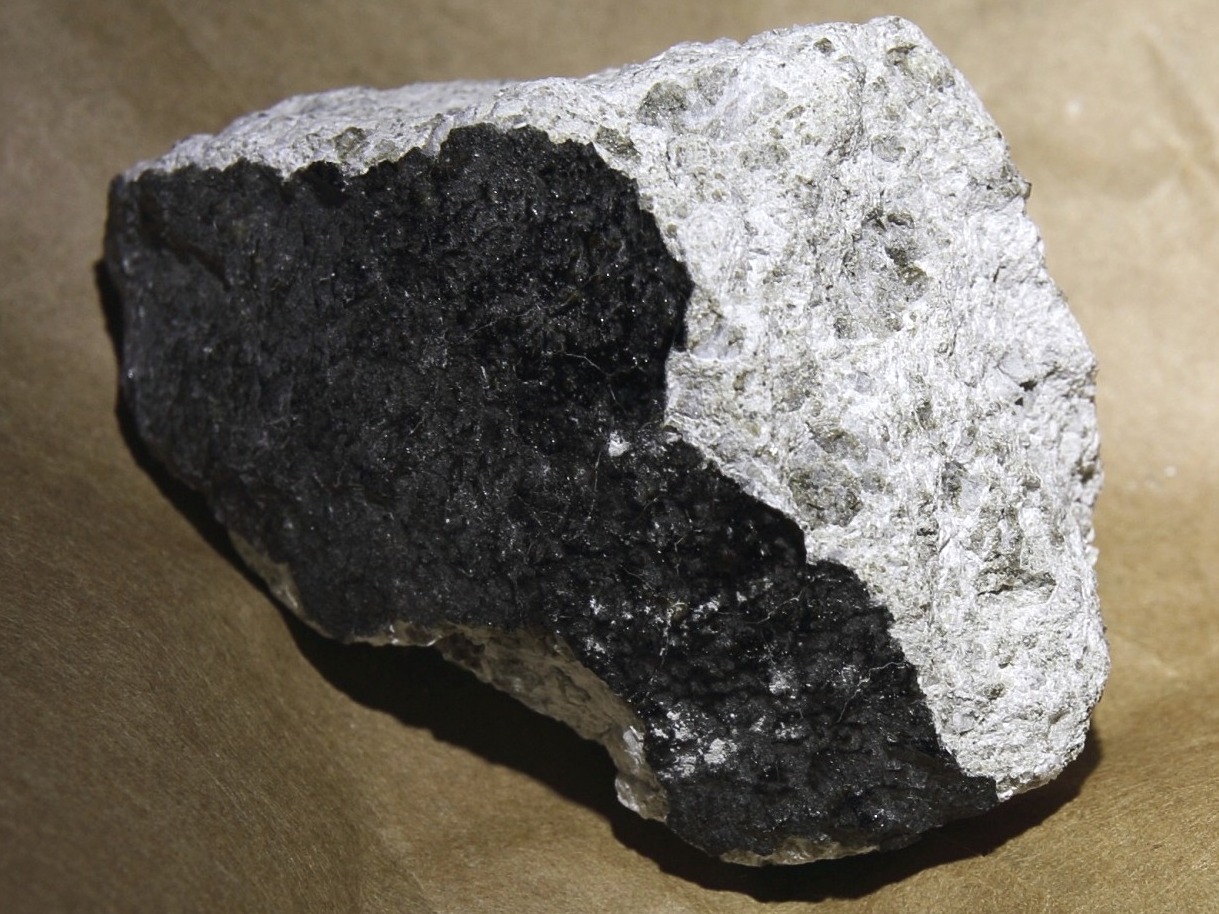
- This study investigates the mid-infrared spectral correlation between four Carbonaceous Vigarano (CV) chondrites (Allende, Grosnaja, Efremovka and Leoville) and ten asteroids of K, Xk, L. & Ld types (Bus- Binzel taxonomy).
- A novel statistical methodology, integrating four distinct similarity assessment techniques (normalised local change method, covariance, Euclidean distance, and cosine similarity), was employed to determine the spectral similarity coefficient (Z) between the CV meteorites and the chosen asteroids.
- The L-type (Bus-Binzel taxonomy), exhibits higher similarity to the CVs in the MIR spectral region in our study”
“This study investigates the mid-infrared spectral correlation between four Carbonaceous Vigarano (CV) chondrites (Allende, Grosnaja, Efremovka and Leoville) and ten asteroids of Xk, L, & Ld types (Bus- Binzel taxonomy). It leverages the mid-infrared region of the electromagnetic spectrum, which is characterised by prominent peaks indicative of crystalline bond vibrations of silicates and ionic oxides. A novel statistical methodology, integrating four distinct similarity assessment techniques (normalised local change method, covariance, Euclidean distance, and cosine similarity), was employed to determine the spectral similarity coefficient (Z) between the CV chondrites and the chosen asteroids. The highest similarity is observed between the asteroids of L type, i.e., Cantillo et al. (2023) (Cantillo et al., 2023) Victoria, (1284) Kassandra, and (1702) Latvia and the CV chondrites studied here, followed by the Xk type (114) Kassandra. The Z value between Ld asteroids (234) Barbara, (269) Justitia and CVs exhibit low similarities. This study establishes a framework for the statistical comparison of mid-infrared spectra of meteorites and asteroids by accounting for compositional variability within CV chondrites, thereby providing a basis for more detailed investigations into the parent-body association of these meteorites.”