The effect of terrestrial weathering on the mineralogy and petrologic (sub)types of CM chondrites explored by kinetic modeling and laboratory experimentsOPEN ACCESS
Robin L. Haller, Martin R. Lee, Mark E. Hodson
MAPS, Version of Record online: 15 April 2026
LINK (OPEN ACCESS)
PDF (OPEN ACCESS)
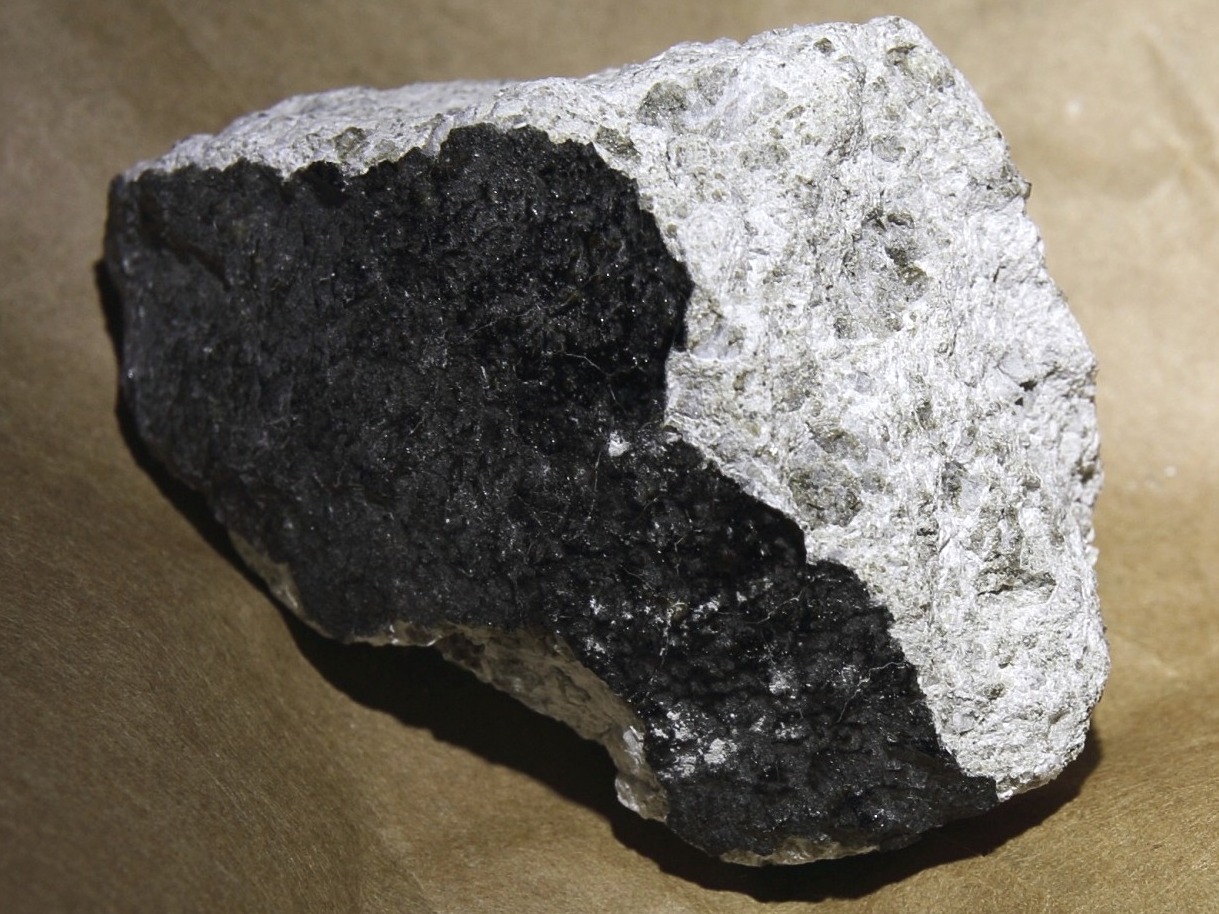
“Terrestrial weathering alters the chemical and isotopic composition, and mineralogy, of meteorites; its effects on ordinary chondrites are well-studied, but relatively little is known about the susceptibility of carbonaceous chondrites. We combined laboratory experiments, whereby Chwichiya 002 (C3-ung find), Murchison (CM2 fall) and Kolang (CM1/2 fall) were exposed to artificial rainwater for 30–180 days, with kinetic models to examine the effects of different weathering timespans and environments on mineralogy and petrologic (sub)type. Leachates derived from the Murchison and Kolang experiments were rich in S, Ca, Na, Cl, K, and Mg with less abundant Si and Fe. These results suggest that calcite and pyrrhotite, together with unknown Na-K-Cl bearing minerals, are particularly susceptible to terrestrial alteration. Chwichiya 002 was less reactive than anticipated, possibly due to earlier hot desert weathering. Models predict that primitive chondrites with amorphous material, including Chwichiya 002, oxidize within days when exposed to water, particularly in warm environments (e.g., hot deserts). Terrestrial weathering is expected to rapidly lower the petrologic (sub)type of CM3 chondrites, whereas CM2s react more slowly and their petrologic (sub)type does not change significantly.”