Impact-generated Porosity Gradients Controlled Fluid Flow and Aqueous Alteration on the CM Parent BodyOPEN ACCESS
Romy D. Hanna, Richard A. Ketcham, Dave R. Edey, Guillaume Avice, Kelly Miller and Alan Whittington
The Planetary Science Journal, Volume 7, Number 6, published: 3 June 2026
LINK (OPEN ACCESS)
PDF (OPEN ACCESS)
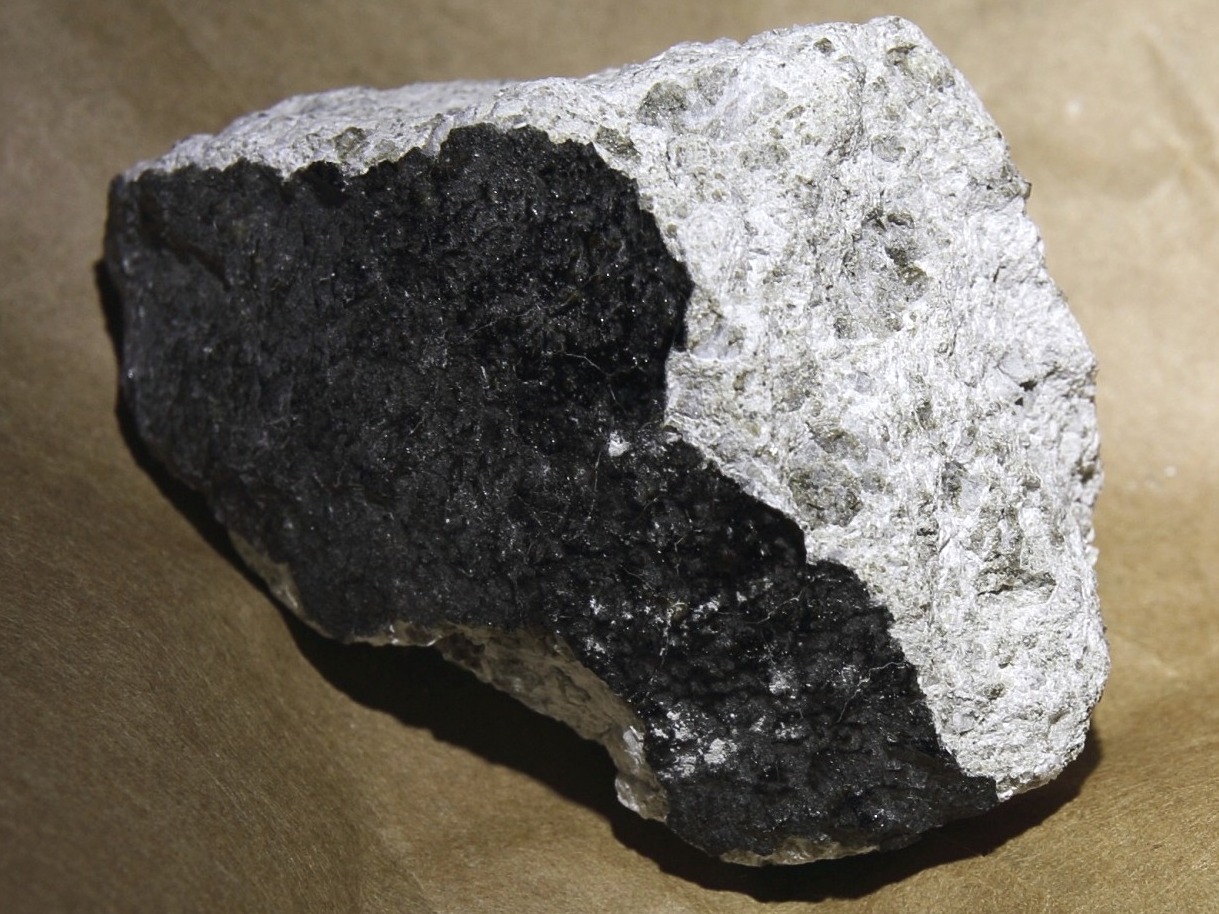
“We investigated the relationship between microporosity, impact deformation, and aqueous alteration in the CM chondrite Murchison using high-resolution (1.86 μm/voxel) X-ray computed tomography (XCT) combined with a pressurized xenon gas infiltration technique (Xe-XCT). Fine-grained rims (FGRs) around chondrules generally have higher microporosity than the surrounding matrix but display systematic porosity reductions in the direction of impact. This porosity reduction signature is asymmetric, with the lowest-porosity FGR regions clustering along a direction consistent with the inferred impact vector. As predicted by numerical simulations of impacts into bimodal (solid chondrule and porous matrix) material, higher-porosity regions occur on the inferred lee (protected) side of chondrules relative to the impact direction. Elemental mapping using scanning electron microscopy and energy-dispersive X-ray spectroscopy reveals that microporosity is moderately positively correlated with Mg/Fe ratio and strongly negatively correlated with S content, and only weakly negatively correlated with Ca abundance. These relationships indicate that impact-generated microporosity gradients influenced post-impact fluid flow at scales of ∼25–600 μm, promoting serpentinization and tochilinite breakdown in high-porosity regions. The weaker porosity–carbonate correlation suggests that most carbonates formed prior to impact. Our findings are consistent with numerical models predicting limited (tens to hundreds of microns scale) open-system fluid flow in low-permeability CM chondrites and demonstrate that impact-driven microporosity modification played a key role in controlling subsequent aqueous alteration on the CM parent body.”