Mechanisms of Vesicle Evolution in the Fusion Crust of the Martian Meteorite NWA 10645
Chunjie Cao, Duojun Wang, Kenan Han, Kewei Shen, Kexuan Zhang
JGR Planets, First Published: 16 July 2026
“Key Points
- Volatiles released from multiple reservoirs promoted vesicle nucleation in the fusion crust
- The post-nucleation growth stages of fusion crust encompass early growth, aggregation, coalescence, and critical rupture
- Classical nucleation theory estimates the minimum vesicle nucleation radius in the fusion crust are estimated at tens of nanometers”
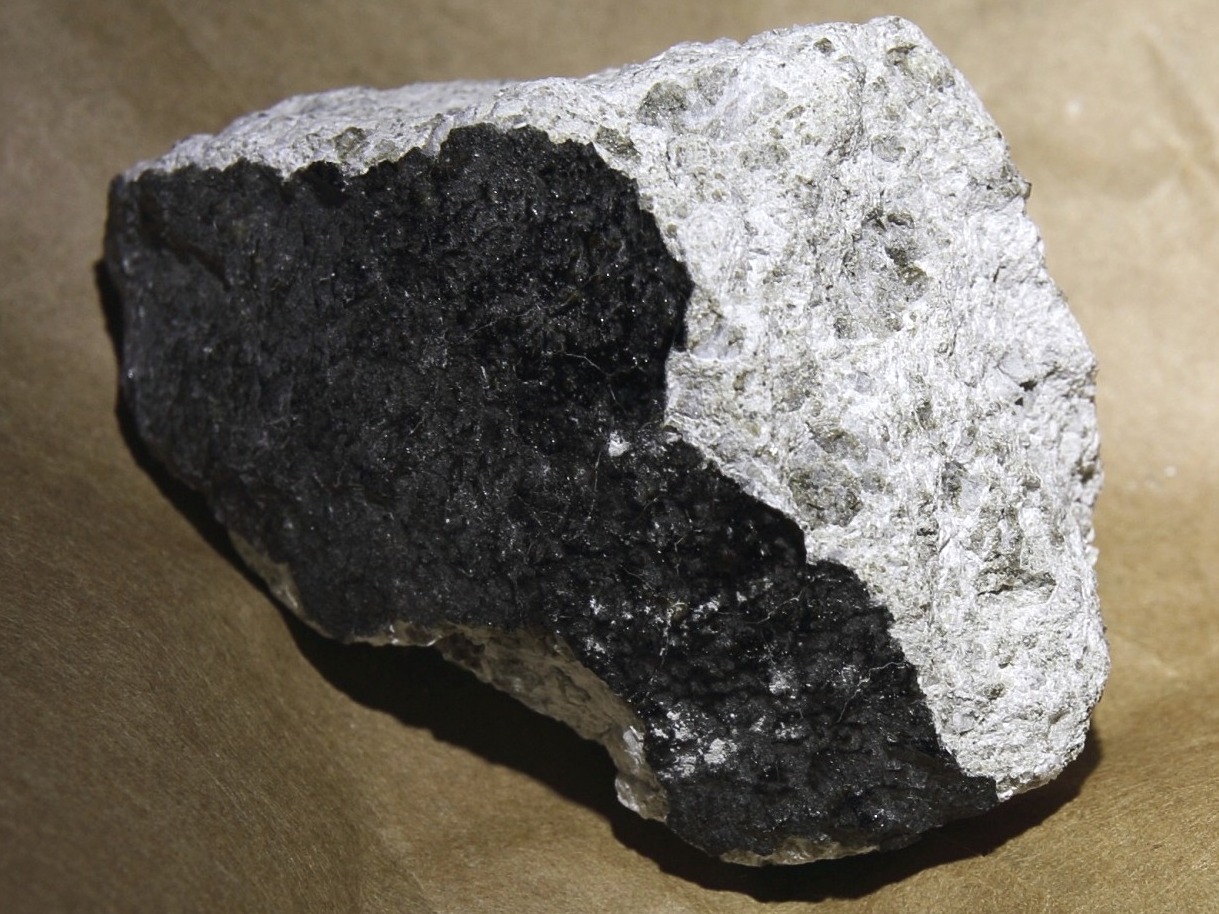
“The vesicles of meteorite fusion crusts offer a key window into transient processes during atmospheric entry, yet their formation mechanisms remain poorly constrained. In this study, we investigated the morphology, mineralogical composition, and evolutionary mechanisms of vesicles in the fusion crust and primary lithology of the meteorite NWA 10645 using micro-CT as the primary technique, complemented by SEM–EDS petrography. Vesicle nucleation in the fusion crust was likely driven by volatile supersaturation generated from multiple reservoirs, including apatite, pyroxene, melt inclusions, and mesostasis. After nucleation triggered by apatite devolatilization, isolated vesicles continued to grow and underwent three evolutionary stages: early growth, aggregation, coalescence, and critical rupture. Micro-CT 3D imaging shows that adjacent nucleated vesicles rapidly aggregated within a short time, forming bead-like alignments, then gradually coalesced into larger pores, and evolved into ellipsoidal shapes due to inertial tensile forces generated in the melt during high-velocity atmospheric entry, while near-surface vesicles approached critical rupture. Furthermore, Classical Nucleation Theory (CNT) is applied for the first time to predict a minimum nucleation radius of 23–70 nm, significantly smaller than the vesicle sizes resolved by micro-CT and SEM. This result indicates that vesicle nucleation occurs at a transient nanoscale stage. Diffusion-length estimates further suggest that volatile transport in the melt could support subsequent vesicle growth to experimentally observable micron-scale sizes.”