Hydrogen in nominally anhydrous minerals from equilibrated ordinary chondrites and implications for the water budget of their parent bodies
S. Desikamani, L.D. Peterson, M.E. Newcombe, C.M.O’D. Alexander, J. Wang, R.D. Ash, S.G. Nielsen, P.M. Piccoli, E.S. Bullock
Geochimica et Cosmochimica Acta, In Press, Journal Pre-proof, Available online 25 August 2026
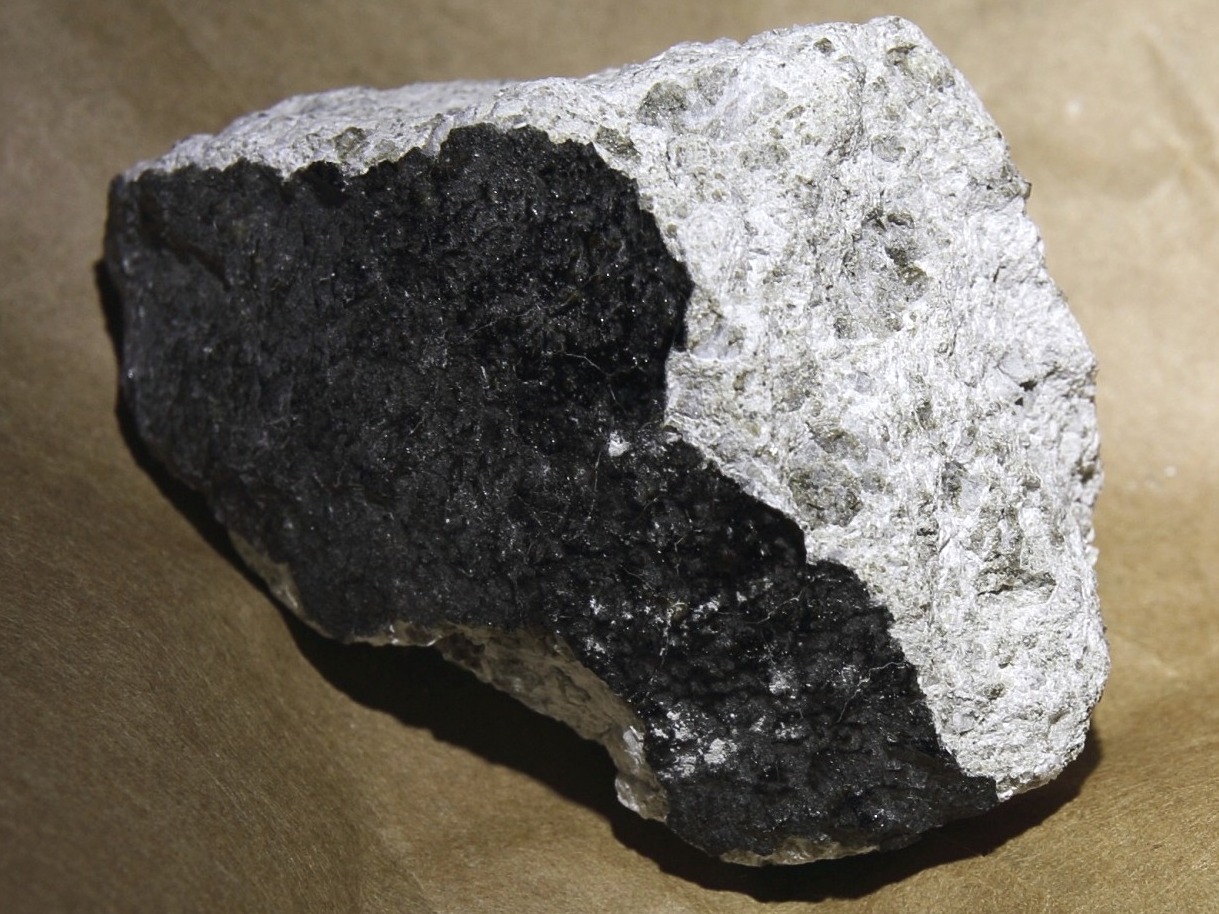
“Nucleosynthetic isotope signatures indicate that the Earth is predominantly made from inner solar system non-carbonaceous (NC) materials. However, a major uncertainty in models of water addition to the proto-Earth is the extent to which H (calculated in this study as µg/g H2O, but present as H-bearing species) in nominally anhydrous minerals (NAMs) from NC materials could contribute to the bulk Earth water budget. The preserved water concentration of NC meteorite NAMs may also shape our understanding of processes occurring in the solar protoplanetary disk (e.g., implantation of H on the surfaces of NAM grains) and in planetesimals (e.g., metamorphism in chondrite parent bodies). Reported water contents for NAMs from the ordinary chondrites (OCs), the dominant NC material falling to Earth today, range between 100-104 µg/g H2O. In order to better constrain the potential contribution of ordinary chondrites to the Earth’s water budget we have measured water concentrations in NAMs from eight equilibrated OCs, six of which have not previously been investigated for water, and two of which (Chelyabinsk and Bensour) were previously measured in other laboratories. We find that olivine and low-Ca pyroxene from equilibrated OCs contain less than ∼ 10 µg/g H2O. Based on these measurements, the water content of the NAM fraction of equilibrated OCs is < 10 µg/g H2O (a factor of ∼ 60–120 lower than prior estimates). Combining these constraints of equilibrated OC NAM water contents with published measurements of NAMs and glassy mesostases from unequilibrated OCs, we estimate that NAMs and glass in OC parent bodies could have delivered no more than ∼ 0.2 ocean masses of water to Earth (∼1% of an assumed total water budget of 18 ocean masses). Additional water could have been delivered from phyllosilicates and organics in the most primitive OC material that is not considered in our modeling. The difference in NAM water concentrations obtained here relative to some prior studies may be rooted in analytical artifacts associated with their nanoscale secondary ion mass spectrometric measurements.”