What do acoustic signatures reveal about asteroid thermal breakdown processes?
Nicole Latsia, Georgios Tsirvoulis, Erika Kaufmann, Heikki Suhonen, Mikael Granvik, Johan Borg, Axel Hagermann
Icarus, Available online 2 October 2026
“Highlights
- Real-time fracture monitoring of meteorites during thermal cycling.
- Carbonaceous chondrites show more sustained microcracking than ordinary chondrites.
- L3 Aba Panu and LL5 Chelyabinsk produce limited AE activity and reach early saturation.
- Thermal fatigue damage evolves toward saturation consistent with stress-memory behaviour.”
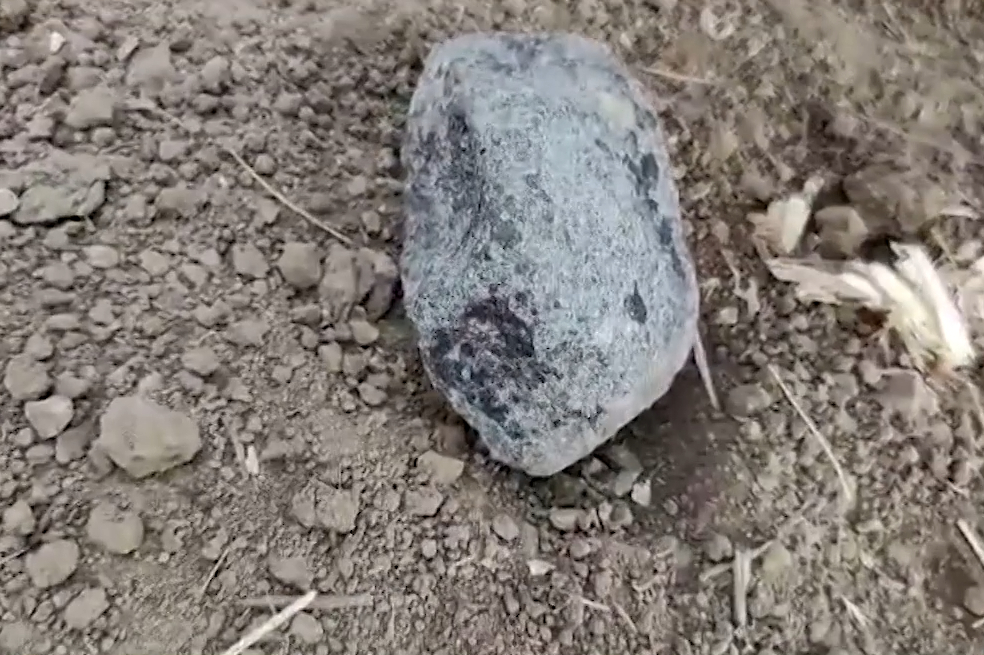
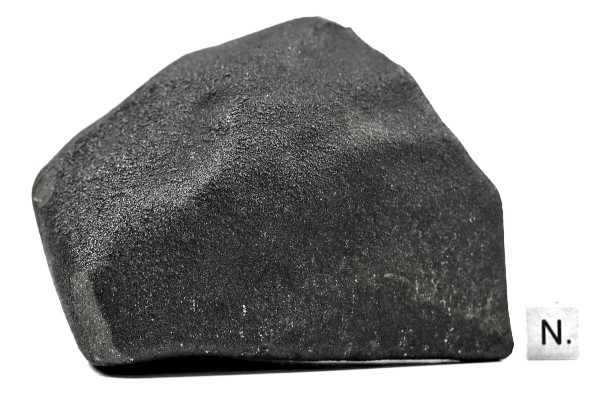
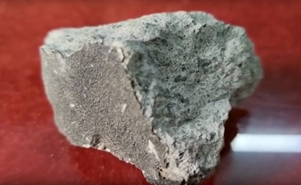
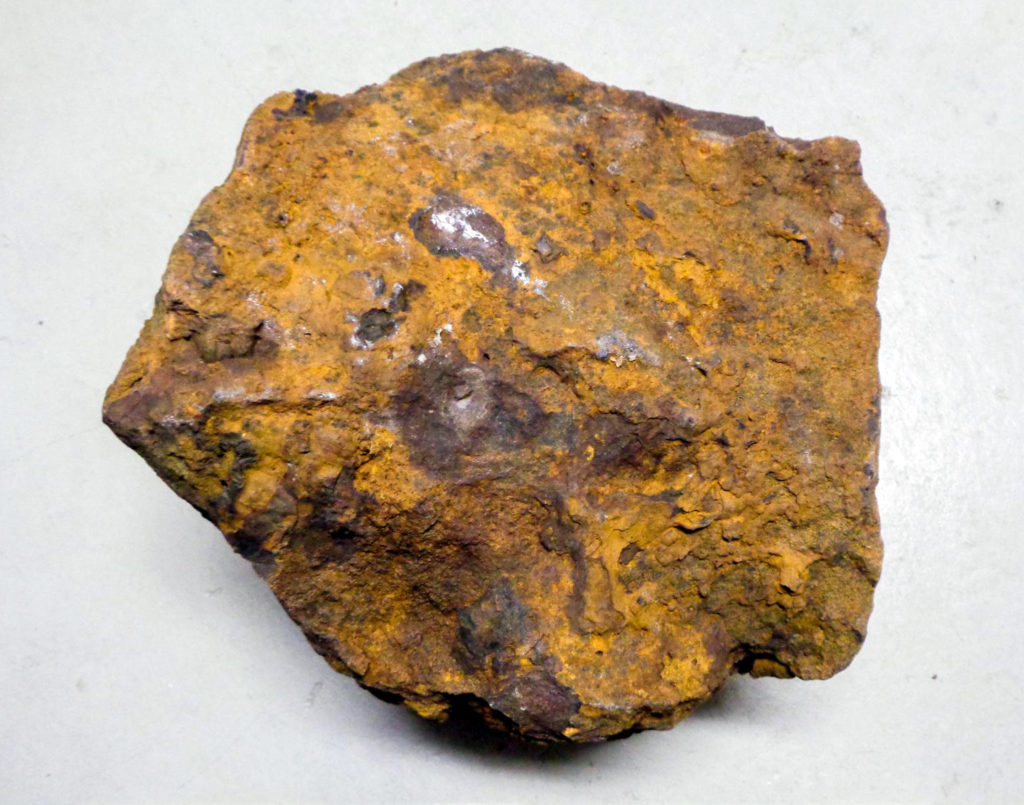
“Regolith blocks on asteroid surfaces evolve through several processes, including thermal fatigue: repeated diurnal temperature variations generate thermal stresses and can contribute to progressive rock breakdown. However, the long-term efficiency of thermally–induced fracturing, and its dependence on the material properties of asteroid rocks, remains uncertain. Here we experimentally investigate thermal fatigue in asteroid analogues. We use the ordinary chondrites L3 Aba Panu and LL5 Chelyabinsk and compare their response with CM2 Aguas Zarcas, CV3 Allende, and H3–5 Oum Dreyga meteorites. The samples were subjected to 100 thermal cycles of temperature amplitude ΔT = 190 K, while acoustic emission (AE) monitoring was used to detect fracturing in real time. Our results show that meteorite materials do not respond uniformly to the same imposed thermal cycles. Carbonaceous chondrites show more intense AE activity, whereas ordinary chondrites generate fewer detectable fracture events and reach early saturation plateaus. L3 Aba Panu and LL5 Chelyabinsk remain largely quiet during cycling, suggesting limited progressive damage under the applied conditions. Critically, the AE characteristics show that thermal fatigue damage does not accumulate continuously, but evolves toward material-dependent saturation regimes consistent with stress memory behaviour. AE signal analysis suggests that microcracking is the dominant fracturing process in carbonaceous chondrites, whereas H3–5 activity appears to favor larger fracture events. If these laboratory trends are applicable to their respective parent asteroid materials, thermal fatigue should contribute differently to regolith production on carbonaceous and ordinary chondrite asteroid surfaces, rather than acting as a uniform process across all small bodies.”