Constraining the structure and composition of Theia and implications for its origin
Zixian Shi, Zhensheng Wang, Renguang Zuo, Shijie Li, Yiheng Li, Razvan Caracas
Earth and Planetary Science Letters, available online 9 October 2026, Version of Record 9 October 2026
“Highlights
- Improved SPH and mass balance equations constrain Theia to a core mass fraction below ∼6%.
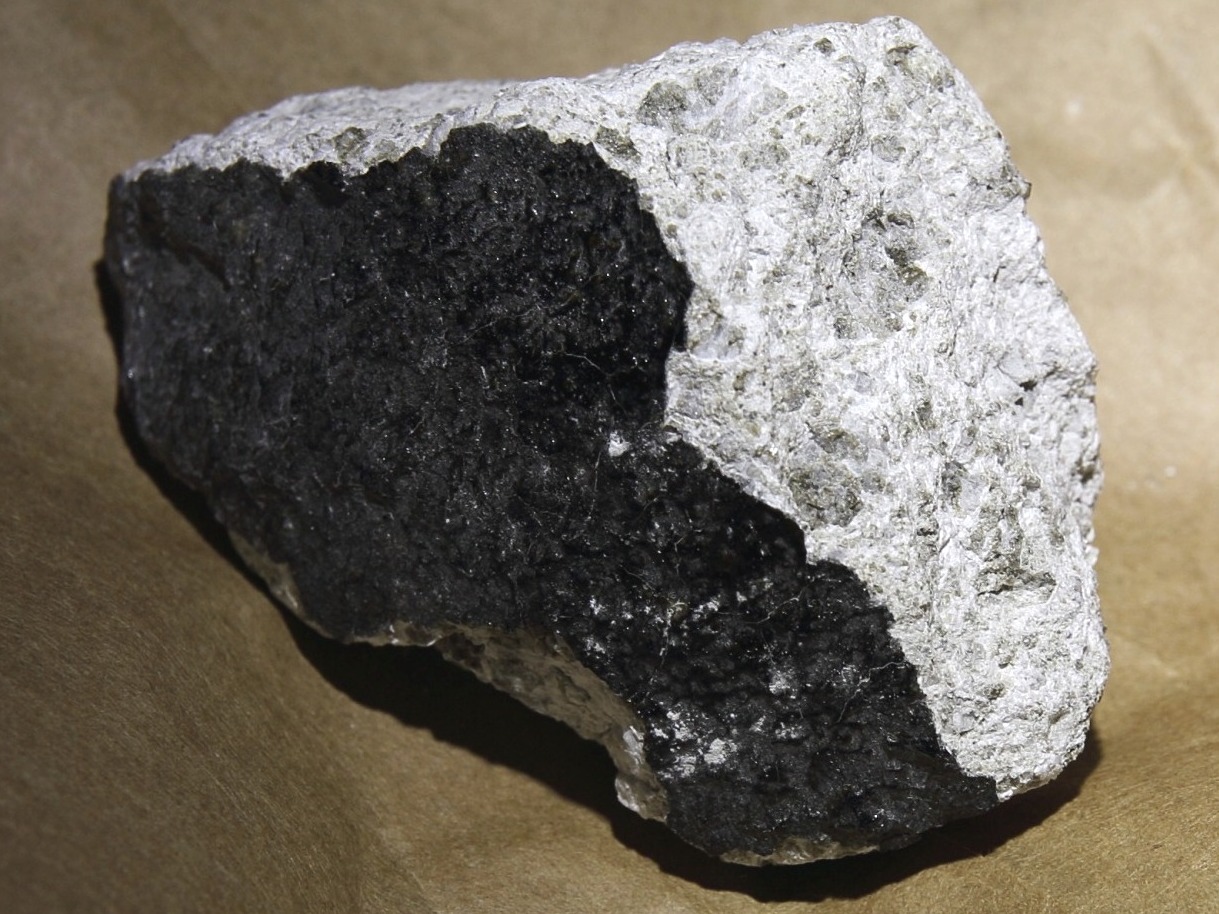
- Theia’s mantle is inferred to have an aubrite-like composition, alleviating the isotope crisis.
- Theia may have formed from a disintegrated inner Solar System planet.”
“The Moon-forming giant impact involved a collision between the proto-Earth and a planetary body named Theia. This resulted in the formation of a protolunar disk, where the Moon formed beyond the Roche limit, and the Earth accreted at the center. As the initial bodies are lost, reconstructing this event presents considerable challenges. Here, we place further constraints on the composition and structure of Theia by integrating improved impact numerical modeling with meteorite data. Our findings indicate that the core mass fraction (CMF) of Theia was below ∼6%, as higher values yield physically untenable mantle compositions and conflict with the Moon’s Fe-poor nature. Chemical composition constraints suggest that Theia’s mantle was composed of differentiated materials similar to aubrites, which may have derived predominantly from the mantle of a disintegrated inner Solar System planet analogous to proto-Mercury. The proto-Earth’s mantle exhibited a composition akin to that of the present-day Earth. Our research mitigates the isotope crisis in the Earth–Moon system and offers a pathway to probe Theia’s mantle mineralogy.”