Comparison of three proton irradiated meteorite samples to better understand the solar wind-based space weathering
D. Rezes, I. Gyollai, S. Biri, K. Fintor, Z. Juhász, R. Rácz, B. Sulik, M. Szabó, Á. Kereszturi
MAPS, Version of Record online: 01 September 2025
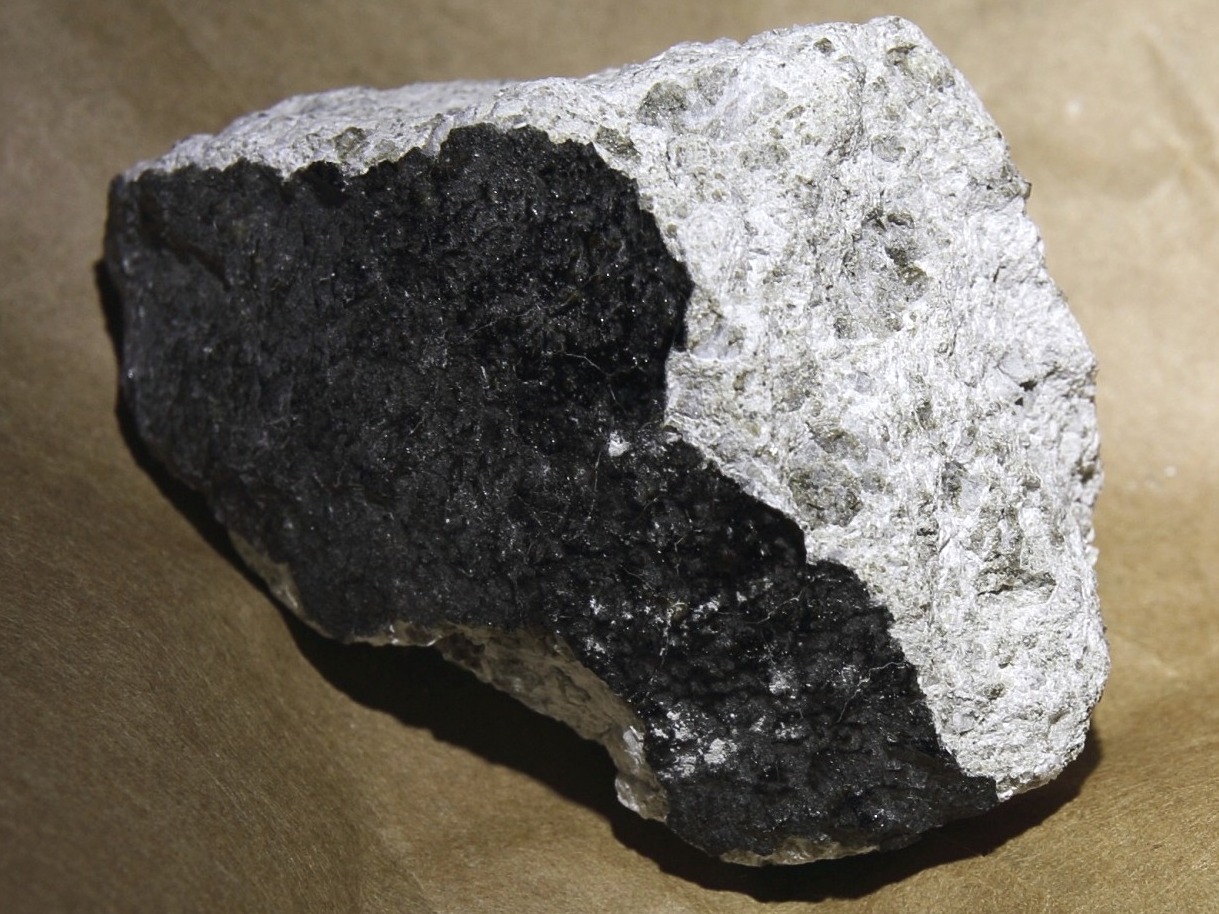
“This paper presents the results of proton irradiation actions of three meteorites which were studied by LV-SEM, Raman spectroscopy, and FTIR spectroscopy methods, both before and after the artificial irradiations. The three samples are the Dhofar (Dho) 007 eucrite, the Northwest Africa (NWA) 4560 LL3.2, and the NWA 5838 H6 chondrite meteorites, which were irradiated by 1 keV average solar wind protons using the ECR ion source at ATOMKI with 1017 and 1019 ions cm−2 fluence values. According to FTIR spectra, the first irradiation induced metastable alteration, and after the second irradiation, crystals organized into more stable phases. In the Dho 007 sample, the pyroxene shows a positive peak shift and FWHM change after the first irradiation, with decreased intensity of spectra. After the second irradiation, the peak position and FWHM decreased but showed an increase in comparison with the state before the irradiation in the FTIR spectra. The minor band near 620 cm−1 disappeared after the irradiations in the FTIR spectra; however, the Raman spectra do not show the disappearance of minor bands. The olivine (in NWA 4560 and NWA 5838) and pyroxene (in Dho 007) showed negative peak shifts indicating escape of Mg2+ ions from the crystal lattice, together with positive peak shifts and increase of FWHM indicating amorphization of the crystal structure. Considering band shapes and intensities, both FTIR and Raman spectra showed decreasing intensity after the first irradiation, with possible metastable alteration. However, the spectra after the second irradiation show a moderate increase in FWHM change, which indicates a change in the crystal lattice. In the FTIR spectra, the minor band at 620 cm−1 disappeared in the case of pyroxene.”