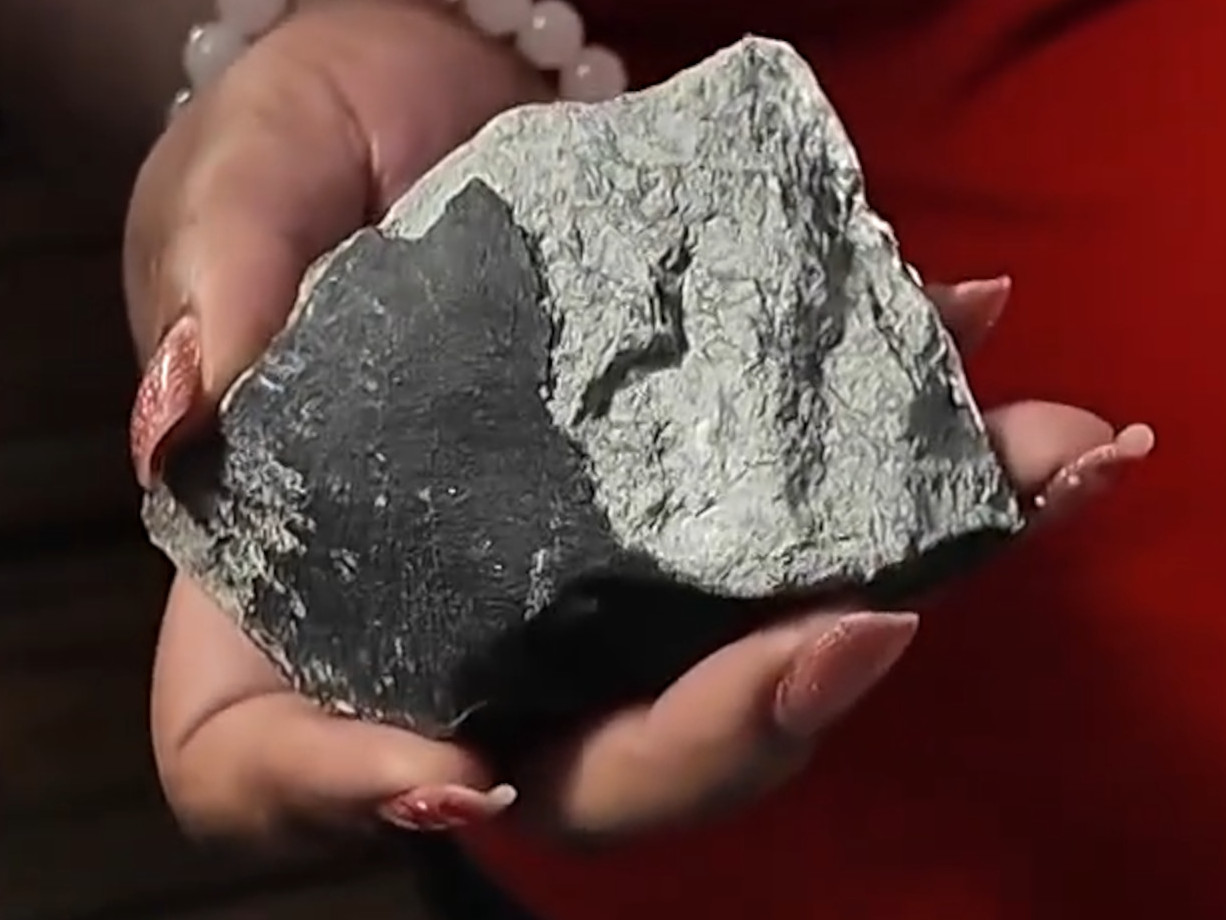
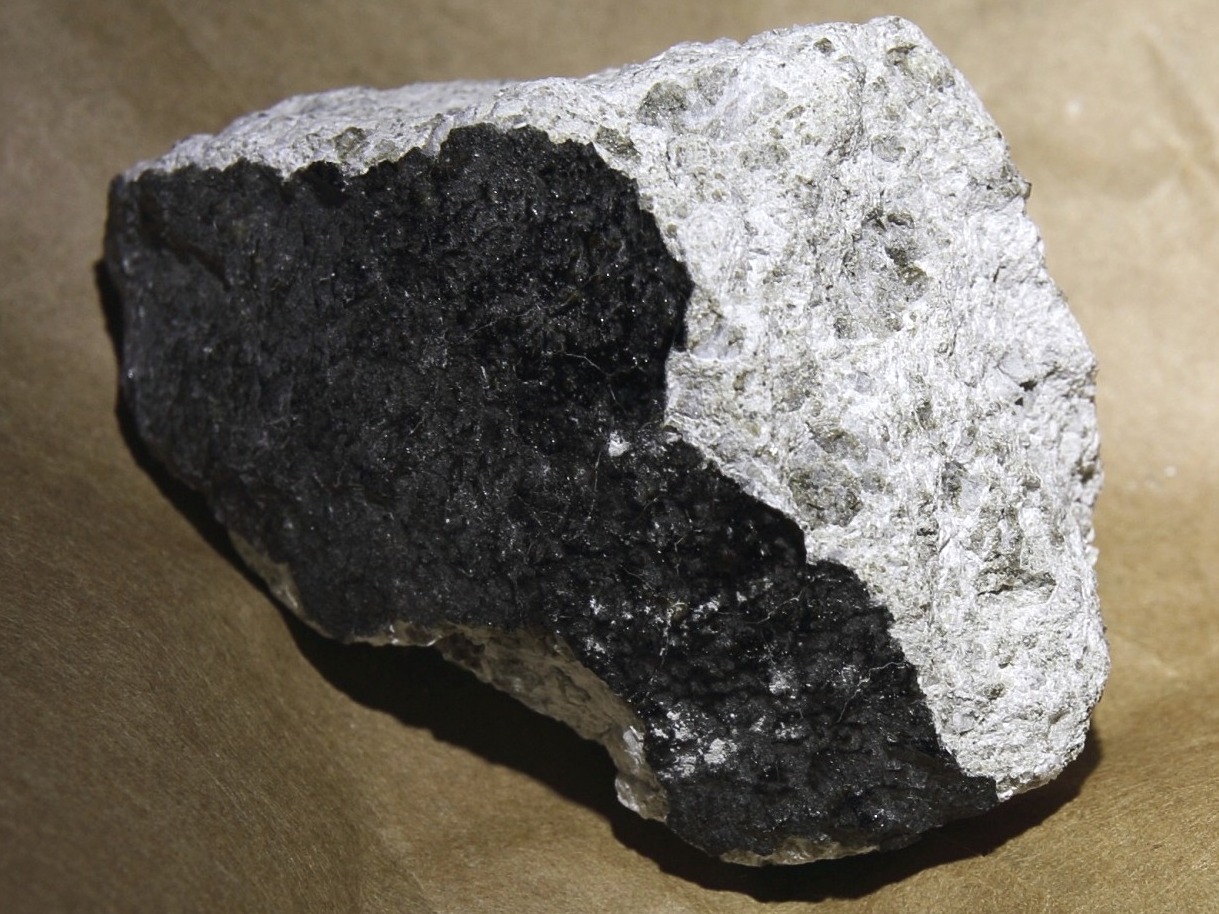
Metal-Rich Ungrouped Chondrite Northwest Africa 13202
M. A. Ivanova, K. M. Ryazantsev, S. N. Teplyakova & D. A. Sadilenko
Geochemistry International, Volume 63, pages 763–777, Published: 23 September 2025
“A meteorite of a new type, NWA 13202, was revealed for the first time in the collection of the Russian Academy of Sciences. It was assigned to metal-rich ungrouped chondrites and is paired with the NWA 12379/12273 chondrites. These chondrites consist of, on average, ∼70 vol % Fe–Ni metal and ∼20 vol % chondrules and contain small silicate inclusions embedded in the metal. Similar to other known metal-rich chondrites (G, CH, CBa, and CBb), these is no fine-grained matrix in NWA 13202. The chondrules are mainly of the porphyritic olivine–pyroxene, olivine, and pyroxene varieties (POP, OP, and PP). Nonporphyritic chondrules (BO, SO, CC, RC, and GC) are rare. Olivine has an L-chondrite composition, Fa25.9 ± 3.5 mol %, and low-Ca pyroxene is Fs17.2 ± 5.7 mol %, which resembles more closely H-chondrites. The degree of olivine heterogeneity corresponds to chondrites of petrological types 3–4. Accessory minerals are phosphates and chromite. The metal includes low-Ni kamacite and high-Ni taenite and tetrataenite, and the only sulfide is troilite. The oxygen isotope composition of silicates from the chondrules of these ungrouped chondrites supports their affinity to the oxygen isotope reservoir of LL chondrites (Jansen et al., 2019). The metal underwent partial melting, and was formed ~2.4 My after the formation of Ca–Al-rich inclusions (Liu et al., 2023). Chondrites of this type were probably formed by a catastrophic collision of metal and chondrite bodies. The intensity and conditions during this event were not sufficient to form chondrules with chondrules with quench textures, such as the CC and SO types. After the reaccretion of a new parent body of the metal-rich ungrouped chondrite, the material of NWA 13202 and NWA 12379/12273 was affected by aqueous alteration and metamorphism at a temperature of ∼600°C, which produced phosphates and rims of Fe-rich olivine around low-Ca pyroxene.”