Network structure of solar wind implanted on small celestial body surface
Sohei Wada, Ken-ichi Bajo, Hisayoshi Yurimoto
MAPS, Version of Record online: 07 May 2026
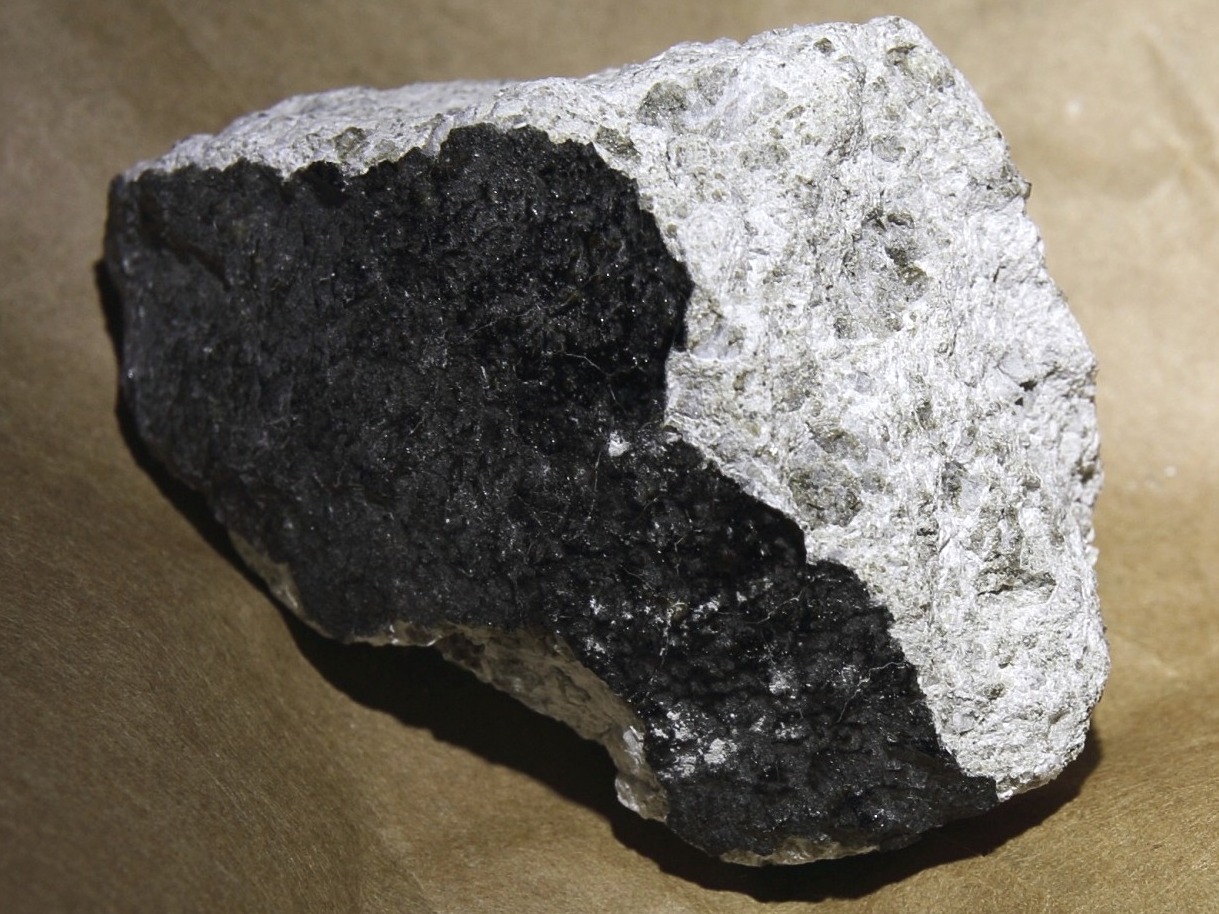
“The surfaces of small celestial bodies are continuously modified by space weathering and surface gardening, yet their interaction remains poorly understood due to observational gaps between micrometer and centimeter scales. Here we analyzed the two-dimensional distribution of helium in the carbonaceous chondrite NWA 801 (CR2) using the LIMAS secondary neutral mass spectrometer with micrometer resolution. The results show that 4He is concentrated mainly in the fine-grained matrix, forming a distinct He-rich network surrounding He-poor fine-grained regions. This structure suggests that space-weathered particles were transported into the subsurface. The process may involve a granular convection driven by impact-induced vibrations. It likely occurred during the early solar system on time scales of ~10,000 years and at depths ranging from tens of centimeters to meters. Such mixing repeatedly exposed fresh material to solar wind irradiation, producing three-dimensional 3He-enriched deposits rather than purely surface-limited accumulations. These findings provide direct microstructural evidence for the dynamic coupling between space weathering and surface gardening and highlight a potential mechanism for forming solar wind–derived helium and hydrogen resources on small celestial bodies.”