Potential of VIS-IR imaging spectroscopy and SEM-EDS and EMPA to map the mineralogical composition of NWA 7317 (CR6)
Simone Pascucci, Tiberio Cuppone, Martina Casalini, Simone De Angelis, Antonio Lettino, Angelo Palombo, Eliana La Francesca, Gianrico Filacchione, Maria Cristina De Sanctis, Anna Galiano, Giovanni Pratesi
MAPS, Version of Record online: 14 May 2026
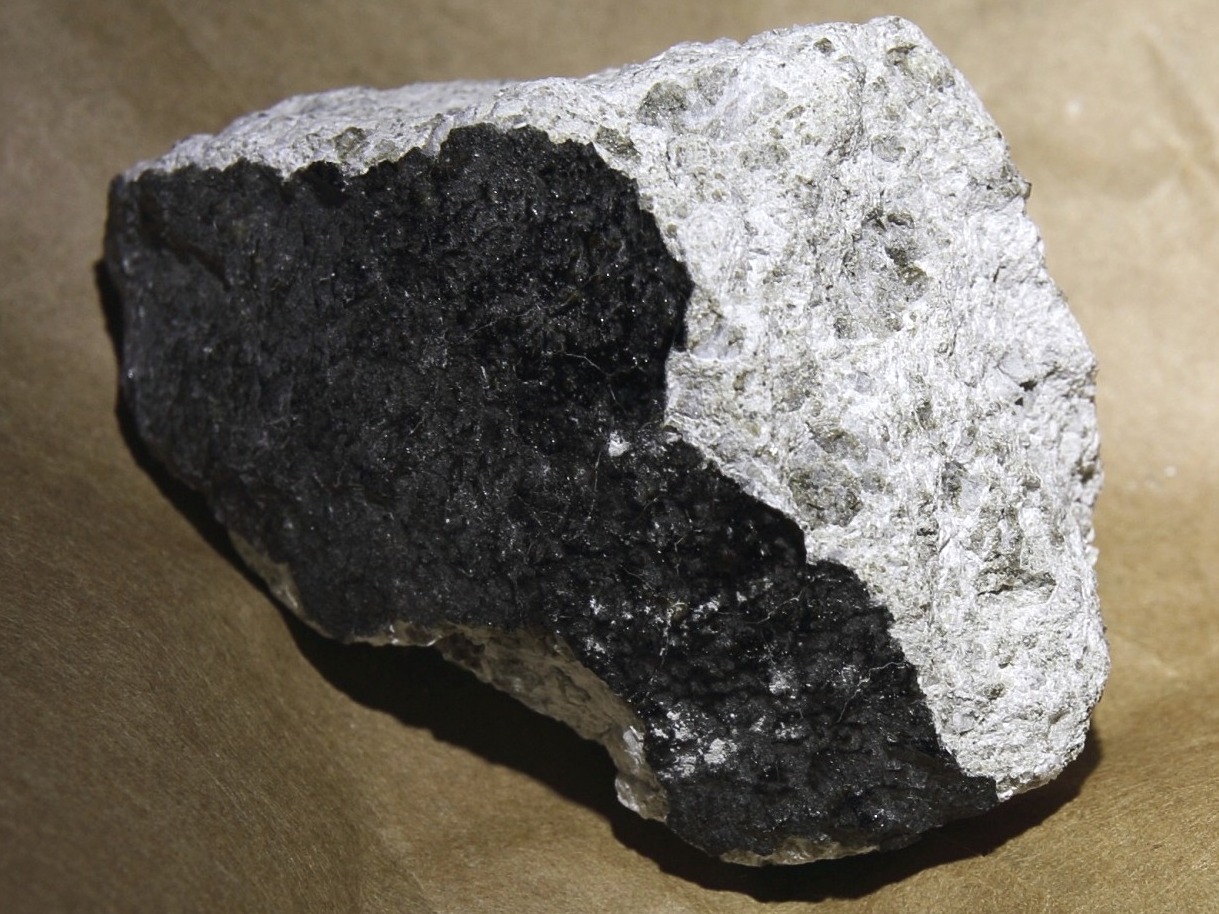
“Asteroid compositional analysis relies on comparing reflectance spectra with laboratory data from well-characterized meteorites. To advance this comparison, we performed a comprehensive laboratory analysis on a slab of the Northwest Africa (NWA) 7317—CR6 carbonaceous chondrite. We employed high-resolution Visible-Infrared (VIS-IR) imaging spectroscopy (0.4–5.1 μm) using the SPIM hyperspectral facility, integrated with high-spatial-resolution elemental mapping via SEM-EDS and EMPA-WDS. This multi-technique approach enabled the retrieval of surface composition at high spectral and spatial resolutions. Our results, supported by ICA/PCA and K-means classification methodologies, highlight the challenges of integrating VIS-IR spectroscopy and SEM/EMPA at the micrometer scale. While both techniques consistently infer an overall poikiloblastic/metamorphic texture dominated by an olivine and pyroxene-rich matrix, their combined use requires a critical approach for robust analysis. The absence of the 3 μm absorption band indicates high temperatures during thermal metamorphism on the NWA 7317 parent body. Although FeNi metallic alloys and Fe-sulfide inclusions contribute to the VIS-IR spectroscopic signal, they are not clearly distinguishable from each other. Furthermore, minor phases like plagioclase and chromite detected via SEM/EMPA are not plainly visible in the SPIM results. We review the potential of integrating these techniques to assess the petrography, mineralogy, and terrestrial weathering of NWA 7317.”