Racemic isoprenoids in the Murchison meteorite derive from petroleum-based aerosol pollutantsOPEN ACCESS
Guillaume Leseigneur, Manuel Reinhardt, Fatma Yesil Sahan, Uwe Meierhenrich
Earth and Planetary Science Letters
Volume 690, 15 September 2026, 120141
“Highlights
- Isoprenoid alkanes pristane and phytane are racemic in the Murchison meteorite.
- The isoprenoids in Murchison come entirely from petroleum contamination.
- Direct chiral separation of pristane and phytane is now readily accessible.
- Improved diastereomeric data for Green River, Messel and Bächental oil shales.
- Difference in pure mass spectrometric fingerprints for isoprenoid diastereomers.”
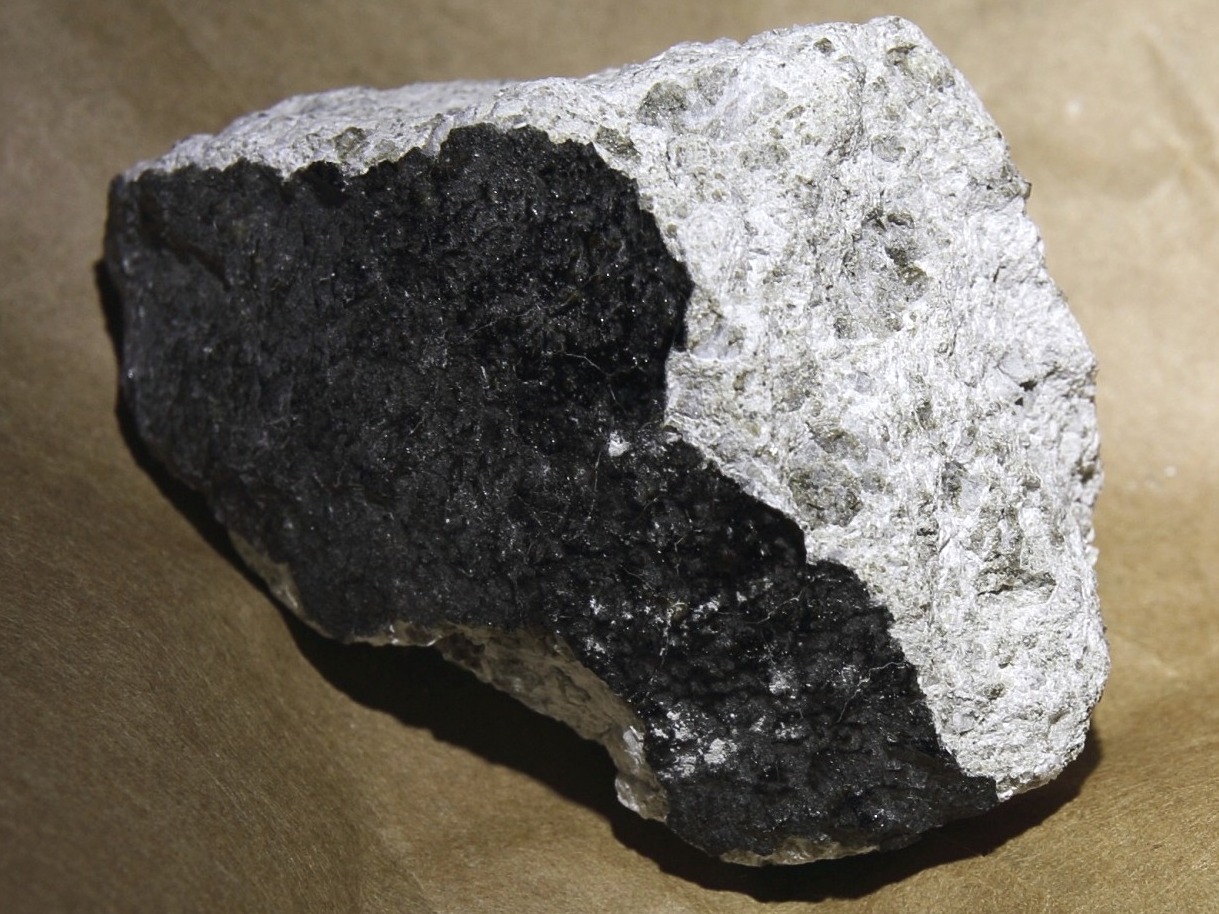
“The isoprenoid alkanes pristane and phytane are widely detected in meteorites. As isoprenoids are considered markers of Earth’s biosphere, their presence in meteorites has led to a prevailing consensus that they represent terrestrial contamination, thereby calling into question the indigeneity of the entire meteoritic hydrocarbon inventory. Indeed, these chiral molecules are ubiquitous in biological systems, where their stereogenic centers are fixed and of the same absolute configuration. In this study we separate, for the first time, the different relevant chiral configurations of pristane and phytane in a meteorite sample, and we show that the isoprenoid alkanes detected in the Murchison meteorite are racemic. On Earth, racemization of these molecules has only been observed in oil shales and crude oils subjected to a certain degree of thermal maturation. In light of previous findings, these results strongly suggest that the Murchison meteorite was contaminated exclusively by petroleum pollutants present in Earth’s atmosphere, and categorically exclude any contribution from the biosphere at the fall site. Consequently, this work establishes a foundation for systematic investigations into the chirality of isoprenoids in other meteorite samples and the different sources of atmospheric petroleum pollution.”