Thermochemical evolution of the mesosiderite parent body: Modelling and mineralogical constraints on silicates
Pipasa Layak, Nachiketa Rai, Kuljeet Kaur Marhas, Hilary Downes
Geochemistry
Available online 16 May 2026, 126426
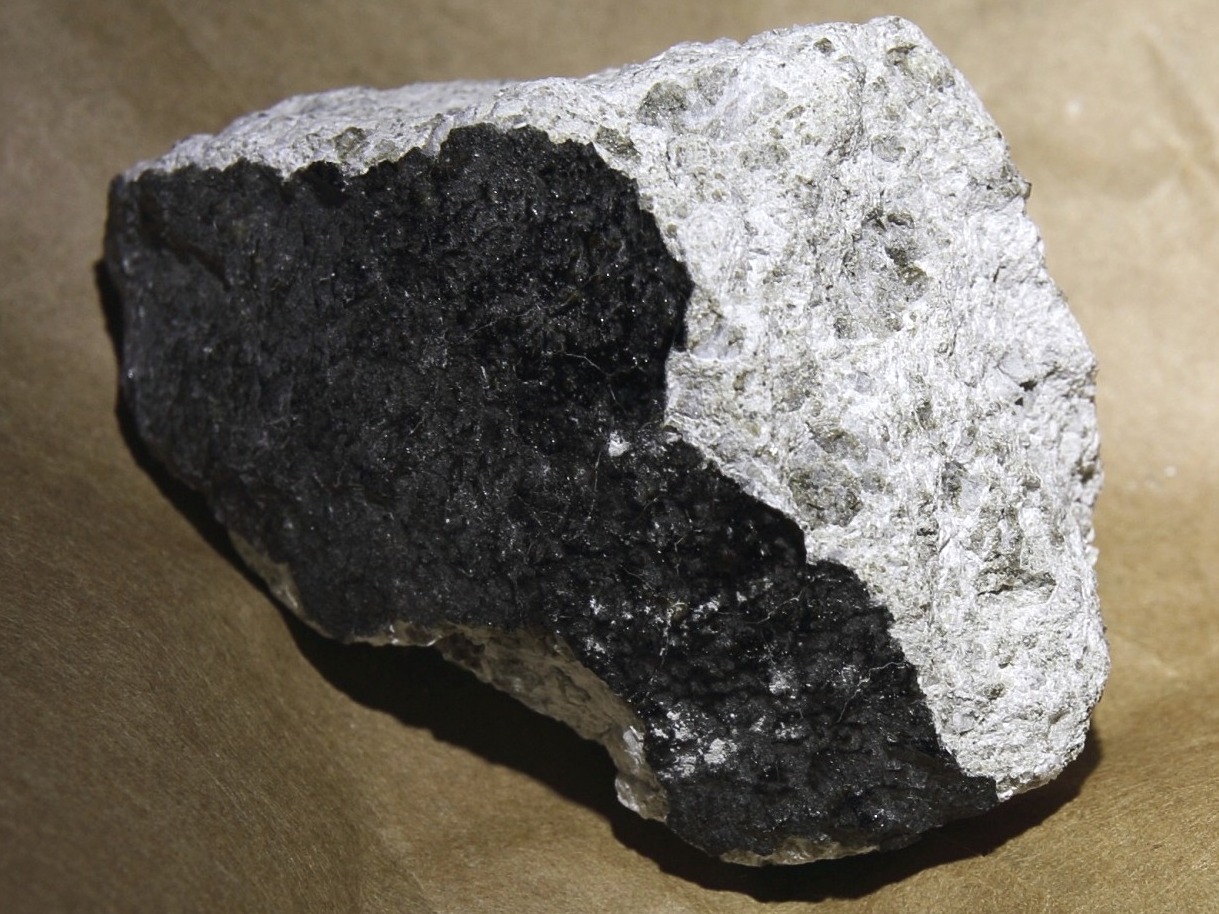
“This study models the compositional evolution of a chondritic starting material representative of the Mesosiderite Parent Body (MSPB) under relevant pressure-temperature-redox conditions (1 bar, 1800–500 °C, fO2 = IW + 1.8), focusing exclusively on the evolution of the silicate portion of the system and not on the origin or evolution of the metallic component. The modelling framework assumes crystallization within a silicate magma ocean, and explores crystallization pathways involving varying degrees of equilibrium crystallization (EC) and fractional crystallization (FC). In addition, we present new mineral-chemistry, and phase data from two mesosiderite specimens, Estherville and Mincy.
Modelling results indicate that mesosiderite silicate mineralogy can be derived from a chondritic composition through an efficient three-stage cooling sequence: 40–50% EC, followed by FC down to 1395 °C, and then final EC of the remaining melt to 914 °C, at which point crystallization is complete. The predicted modal abundances—69 wt% pyroxenes, 26 wt% plagioclase, 1.9 wt% tridymite, and 1.6 wt% whitlockite—closely match the observed proportions in Estherville and Mincy. In both meteorites, pyroxenes and tridymites serve as robust geothermometers, stable across 870–1470 °C. The strong agreement between modelled Mg#, Fe#, density, and fO2 with published mesosiderite values further supports a chondritic starting composition of the MSPB.
The model suggests that the MSPB mantle consisted of olivine-orthopyroxene cumulates (dunitic in character), while the lower crust was dominated by pigeonite and hypersthene, forming a pyroxenitic lithology. The upper crust was enriched in plagioclase and pyroxene, reflecting a basaltic composition. Following differentiation, the MSPB likely underwent a collisional encounter with a differentiated impactor, leading to excavation of its silicate crust, followed by brecciation, remelting, and clast metamorphism. These processes ultimately produced mesosiderite meteorites as composite breccias of MSPB-derived silicates intermixed with metallic phases contributed by the impacting body.”