Nucleosynthetic Sr and Nd isotope anomalies in Allende calcium-aluminium-rich inclusions (CAIs) reflectings- and p-process heterogeneity
Yankun Di, Magdalena H. Huyskens, Qing-Zhu Yin, Yuri Amelin
Geochimica et Cosmochimica Acta
In Press, Journal Pre-proof, Available online 18 June 2026
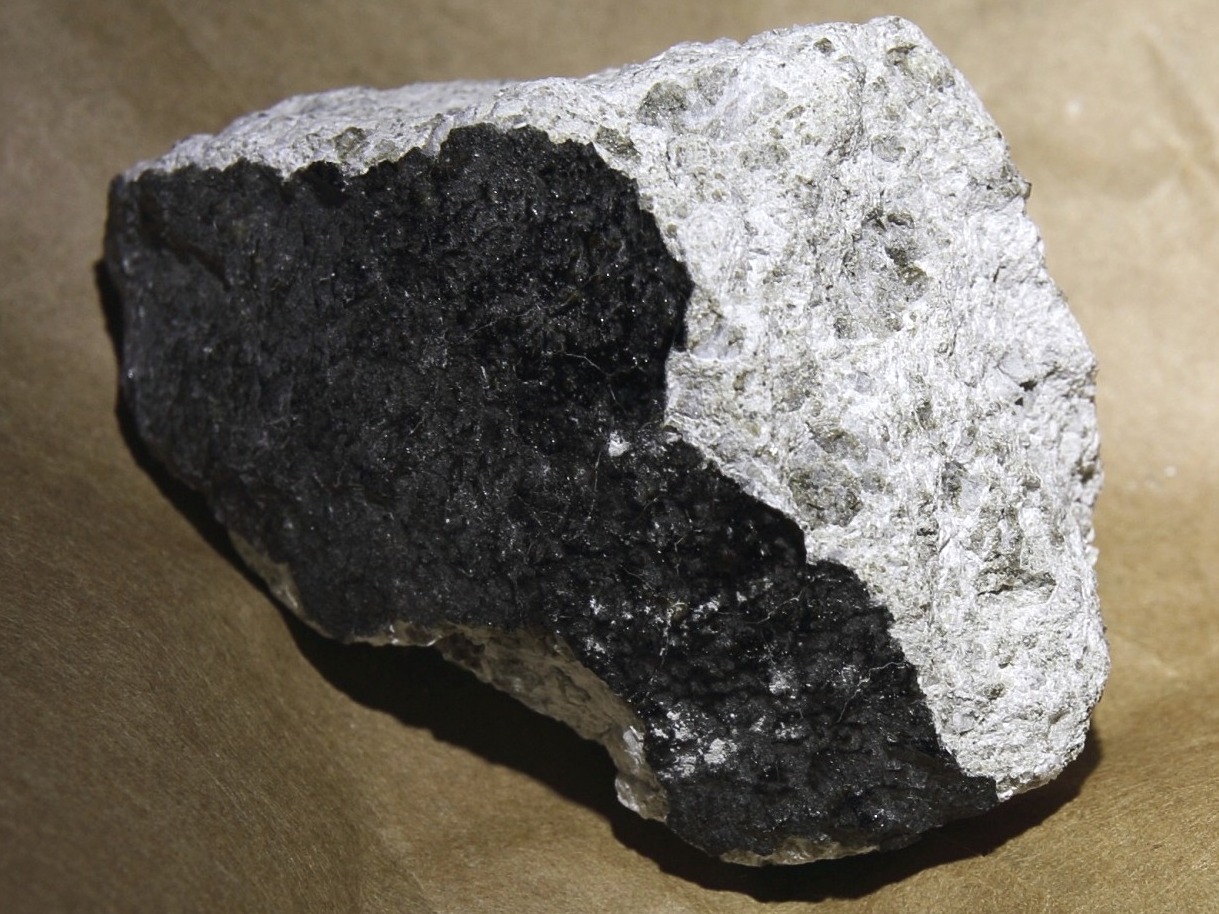
“Compared to the Earth and inner Solar System planets, calcium–aluminium-rich inclusions (CAIs) possess nucleosynthetic Sr isotope anomalies manifested as elevated 84Sr/86Sr after internal normalisation using 88Sr/86Sr. These anomalies can be generated by heterogeneous incorporation of s-, r-, or p-process nucleosynthesis components. Accurately distinguishing between the enrichment or depletion in those components is critical for correctly understanding the timing of planetary volatile depletion, as they predict very different anomalies in 87Sr/86Sr and lead to disparate interpretations of 87Rb–87Sr chronology. Here, we constrain the origin of Sr isotope anomalies in the original Mason and Taylor (1982) set of Allende CAIs by examining their nucleosynthetic Sr and Nd isotope systems. Most CAIs analysed exhibit positive μ84Sr and negative μ145,148,150Nd anomalies (μ-values are defined as part-per-million deviations of isotopic ratios relative to terrestrial standards) in agreement with previous studies, but we also detected significant isotope heterogeneities among them, including discovery of CAIs with Sr and Nd isotope anomalies in directions opposite to the majority. The Nd isotope heterogeneity among CAIs is predominantly consistent with variations in the abundance of the s-process component, with a minor but clearly resolved p-process deficit on μ142Ndcorr (μ142Ndcorr is μ142Nd corrected for 146Sm decay). The less steep μ142Ndcorr vs. μ148Nd slope defined by the CAIs compared to that predicted by stellar models supports the recent suggestion that the accessible Earth has a small radiogenic excess in μ142Nd relative to chondrites. Correlated Sr and Nd isotope anomalies in the CAIs suggest that (1) they formed from at least two isotopically distinct reservoirs, one with and the other without p-process Sr excesses relative to Earth, (2) the majority of CAIs formed in the p-process-Sr-enriched reservoir with additional s-process excesses, and (3) variations in r-process Sr and Nd are not observed among the CAIs. The s-process-induced 87Sr/86Sr anomalies in CAIs (relative to the inner Solar System) predicted based on Nd isotopes are below the typical measurement precision, negating the need for nucleosynthetic correction on CAIs’ 87Sr/86Sr in chronological interpretations”