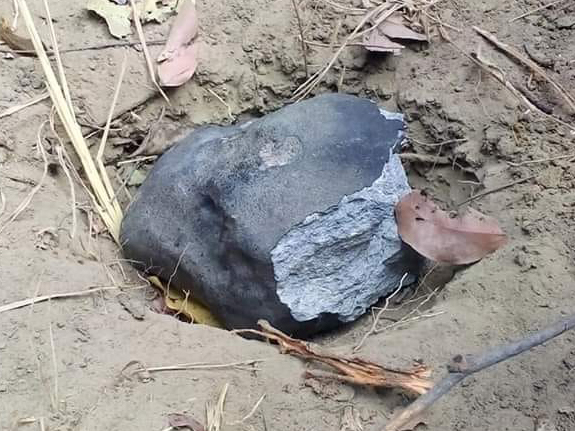
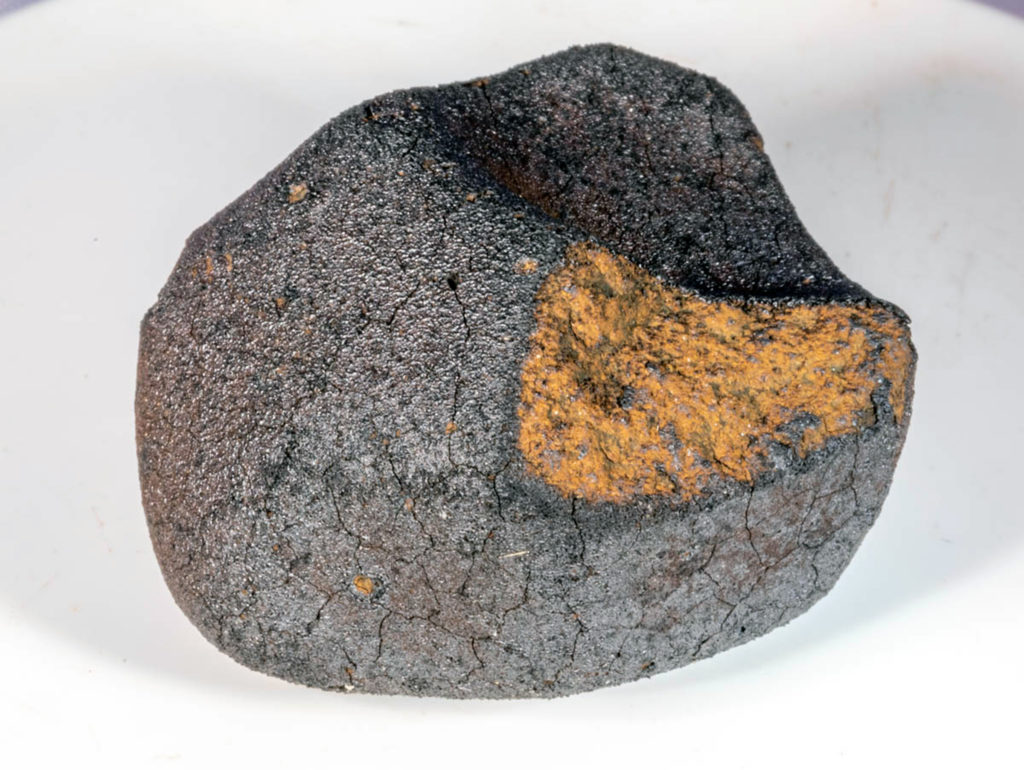
Hillsborough (~1.35 kg, CM1/2) meteorite fall in Hillsborough, New Jersey, USA at 15:17:27.6 (UTC) on 16 July 2024
Shortly after 15:17:27.6 (UTC), at around 15:20 UTC, on 16 July 2024 a ~1.35-kg meteorite (CM1/2) fell through the roof of a house in Hillsborough, New Jersey, USA, somewhere near location 40°29’00.0″N, 74°35’00.0″W.
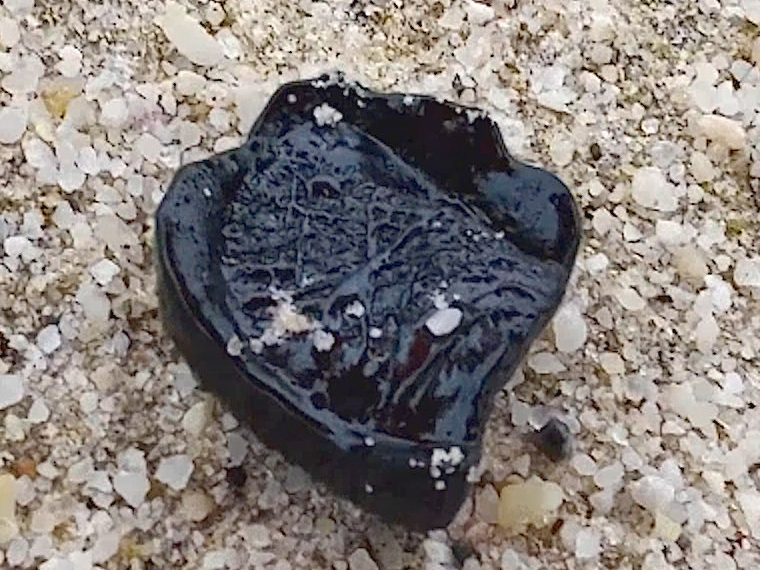
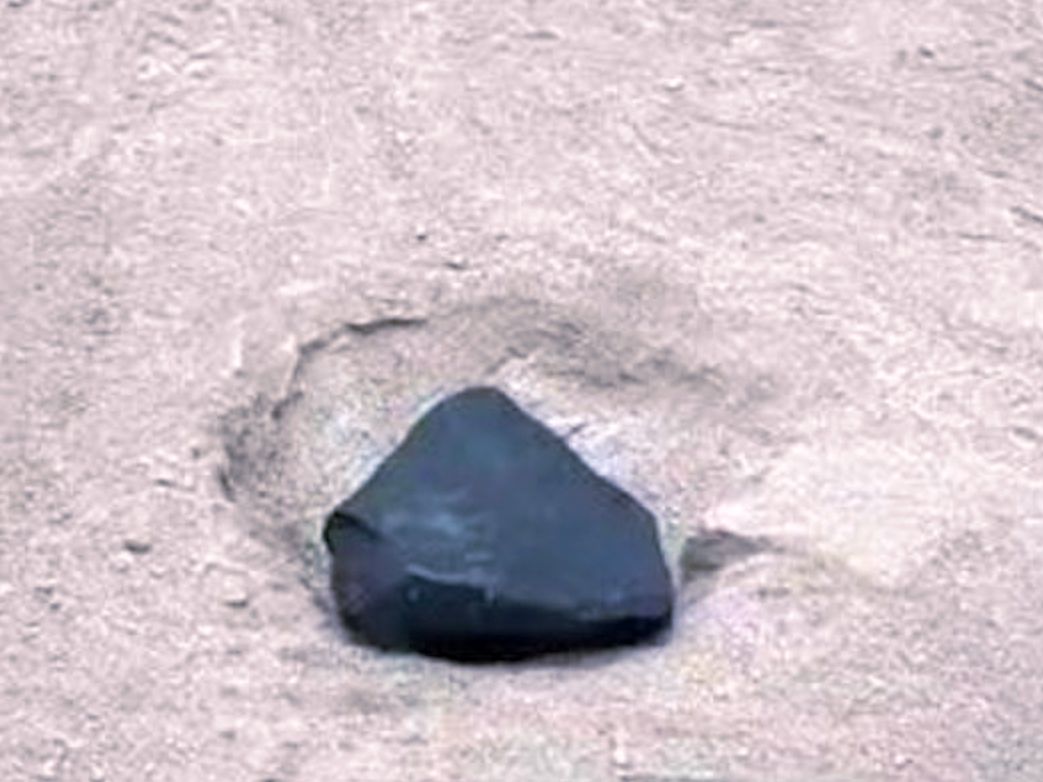
The meteoroid entered the atmosphere at a speed of about 14.4 km/s (± 0.6 km/s). The low density of the meteoroid caused early fragmentation. The luminous trail of the meteoroid was visible down to an altitude of about 35 kilometres above the ground. Doppler radar of the cloud of falling meteorite masses extended from Staten Island to New Jersey with Hillsborough being in the area where larger masses fell, of which only one was found. The meteorite fragmented on impact when it hit the fiberglass isolated roof above the master bedroom leaving a hole in the ceiling. Meteorite fragments and dust covered the bed, carpet, and surrounding areas. Immediately the home owner thoughtfully preserved the meteoritic matter adequately by wearing disposable gloves when touching it, then wrapping it in aluminum foil and storing it in a glass jar. Then he documented the situation after the fall. Some of the only slightly weathered meteorite fragments will be curated at the American Museum of Natural History in New York City. The meteorite fall was registered as confirmed fall Hillsborough (CM1/2, S1) in the database of the Meteoritical Bulletin on 15 July 2026.
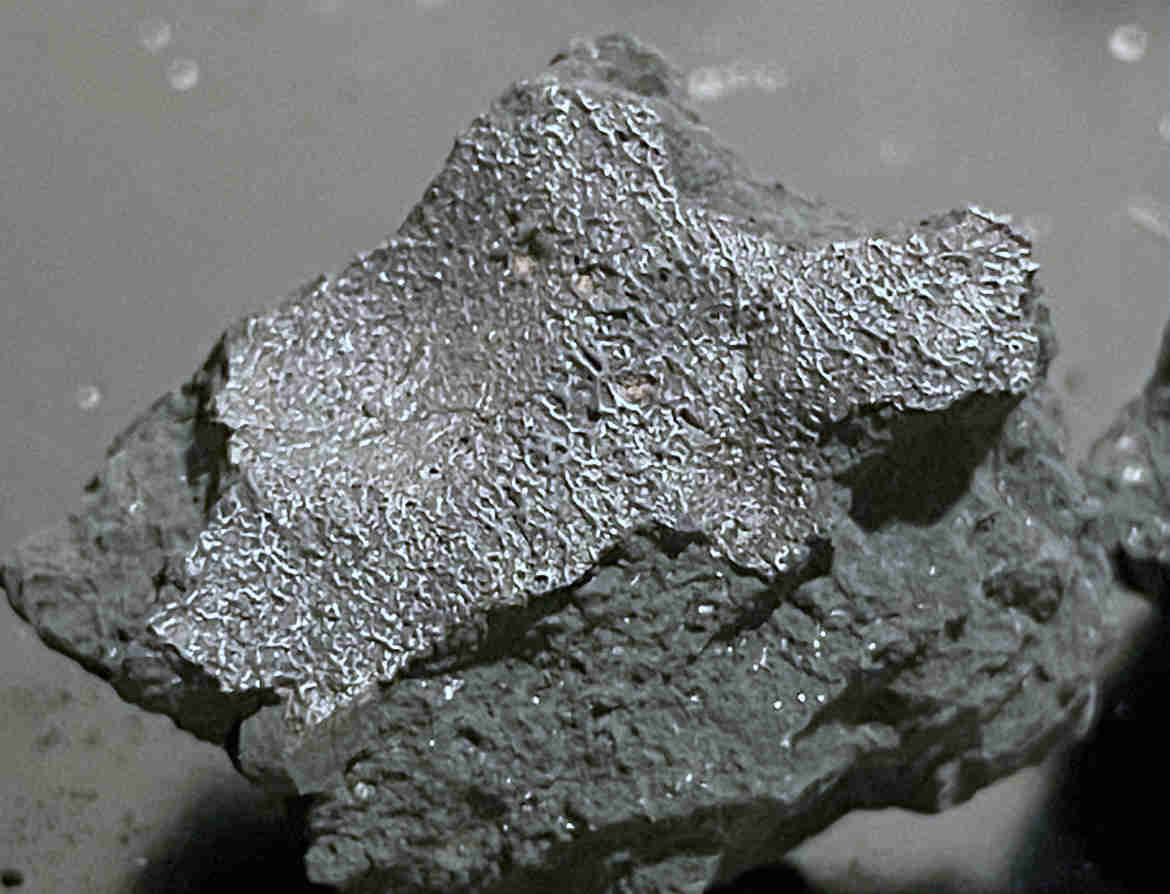
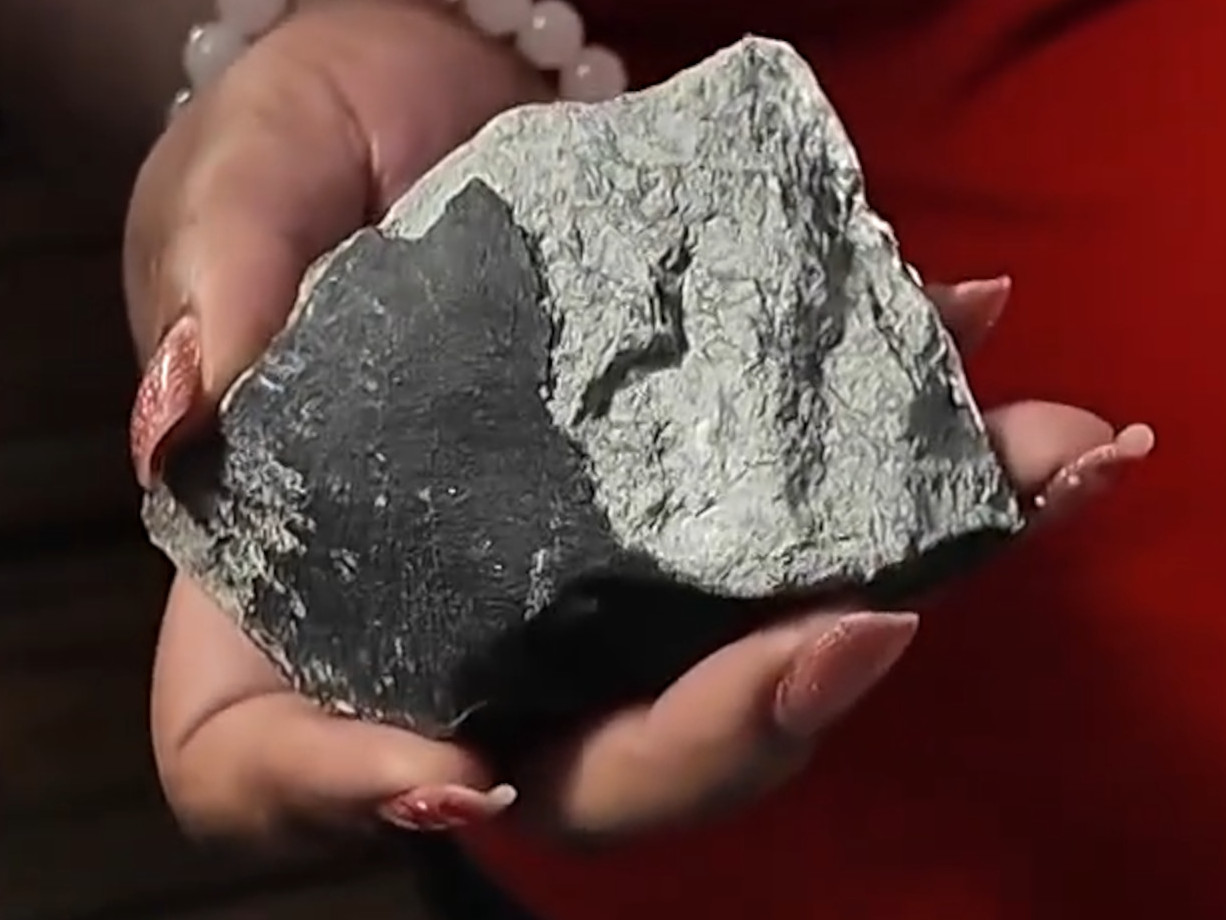
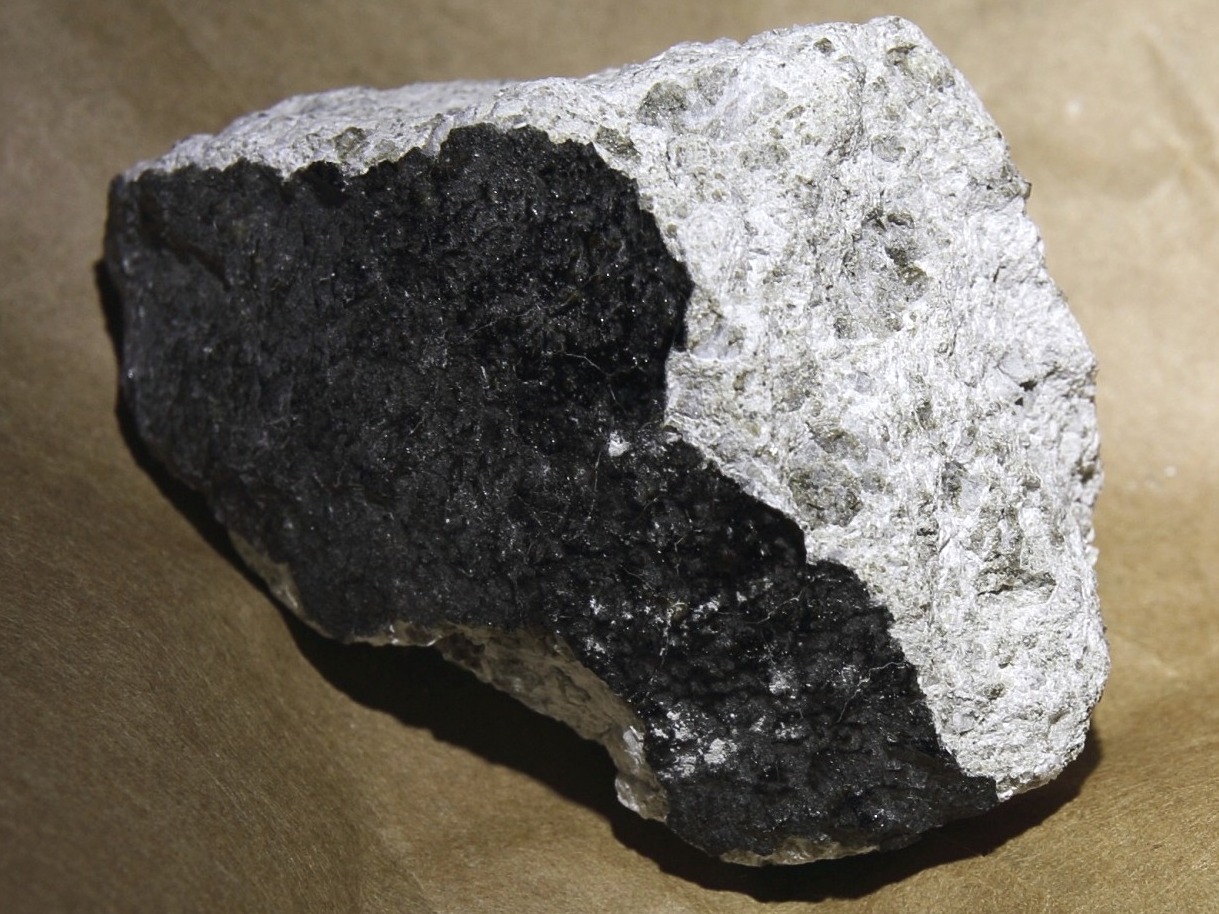
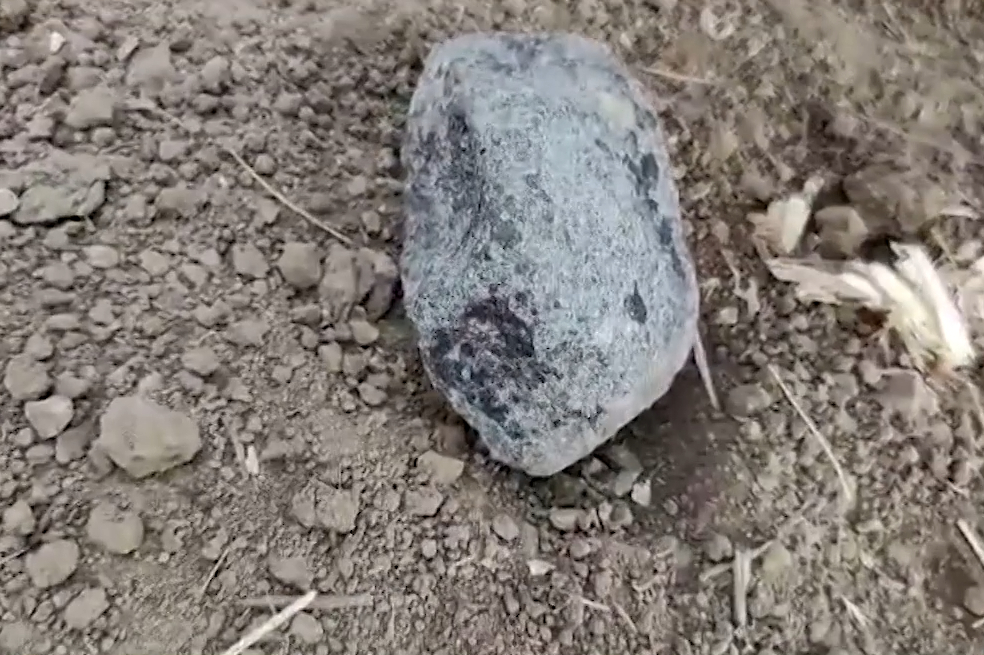
Crusted fragment of the Hillsborough meteorite. Photo: SETI
“I was at home at the time, heard a loud crash and found a hole in the ceiling of the master bedroom. I smelled a strong sulfur-like odor and saw many black fragments along with debris and black dust that covered my bed, carpet and surrounding areas.” (Hillsborough home owner)
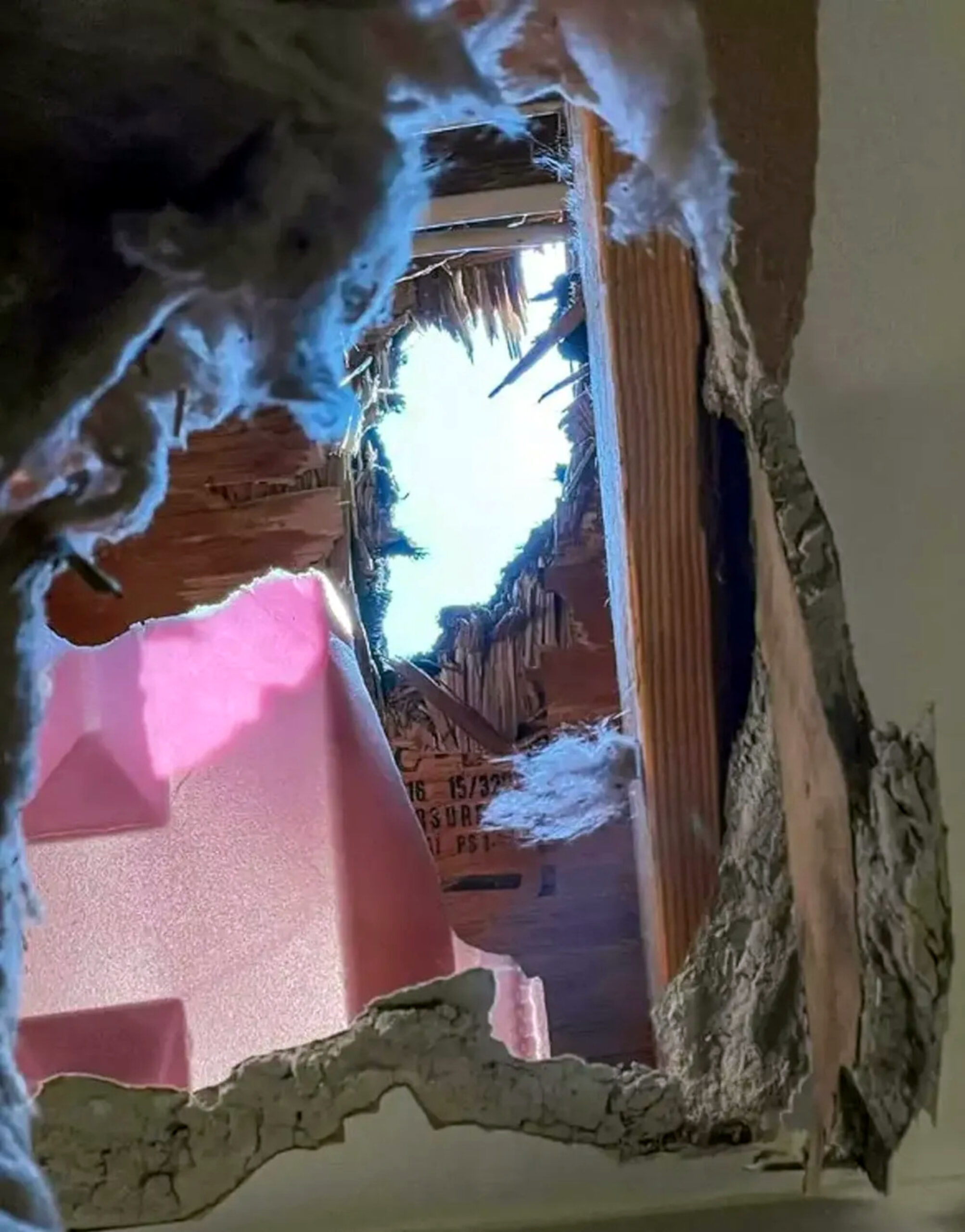
Impact hole in the roof, seen from inside. Photo: SETI Institute
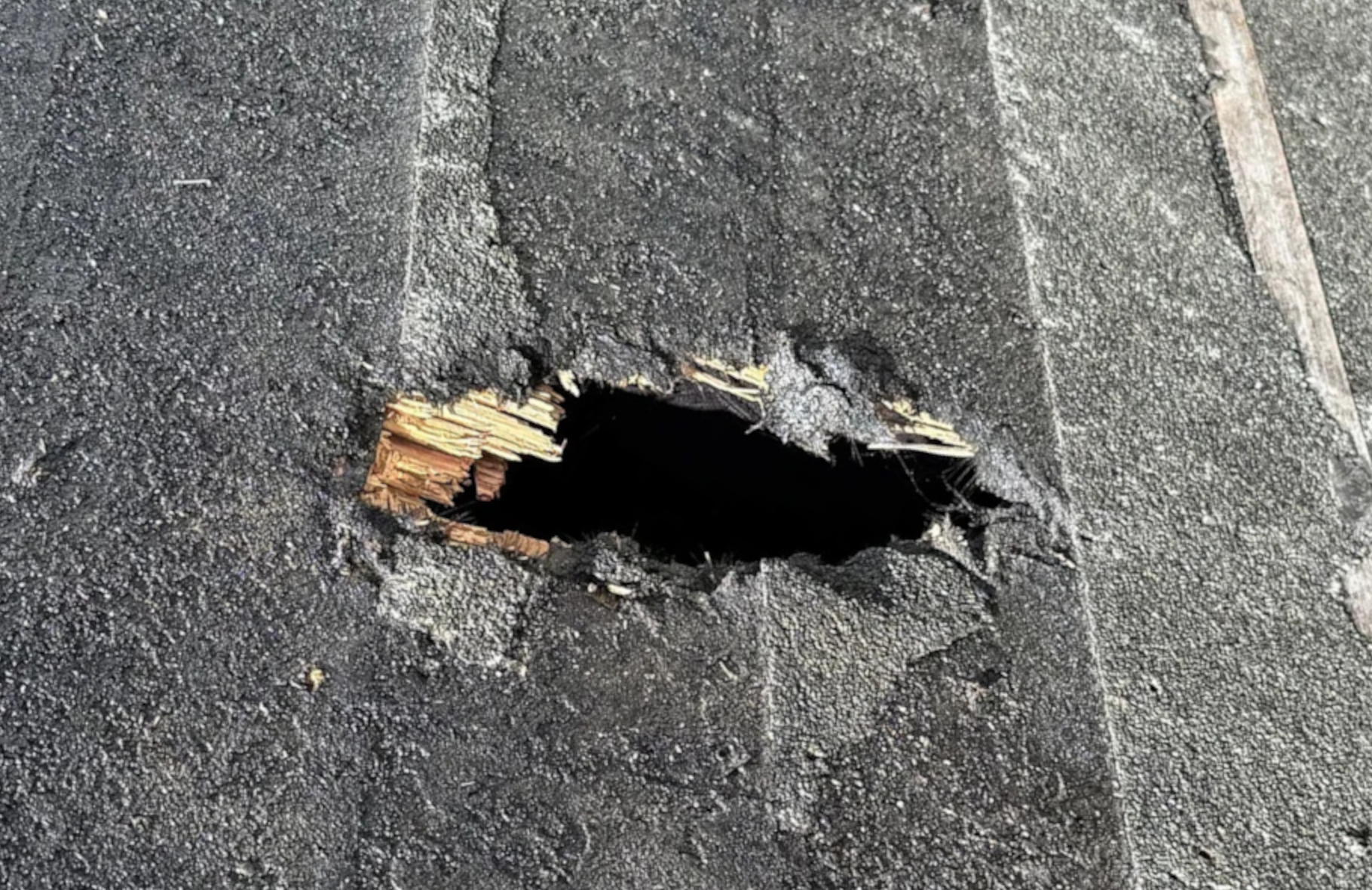
Impact hole in the roof. Photo: SETI Institute
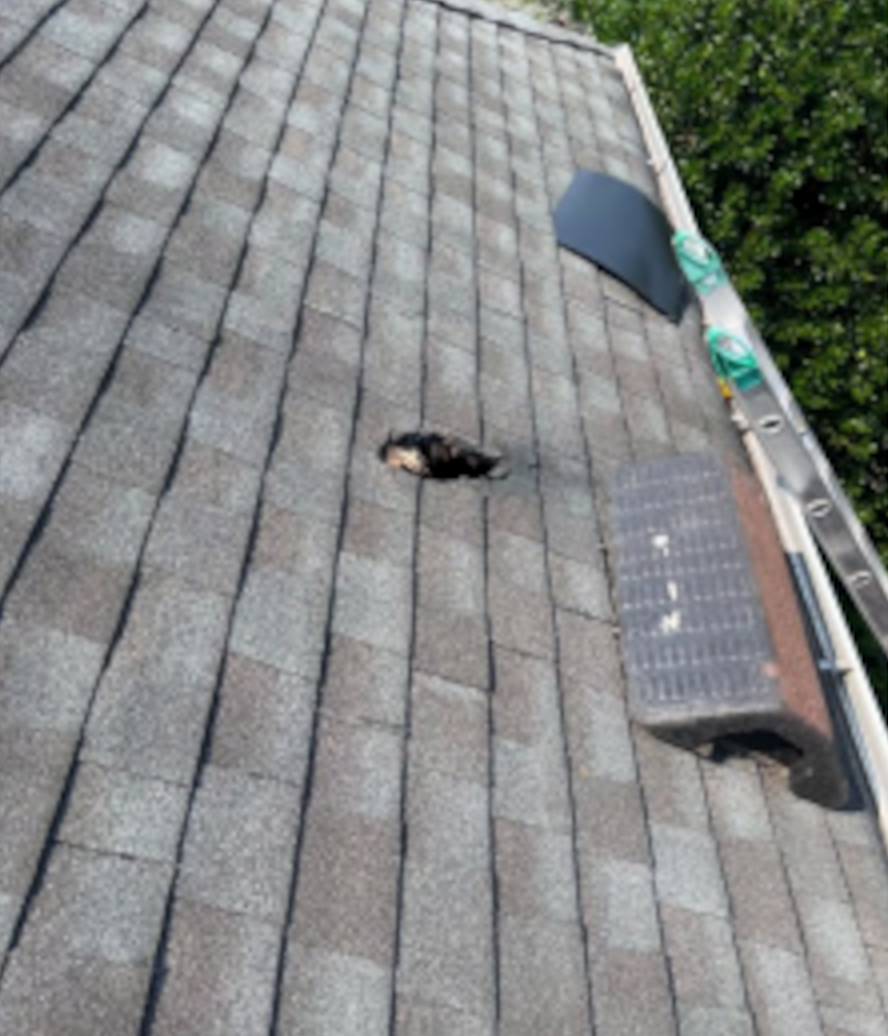
Impact hole in the roof. Photo: NASA
The bolide
The calculation of the meteoroid’s atmospheric trajectory was performed by using two AllSky7-cameras (AMS149 and AMS15, by M. Kirschner in Northford, Connecticut, and P. Deterline in Douglassville) and Jason Stier’s door bell camera in Wayne, New Jersey. The meteoroid with a calculated preatmospheric mass of 53 ± 6 kg and a diameter of about 38 cm moved from east to west (azimuth 256°), as recorded from an altitude of 44.4 km to 34.9 km at an angle of 29° to the horizontal. The surviving meteoroidal mass caused a last flare at an altitude of 28.2 km above the ground. High winds at the time of the fall came from west-southwest, thus the bolide travelled straight into the wind. Because of this smaller masses were transported back in opposition to the bolide’s flight direction. Because of the low density of the meteoroid the meteorite masses fell for an unusually long time. Falling meteorite masses weighing between 0.1 and 10 grams were detected by Doppler radar between 2 and 16 minutes later, but have not been found. The kinetic energy of the bolide was calculated to be 1.31 ± 0.09 tons TNT equivalent.
Bolide recorded from Wayne, New Jersey. Video: Jason Stier
Bolide recorded by an AllSky7 camera from Northford, Connecticut. Video: Mark Kirschner
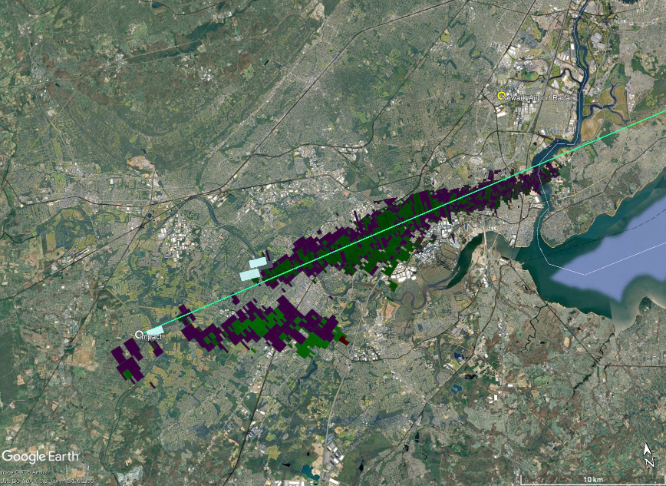
“Combined ground-projected radar reflections from the Hillsborough meteorite fall. In light blue are the three NEXRAD-detected reflections, in dark colors those generated by the nearby TEWR (Newark Airport TDWR) radar, the location of which is identified at upper right. The green line is the ground-projected path of the fireball. The first radar signature to appear was that at far left and additional signatures appeared drifting ENE over a period of 14 minutes 58 seconds afterward, when smaller meteorites fell to lower altitudes under the influence of prevailing winds. Attribution in lower left corner reads: Google Earth. Image ©2025 Airbus. Data SIO, NOAA, U.S. Navy, NGA, GEBCO.” (Image and text from : Meteor over New York City: Brines in a primitive CM asteroid, Peter Jenniskens et al. (15 July 2026))
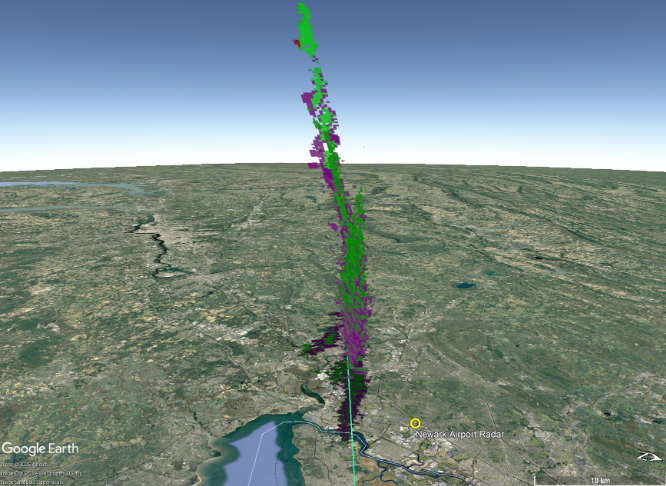
“The same data as […] but viewed from an approximate 45-degree elevation along the direction of flight of the bolide. The highest altitude of a radar signature measures 13.339 km above mean sea level (AMSL) at the signature centroid and the lowest occurs at 6.470 km ASML. Attribution in lower left corner reads: Google Earth. Image ©2025 Airbus. Image ©2025 Vexel Imaging US, Inc. Image Landsat / Copernicus.” Image and text from : Meteor over New York City: Brines in a primitive CM asteroid, Peter Jenniskens et al. (15 July 2026)
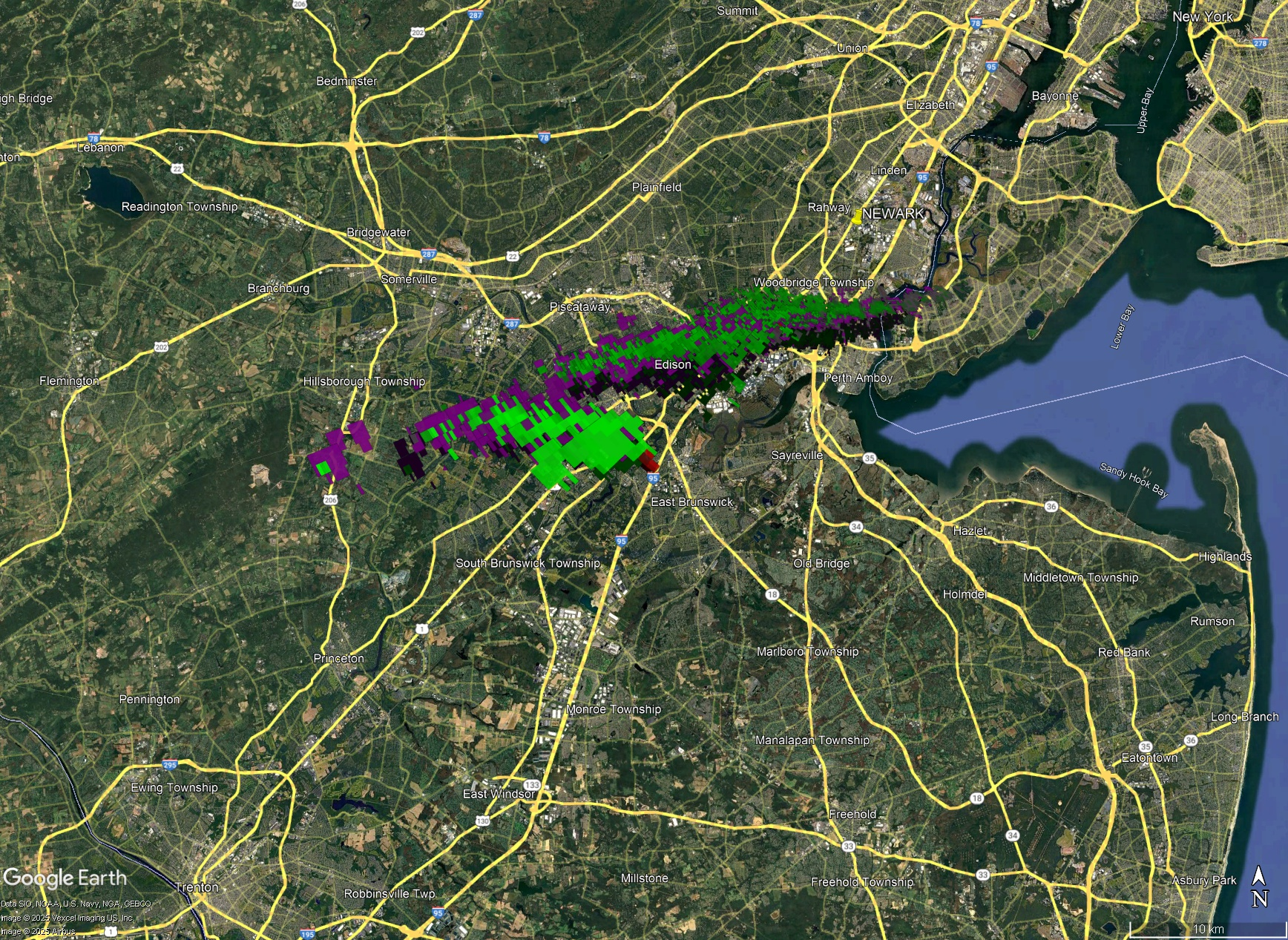
“Composite view of all radar signatures of falling meteorites.” Image: ARES/NASA
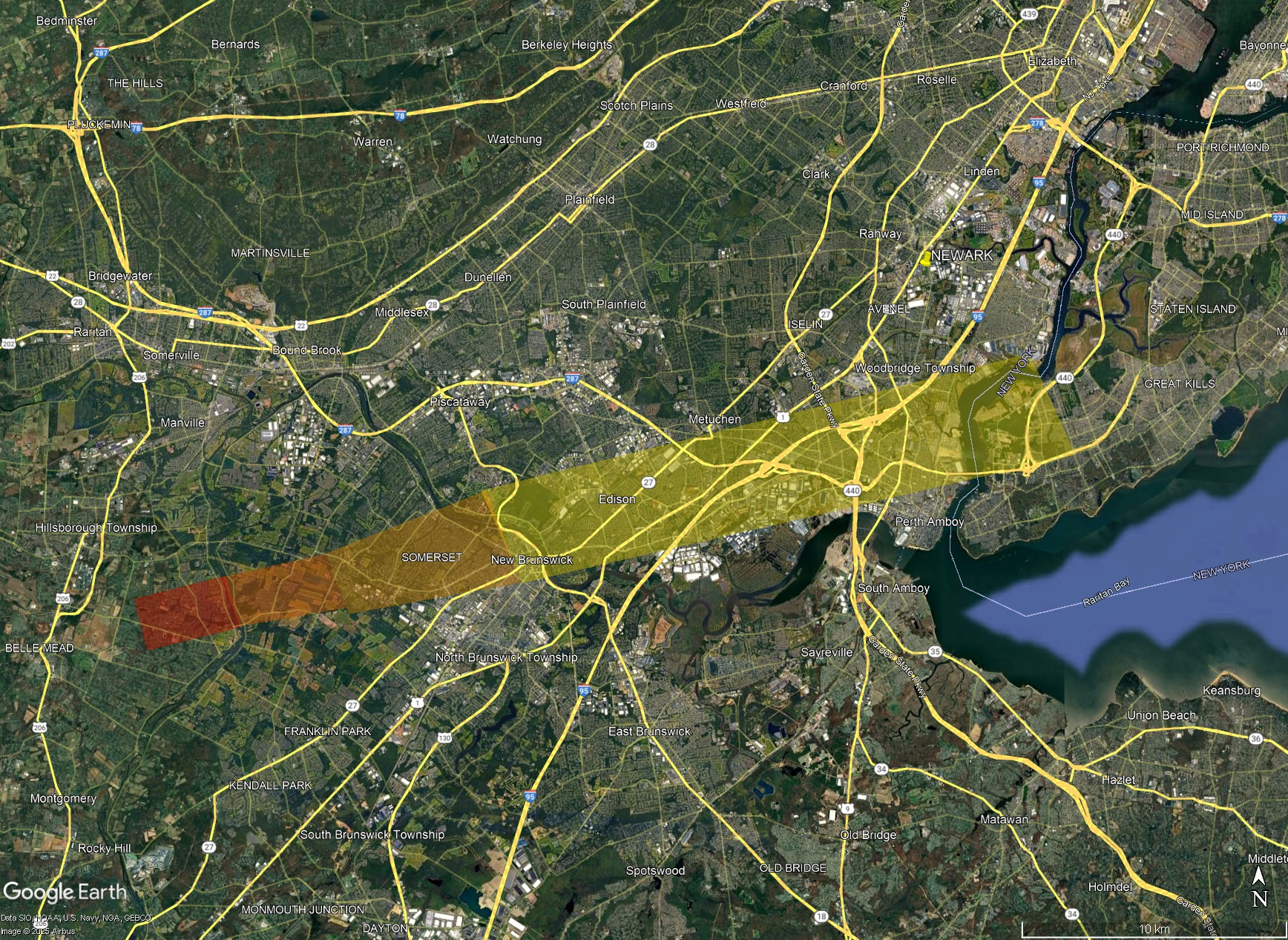
“Simplified drawing of where meteorites may have landed. The red polygon is for ~1 kg meteorites, dark orange is 100s of grams, light orange is 10s of grams, and yellow is 1g and smaller.” “The Newark airport weather radar records […] signatures of falling meteorites seen in twenty-five radar sweeps as well as another two sweeps from the Fort Dix, NJ NEXRAD radar.” Image: ARES/NASA