First ‘Cockburn Island’ (prov.) meteorites of bolide above Cockburn Island, Ontario, Canada at ~00:13:54 UTC on 20 June 2026 found
Last update: 10 September 2026 (15:50 CEST)
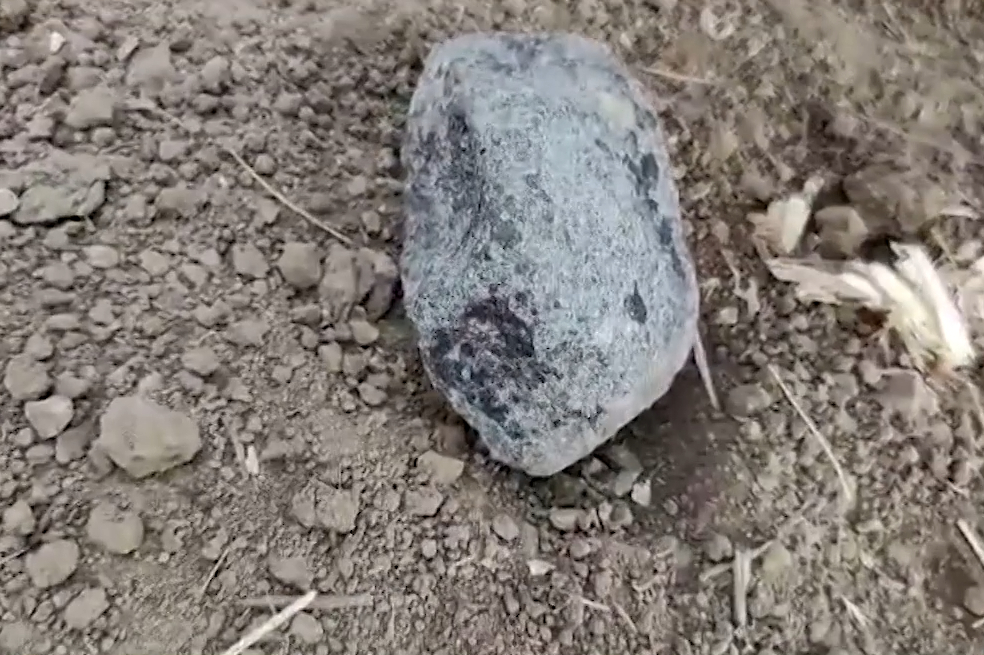
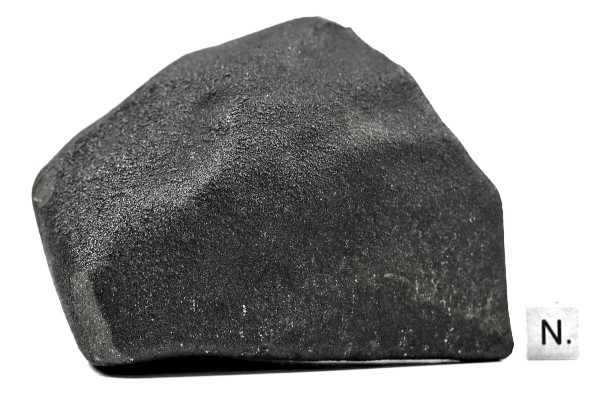
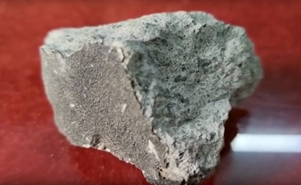
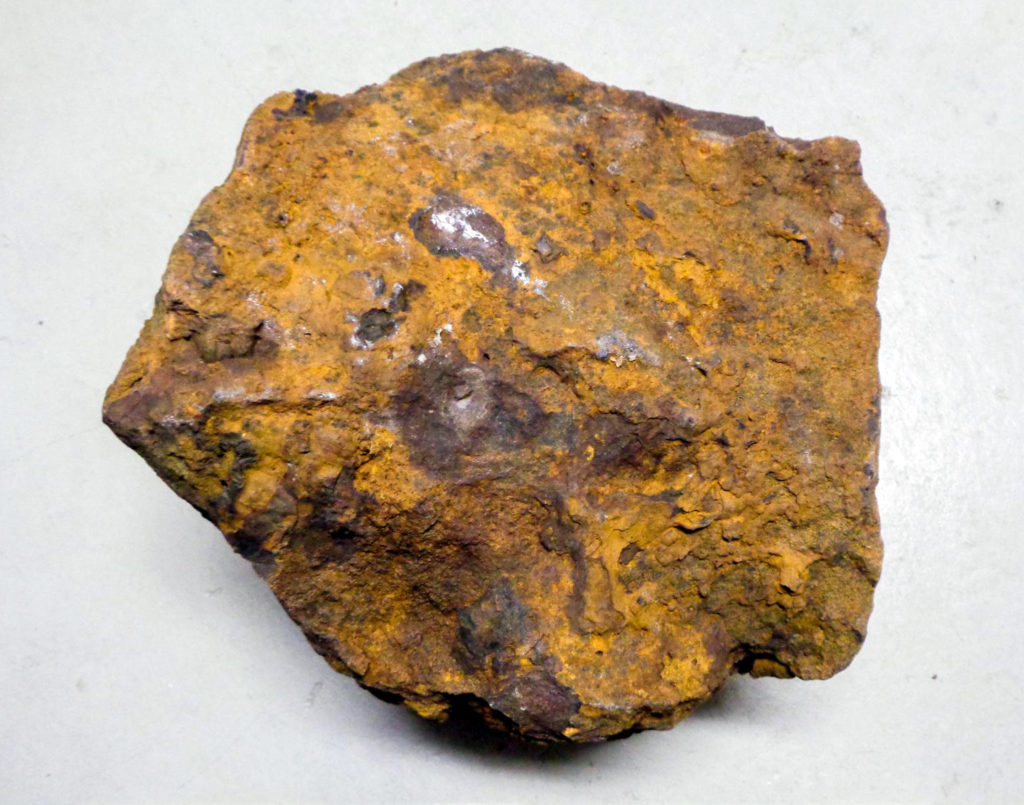
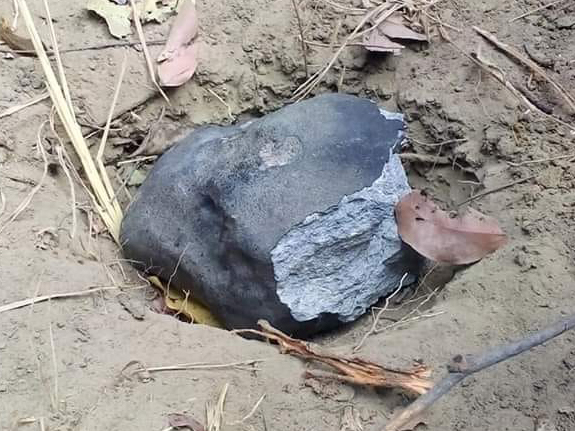
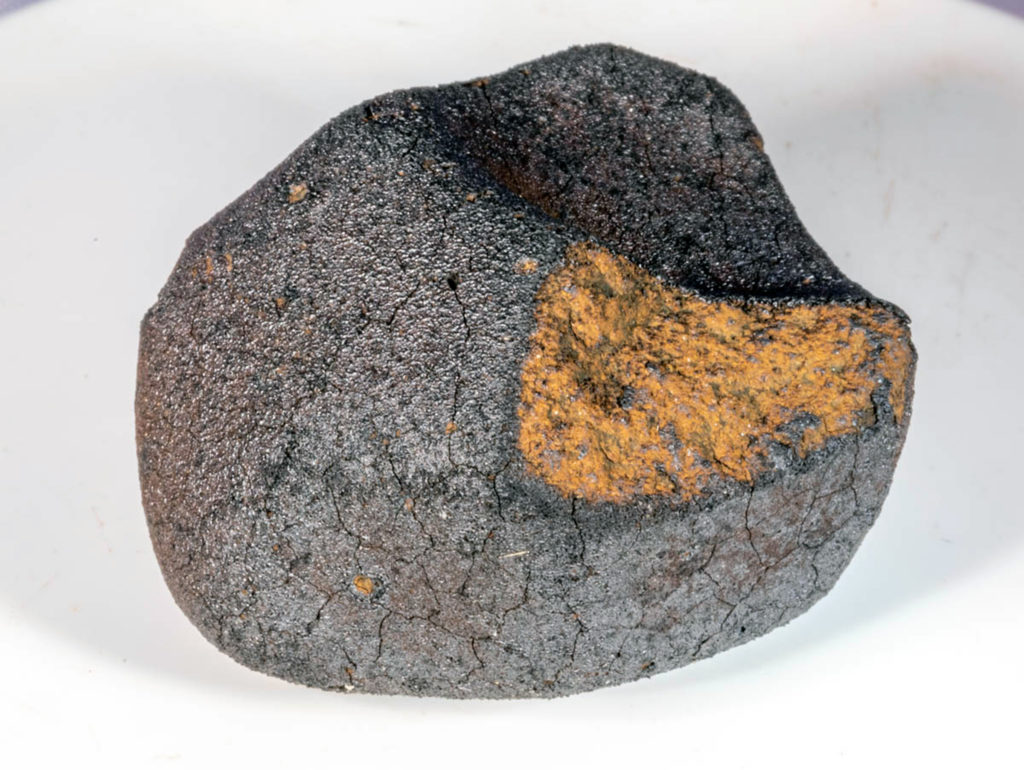
Meteorite searchers Dave Kenny from Vancover Island and Anton Clemens report having found two meteorites (probably ordinary chondrites, H chondrite?) of the bolide above Cockburn Island, Ontario, Canada while searching for about 24 to 30 hours during their two and a half days on the island. According to Kenny a first intact 57.6-gram specimen was found on the side of a public road south of Tolsmaviile on 11 July 2026 at 12:23 p.m. EDT, only two hours after arriving on the island by boat. Another fragmented specimen (55.2 g) was found on the edge of a gravel path on 13 July 2026, about two kilometres south of Tolsmaville in the northeastern part of the island. Its biggest fragment seems to weigh 24.4 grams. The 57.6-gram specimen has been sent to Western University’s Meteor Physics Group for analysis and fragments of the 55.2-gram mass have apparently been given for analysis, cutting and classification as well. Kenny reports having found ‘nine meteorites’ (or meteorite fragments of two specimens ?) in three days. The specimens were examined by Dr. Phil McCausland of Western University in London, Ontario on 15 July 2026.
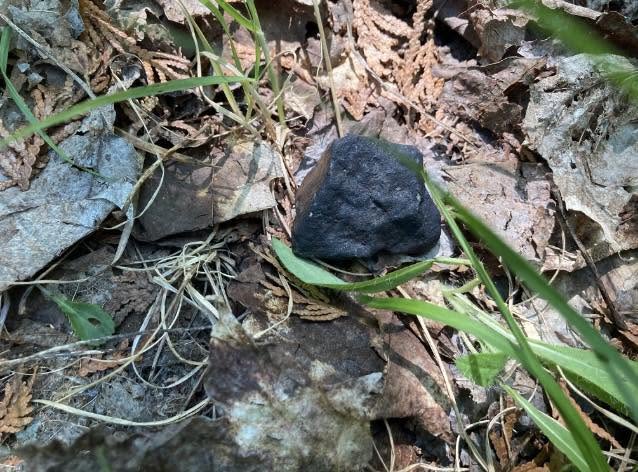
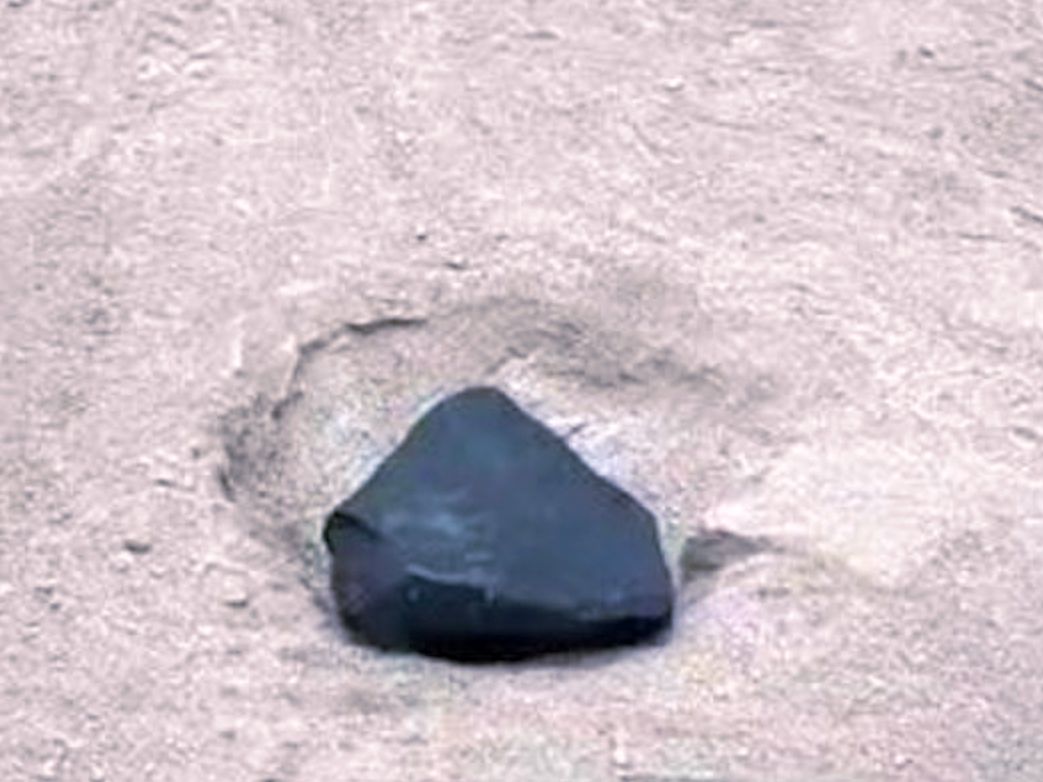
First find, an intact 57.6-gram mass in situ. Photo: Dave Kenny
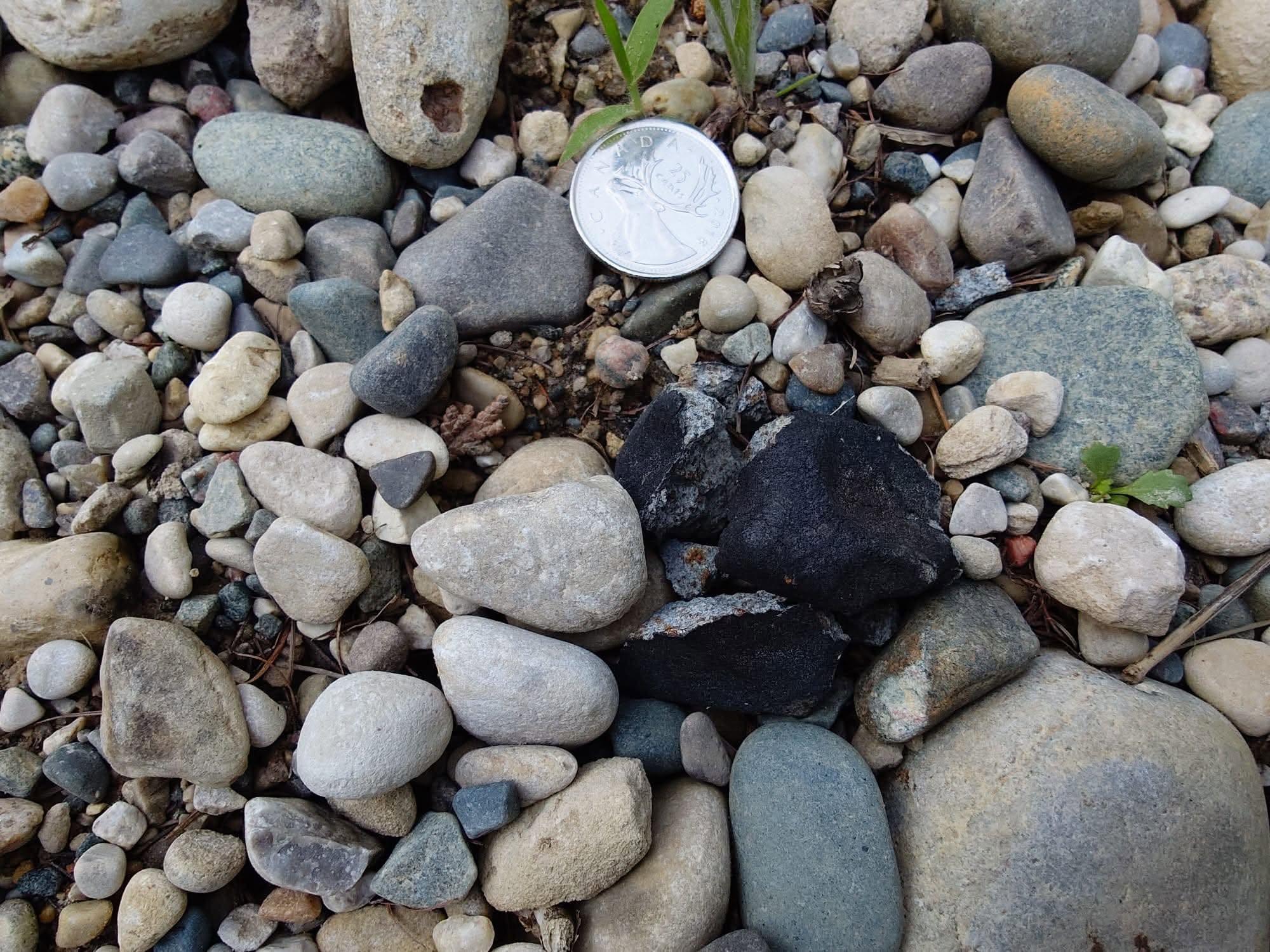
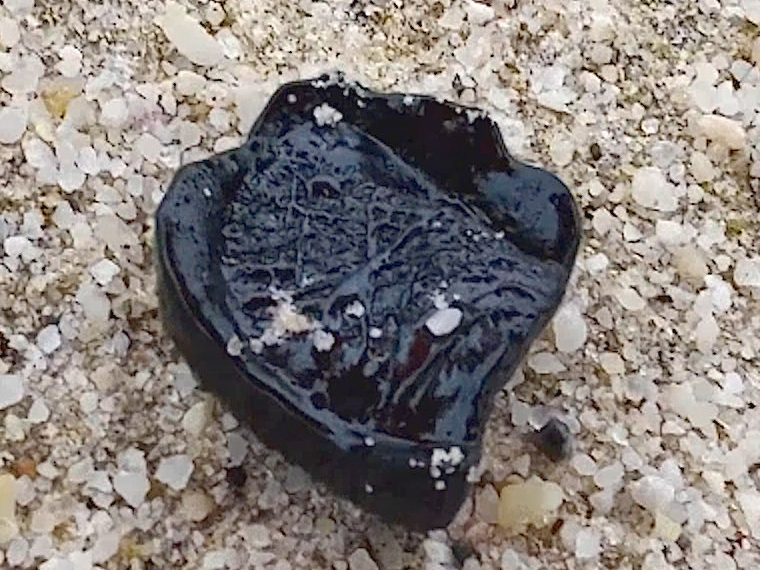
Fragments of the 55.2-gram mass in situ at the edge of a gravel path. Photo: Dave Kenny
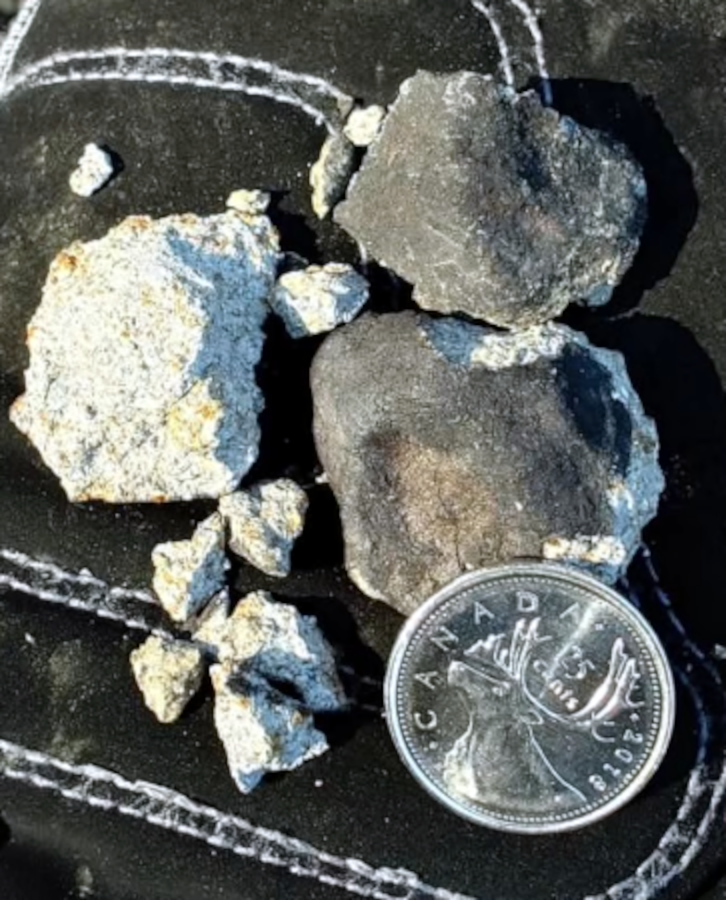
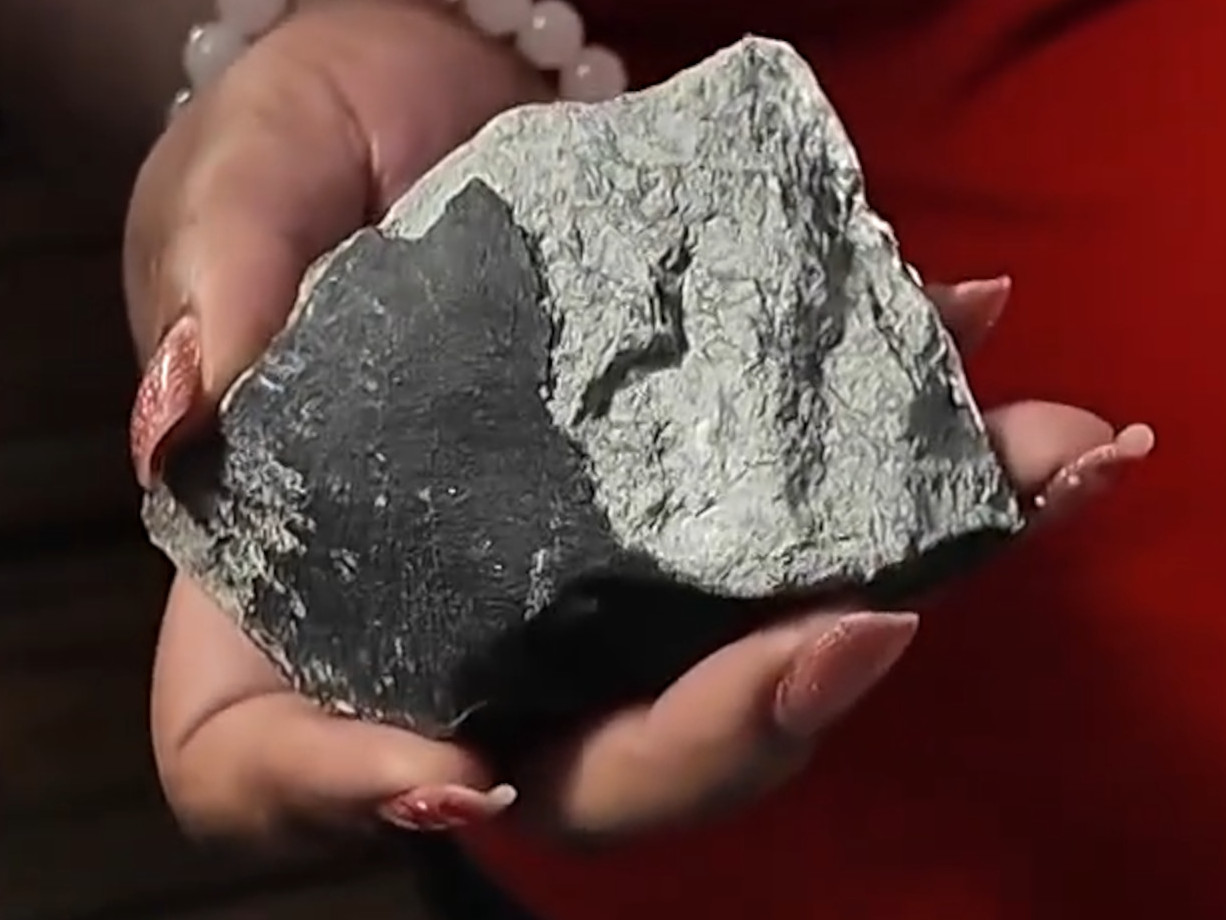
Dave Kenny holding the fragments of the 55.2-gram mass. The biggest weighs 24.4 grams. Photo: Dave Kenny
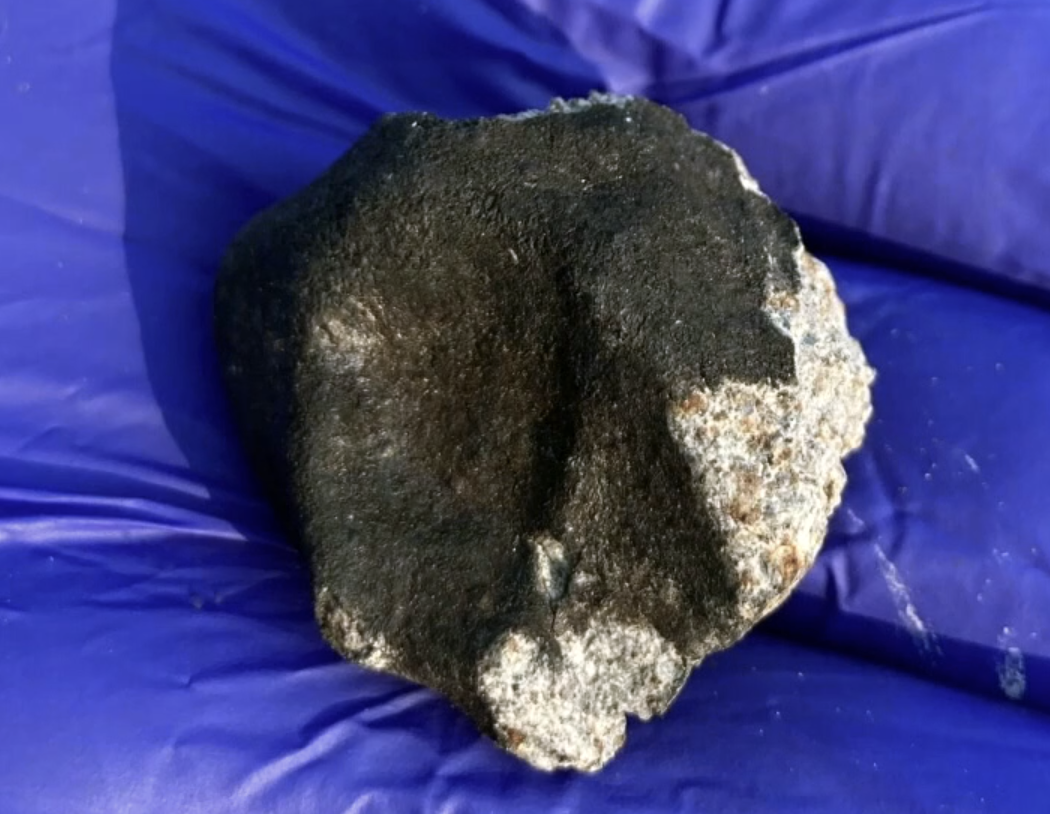
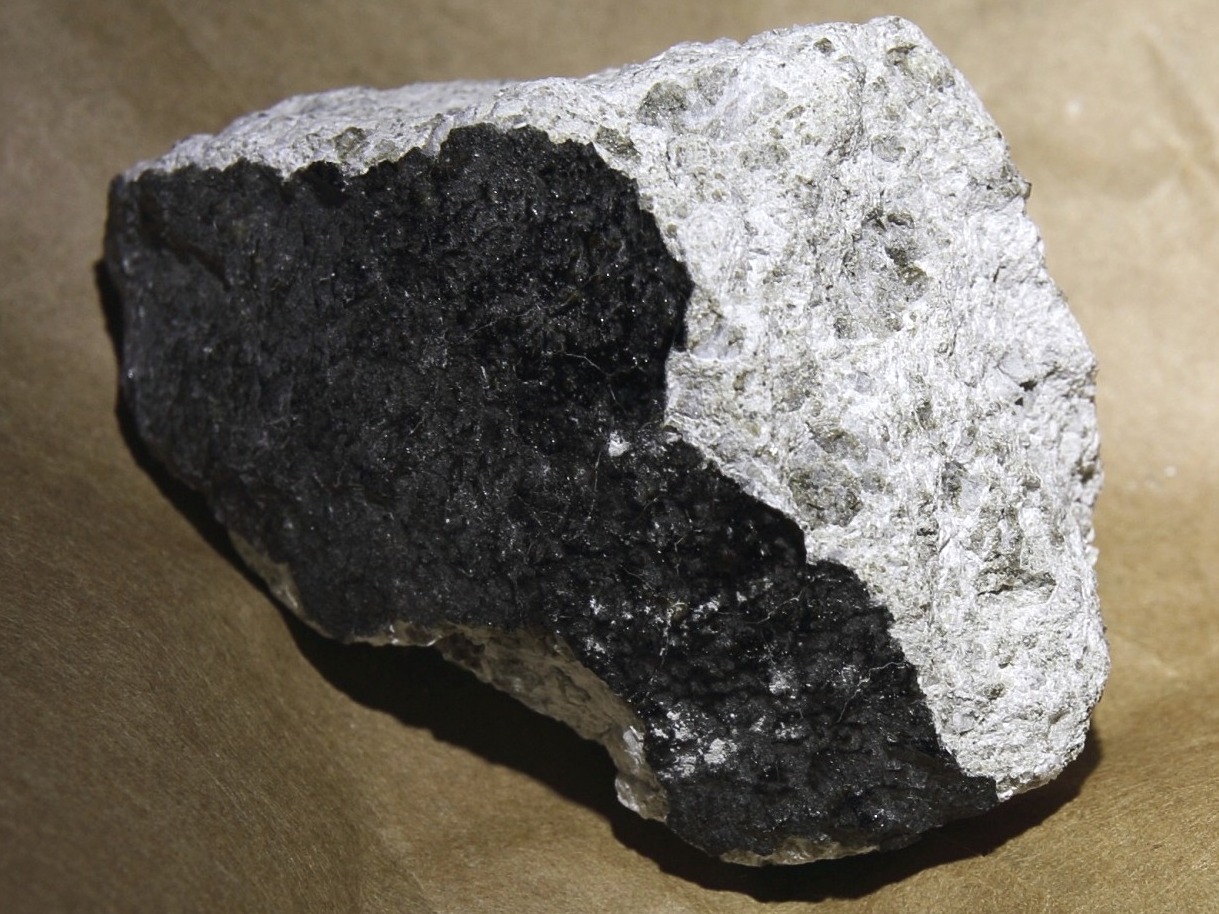
The 24.4-gram fragment of the fragmented 55.2-gram mass. Photo: Dave Kenny and Anton Clemens.
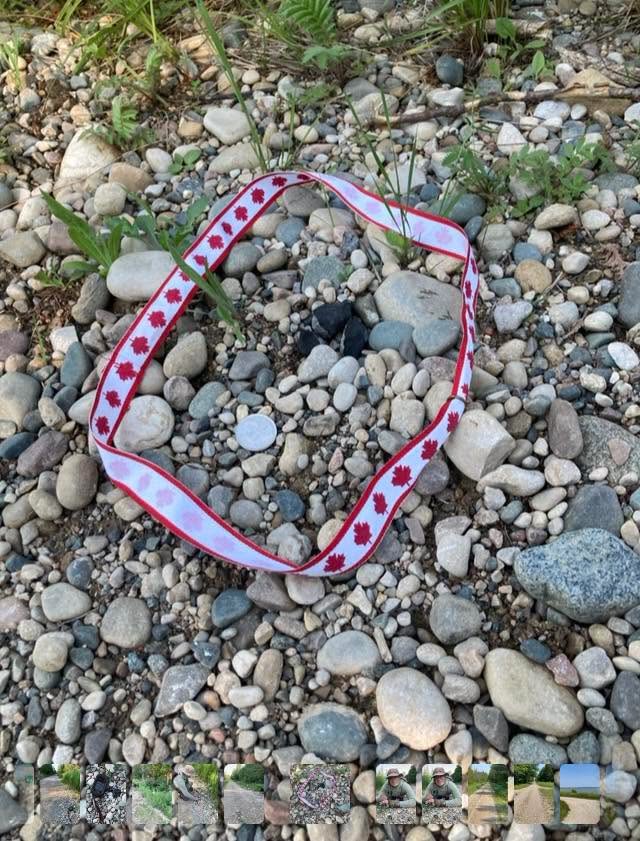
Fragments of the 55.2-gram mass in situ. Photo: Dave Kenny
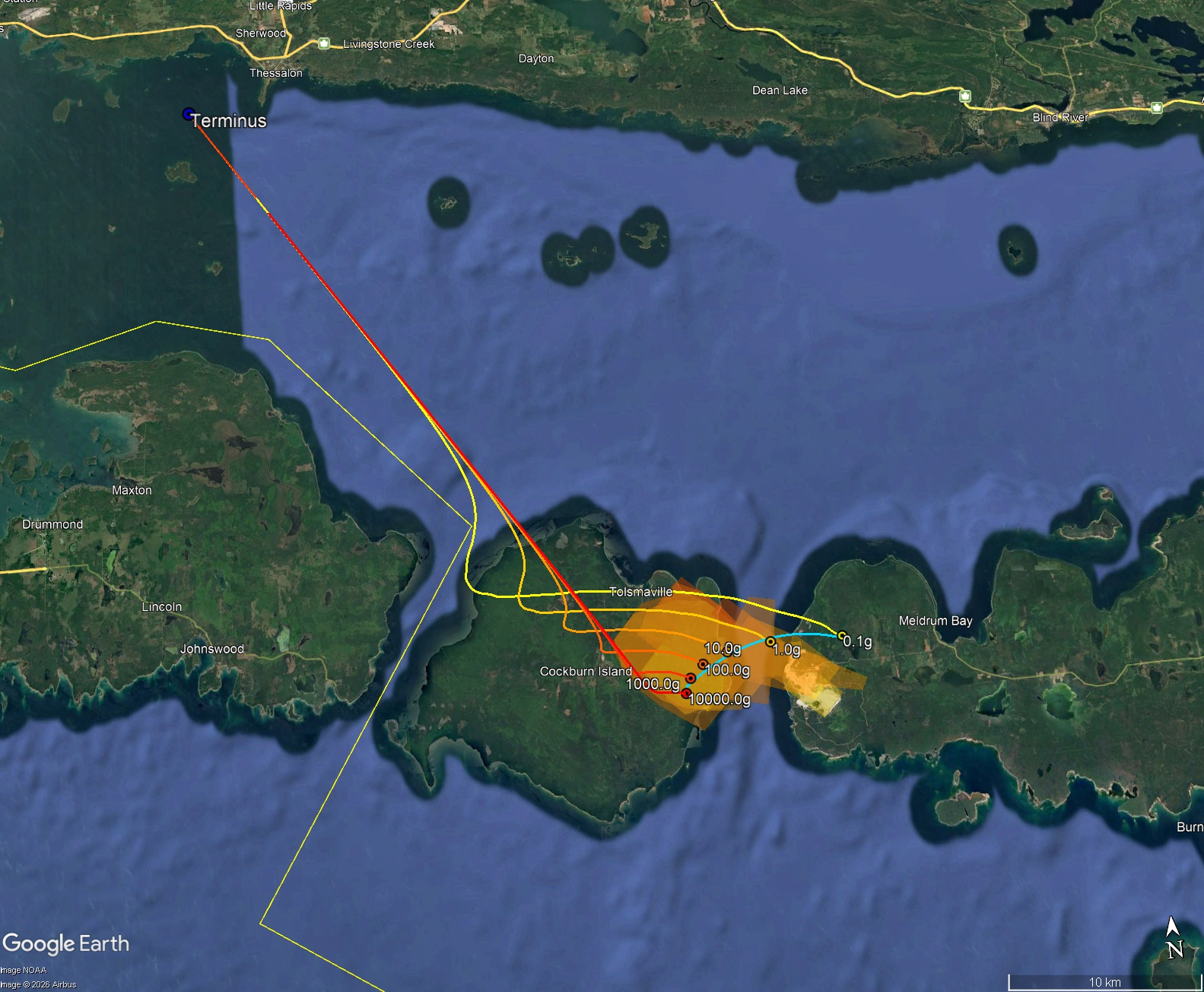
The bolide and calculated fall area
The bolide recorded from Cedarville Marine (in 100 Hodeck St., Cedarville, Michigan, USA, about 82.2 km west from the fall area) and and Spray’s Landscape – Nursery and Garden Center (in 1420 Court Street, Cheboygan, Michigan, USA), about 97.7 km WSW from fall area). Videos: Cedarville Marine and Spray’s Landscape, published by Michigan Storm Chasers
Bolide heading up to the northeast, recorded by Nathan Polaski at his family’s cottage in Posen, Michigan, about 79 km south-southwest from the fall area. Video: Nathan Polaski
Bolide recorded from location 46°30’51.5″N, 84°20’12.4″W in Queen Street East in Sault Sainte Marie, Ontario (about 103 km northwest of eastern Cockburn Island) by Gerri-Annette Grenier. Grenier had already been filming some vintage cars at the Queen Street Cruise car show when she managed to capture the bolide. Video: Gerri-Annette Grenier
“Winds at the time of the fall ranged up to 30 m/s (67 mph) but changed direction by 90 degrees around 20 km altitude. The resulting flight paths of falling meteorites are almost a spiral, with a high concentration of meteorites landing in a small area centered on the road passing through approximately 45.9225 -83.2893. Basically, meteorites landed on the eastern end of the island. Some very small (<1g) meteorites landed in the dolomite quarry across the lake. The flight paths shown here are for hypothetical meteorites. Just because there is a 10 kg meteorite shown on the map does not necessarily mean there is a 10 kg meteorite on the ground. Signatures of falling meteorites are seen in eighteen radar sweeps from four different NEXRAD radars. High reflectivity values indicate this was a relatively high mass fall.” (Text: ARES/NASA/Marc Fries)
“Composite radar image of falling meteorites, seen from a high altitude perspective view looking towards the north.” (Image and text: ARES/NASA/Marc Fries)
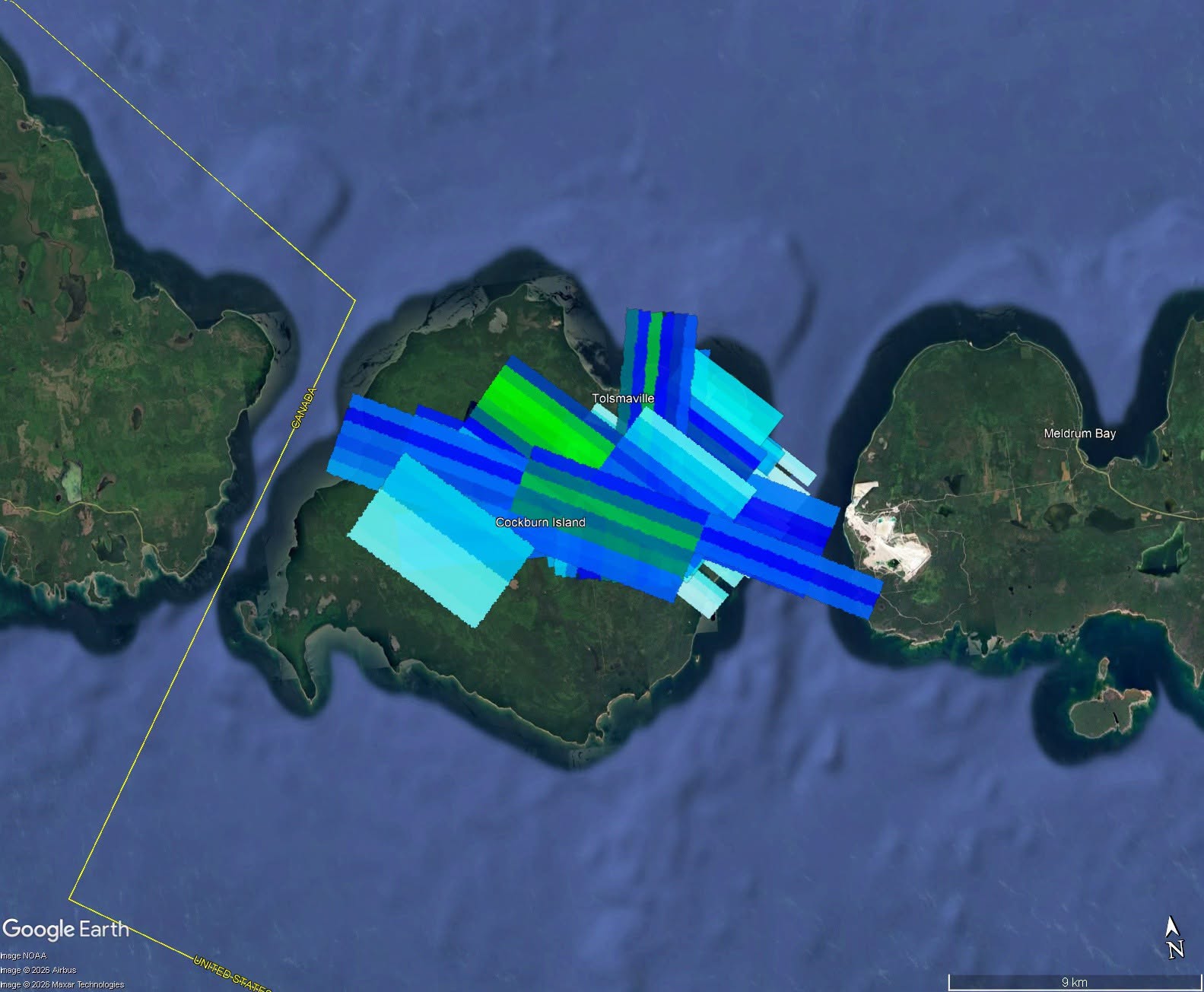
“Composite radar image of falling meteorites” (Image and text: ARES/NASA/Marc Fries)
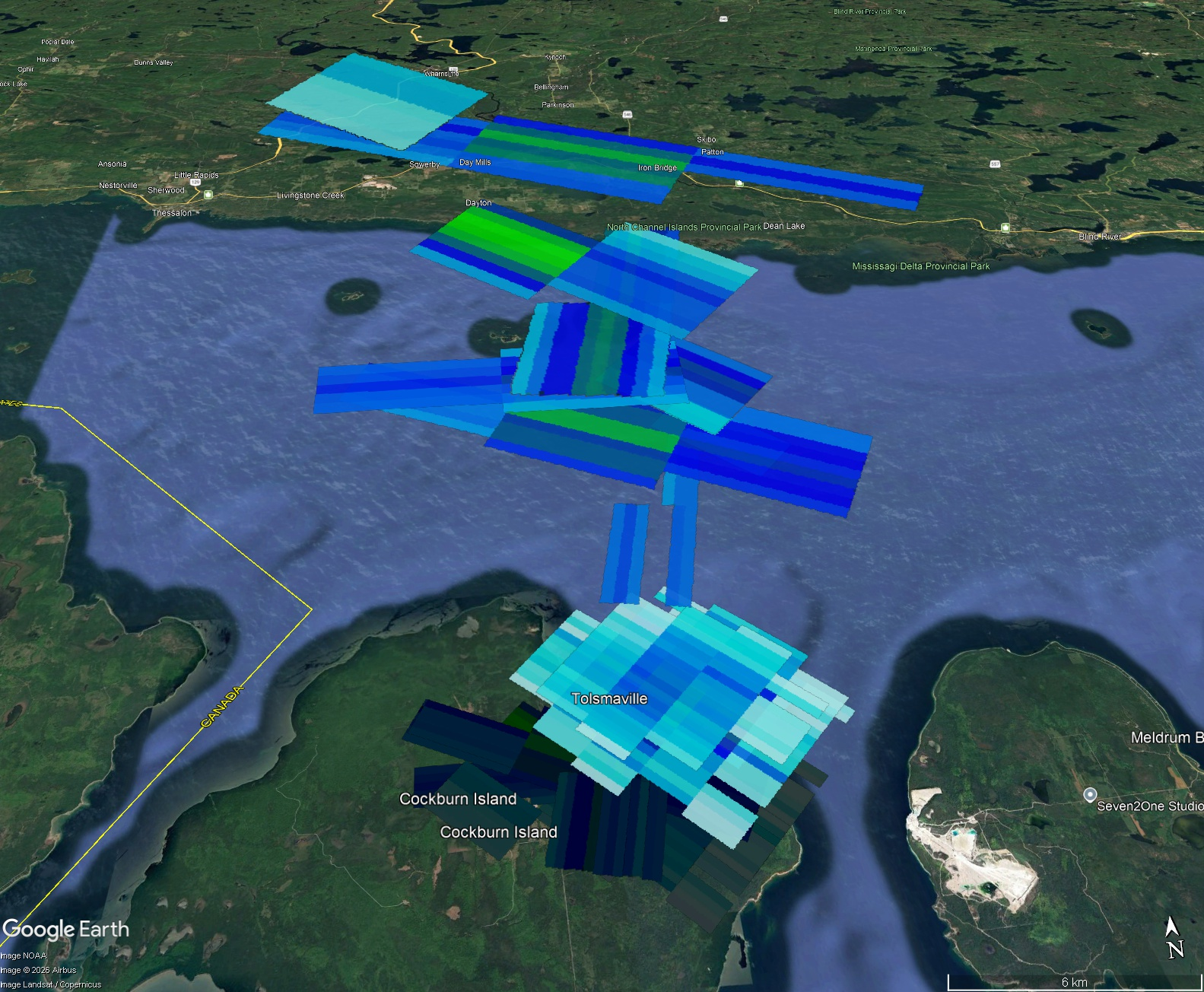
“Composite radar image of falling meteorites, seen in perspective and looking towards the north.” (Image and text: ARES/NASA/Marc Fries)