High-pressure clinopyroxene in Northwest Africa 12774 and new geobarometric evidence for a planetary embryo-sized angrite parent body
Aaron S. Bell, Laura Waters, Mark Ghiorso
Earth and Planetary Science Letters
Volume 685, 1 July 2026, 120029
Version of Record 10 April 2026
“Highlights
- We developed a new thermodynamic CaTs–liquid geobarometer specifically for CaTs‑rich clinopyroxene in angritic meteorites, leveraging MELTS and existing thermodynamic data.
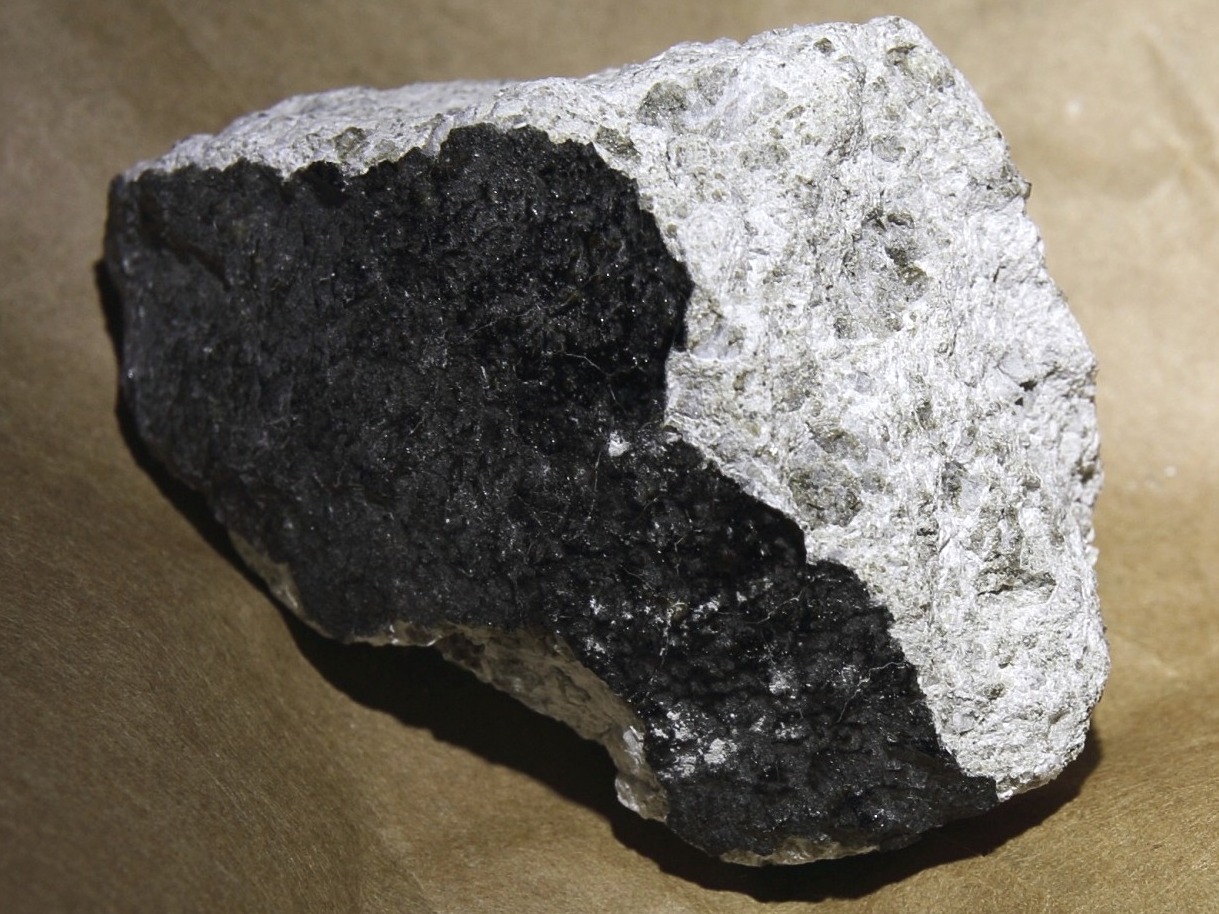
- NWA 12,774 is an unusual porphyritic angrite in which clinopyroxene is an early liquidus phase, indicating high‑pressure crystallization.
- Applied to NWA 12,774, the CaTs-liquid barometer yields a mean crystallization pressure exceeding 17 kbar, providing the first direct constraints on the size of the angrite parent body (APB).
- These pressures show that the APB was large, with a minimum radius of about 1000 km, and potentially Moon‑scale if crystallization depths were modest.
- Angrites therefore represent samples from a large, first‑generation protoplanet formed early in Solar System history.”,
“In this study, we develop, test, and apply a novel clinopyroxene-liquid geobarometer to a suite of unusually Al-rich clinopyroxenes in the porphyritic angrite meteorite NWA 12774. The new geobarometer exploits the pressure dependent crystal-liquid equilibrium between the Ca-Tschermack’s component of the clinopyroxene phenocrysts and the SiO2 and CaAl2Si2O8 (anorthite) components in their conjugate liquid. The new CaTs-liquid geobarometer yields a mean clinopyroxene crystallization pressure of 17.56 ± 0.89 (1σ) kbar. These new geobarometric data mark the first application of a thermodynamically grounded geobarometer to angritic phase assemblages and constitute the first unequivocal evidence supporting the large angrite parent body (APB) hypothesis, which posits that the angrites are samples derived from a protoplanet that was catastrophically disrupted during the earliest evolutionary stages of the inner solar system. Using established core-mantle mass ratios and density estimates, we calculate that the APB must have attained a minimum radius of 1000 km to generate a lithostatic pressure consistent with the new geobarometric dataset. The preservation of texturally pristine clinopyroxene phenocrysts suggests that NWA 12774 experienced a rapid ascent rate and brief pre-eruptive storage time scales; therefore, phenocryst crystallization depths were likely modest. If the phenocryst assemblage in question crystallized at depths <200 km, then the minimum radius of the APB is pushed beyond 1800 km, which means it would have been comparable to the size of the moon. Finally, the new APB size constraints offer new perspectives on the importance of unusual accretionary components present during the earliest stages of inner solar system evolution. The large size of the APB implies that refractory nebular condensates may constitute a much more significant mass fraction of the accretionary feedstock budget of the early inner solar system than previously appreciated.”