Turbulent Infall onto Class 0 Disks as the Cause of the Brief CAI Condensation Episode in the Solar SystemOPEN ACCESS
Jiachen Zheng, Xing Wei, Hongping Deng, Wenrui Xu, and Douglas N. C. Lin
The Astrophysical Journal, Volume 1004, Number 1, published: 8 June 2026
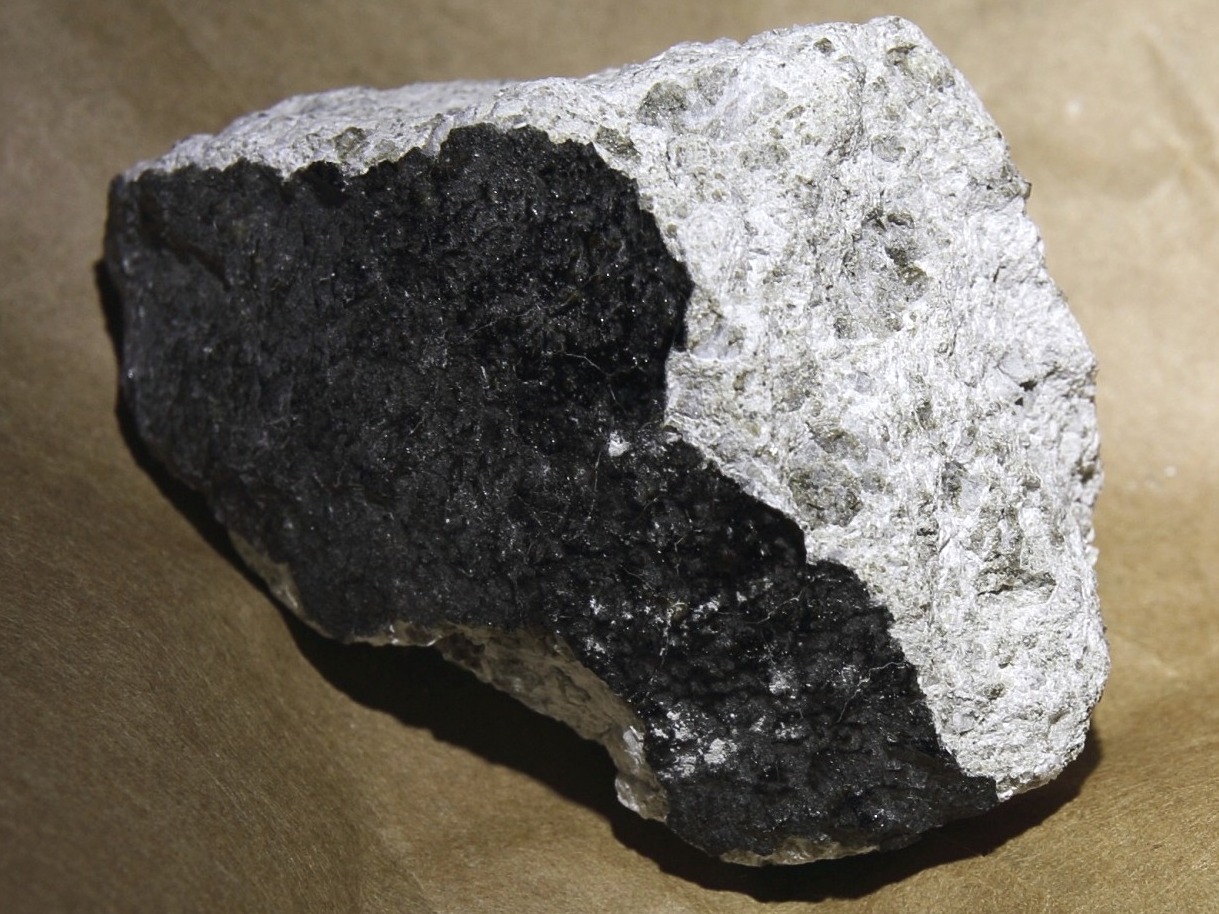
“Calcium-aluminum-rich inclusions (CAIs) in carbonaceous chondritic meteorites are the oldest relics in the solar system. Notably, their radiogenic ages indicate a brief (100 kyr) condensation episode. In contrast, the reservoirs of the short-lived isotopes in CAIs, presumably supernovae or asymptotic giant stars, pollutes star-forming regions in giant molecular cloud complexes (GMC) over much longer (Myr) timescales. Through a series of numerical simulations, we show here the possibility that, within an extended region (~2–3 au), nearly all “presolar” CAI-loaded grains in the infalling clouds were sublimated and subsequently recondensed during the early (≲105 yr) infall and formation phases of Class 0 disks. We adopt a set of initial conditions from a previous hydrodynamic simulation of GMC collapse and young stellar cluster formation. We analyze the evolution of the disk’s thermal distribution and dynamical structure resulting from the interaction between circumstellar disks and infalling gas. Our follow-up simulations, performed at much higher resolution, show significant and rapid changes in disk orientation and morphology due to the dynamic infall of external streamers. Warps and global spiral density waves commonly emerge, leading to intense dissipation that heats the gas to sufficiently high temperatures to sublimate prior-generation CAIs. This solid-to-gas phase transition is followed by subsequent cooling and recondensation. The CAIs contained in meteorites today may therefore be relics of the last major episode of infall onto Class 0 disks.”