Grain Size Effects on UV-MIR Spectra of Aubrites: Clues for Interpreting E-type Near-Earth AsteroidsOPEN ACCESS
David C. Cantillo, Neil C. Pearson, Kaycee I. Ridenhour, Vrinda McBride, Miren Miranda, Adam Battle, Thomas Joyce, Juan A. Sanchez and Vishnu Reddy
The Planetary Science Journal, Volume 7, Number 6, published: 12 June 2026
LINK (OPEN ACCESS)
PDF (OPEN ACCESS)
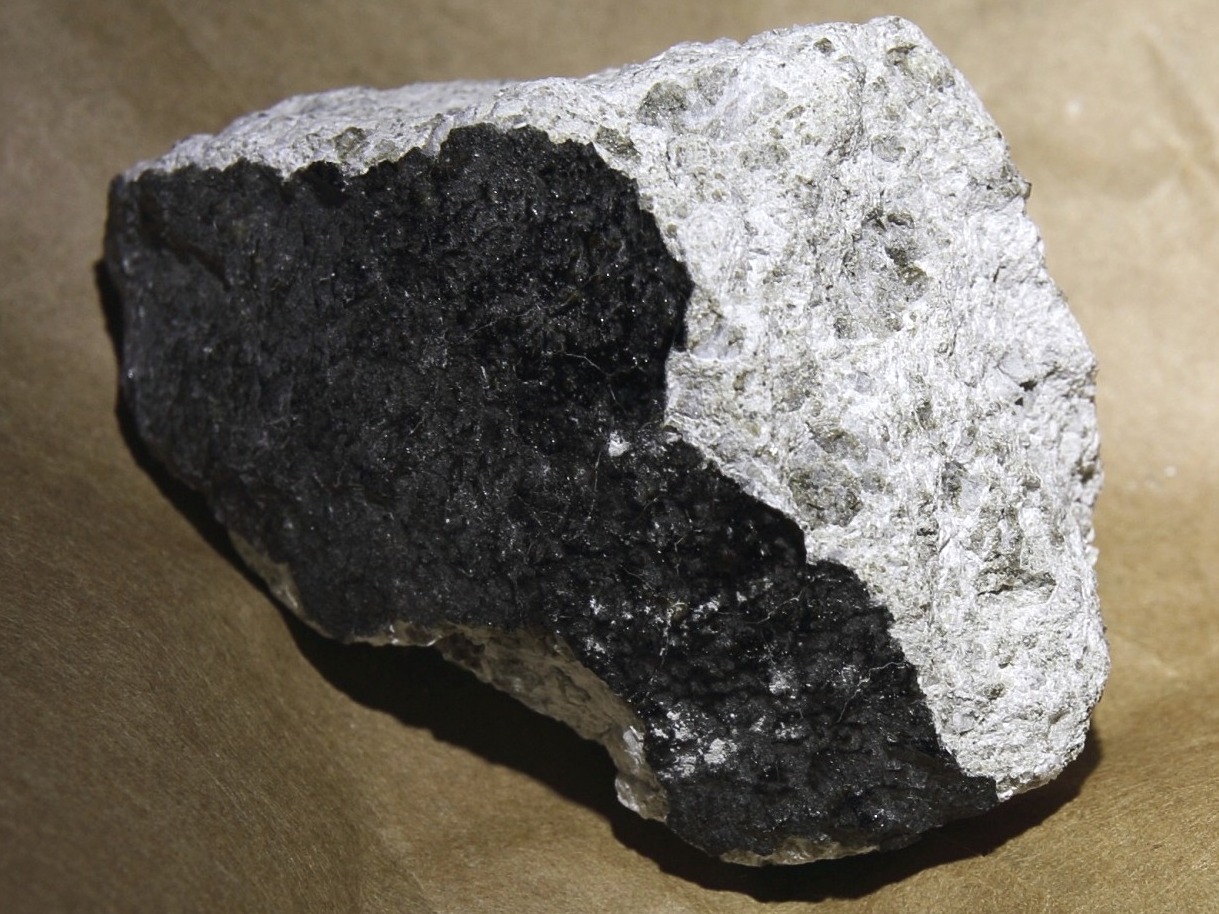
“The Vera C. Rubin Observatory and the future NEO Surveyor infrared space telescope are expected to dramatically increase the number of near-Earth object discoveries. Among these new objects, we expect small (<140 m), enstatite-rich E-type asteroids to be especially detectable in Rubin’s visible-wavelength data due to their high visible albedo (>0.40). Despite this detectability, E-types remain among the rarest near-Earth asteroids (NEAs), with few published spectra to constrain their composition or firmly link them to their assumed meteorite analogs, the aubrites. This linkage is further complicated by noncompositional effects such as grain size, especially given growing evidence that small NEAs are regolith-free unlike their larger main belt counterparts. To better characterize this effect, we conducted a spectral study of eight aubrite meteorites from the ultraviolet-to-mid-infrared range (0.18–14.5 μm; UV–VNIR–MIR) wavelengths, examining multiple grain sizes from <45 μm powders to slabs. We find that grain size significantly alters key spectral parameters used to interpret aubrite-like material, including albedo, spectral slope, and band depth of the 0.9 μm feature. We also demonstrate how aubrite grain size data can aid in interpreting E-type NEAs 2023 DZ2 and 2015 TC25, as well as identifying possible connections to the main belt asteroids (434) Hungaria and (44) Nysa, respectively. Finally, we show that grain size affects the Bus–DeMeo taxonomic classification for nearly all of our aubrites, with implications that some small Q-type NEAs may be composed of aubrite-like material rather than ordinary chondrites.”