Mesosiderite formation by impact-driven ferrovolcanism on differentiated asteroids
Weibiao Hsu 徐伟彪, Lei Jin 金磊
Earth and Planetary Science Letters, Available online 16 November 2026, Version of Record 16 November 2026
“Highlights
- First in-situ U-Pb dating of coexisting apatite and merrillite in four mesosiderites.
- Zircons record MPB crustal differentiation at ∼4560 Ma, apatite cooling to ∼4520 Ma.
- Metamorphic merrillites date metal-silicate mixing during 40004200 Ma.
- Apatite-merrillite age dichotomy reveals two discrete thermal events.
- Support an impact-driven ferrovolcanic model for mesosiderite formation.”
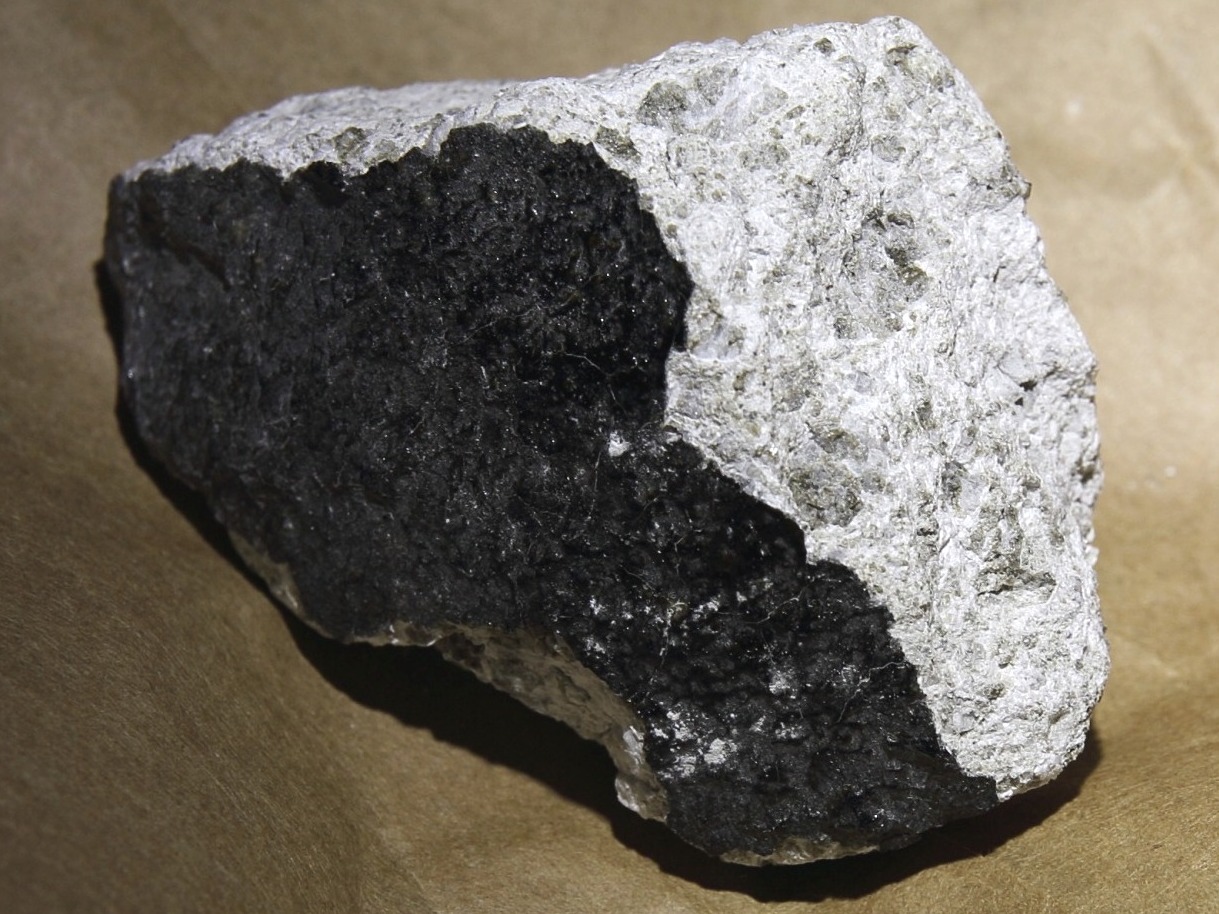
“Primitive planetesimals accreted early in the Solar‑System and subsequently differentiated into layer-structured asteroids. Mesosiderites, stony‑iron meteorites with silicate clasts embedded in Fe‑Ni metal, derived from dynamic mixing of core and crustal materials of these bodies, yet their metal‑silicate sources, formation age and mixing mechanism remain poorly constrained. This work presents a comprehensive investigation of petrography, mineral chemistry and in situ U-Pb dating of mesosiderites. Our investigation reveals that apatite, a rare mineral phase in mesosiderites, occurs in both NWA 11,005 and Vaca Muerta, in addition to rare zircon and abundant merrillite. Furthermore, both primary igneous and secondary metamorphic merrillites are present in these two mesosiderites. Magmatic zircons record crustal differentiation at ∼4560 Ma. Apatite and a minor subset of igneous merrillites record a subsequent prolonged cooling until ∼4520 Ma, whereas the remaining metamorphic merrillites give 4000‑4200 Ma, defining the upper timing limit of catastrophic core-crust mixing linked to later impact events during this interval.. Similar Pb‑diffusion behaviors for apatite and merrillite exclude simple slow cooling for the 300 Ma age offset, pointing to two distinct thermal events: an early global thermal disturbance (slow cooling) until ∼4520 Ma and a later mixing event (rapid quenching) during 4000–4200 Ma interval. The later age range establishes a robust upper temporal limit for the metal-silicate mixing. Integrating these findings with pallasite paleomagnetic evidence for long-lived molten cores (>300 Ma after the planetary differentiation) in large differentiated asteroids (> 400 km), our results support an impact‑triggered ferrovolcanic model for mesosiderite formation with minimal mantle contribution.”