Constraining the effects of source regions and parent-body processes on soluble organic matter in carbonaceous chondritesOPEN ACCESS
Mingtan Dong, Wei Yang, Yamei Li, Li Quan, H.G. Changela, Siyu Li, Sen Hu, Yangting Lin
Geochimica et Cosmochimica Acta, In Press, Journal Pre-proof, Available online 25 November 2026
“Soluble organic matter (SOM) in carbonaceous chondrites preserves a molecular record of early Solar System chemical evolution and represents a plausible source of prebiotic molecules delivered to the early Earth. There is a broad consensus that the evolution of SOM was influenced by two primary factors: source-region heterogeneity and parent-body processes. However, it remains unclear how to distinguish the respective influences of these factors. Here, we applied an omics-style workflow based on untargeted ultrahigh-performance liquid chromatography–high-resolution mass spectrometry (UHPLC–HRMS) with positive-ion electrospray ionization [ESI(+)] for comparative molecular profiling of methanol-extractable SOM in nine carbonaceous chondrites spanning CI1, C2-ung, and CM. This approach enabled systematic comparison of molecular composition, relative intensity patterns, and structure-related signatures to investigate the contributions of source-region heterogeneity and parent-body aqueous alteration to SOM diversity.
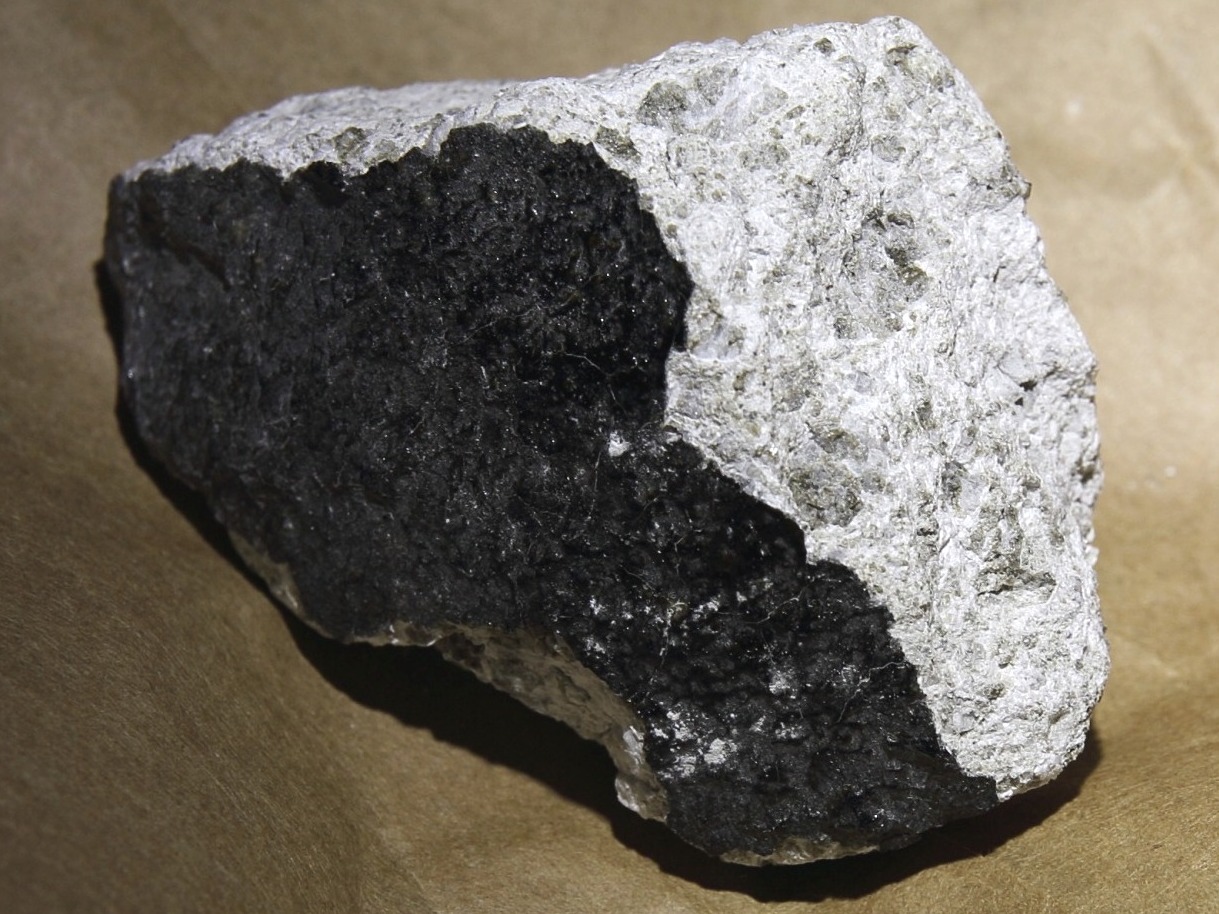
UHPLC–HRMS analysis revealed diverse families of N- and N,O-bearing heterocycles together with organosulfur compounds, while feature-based molecular networking showed modular connectivity among these families through regular mass-difference relationships and similarity between tandem mass spectra (MS/MS). Multivariate analyses further revealed pronounced separation in SOM chemical space among CI1, C2-ung, and CM chondrites. In general, CM2 chondrites exhibited cumulative ESI(+) responses approximately 2–3 times those of the CI1 chondrites and Tarda (C2-ung). Tarda showed relatively higher intensities of alkyl anilines, whereas alkyl pyridines predominated in the ESI(+) responses of CM and CI1 chondrites, highlighting differences in isomer distributions among chondrite groups. Within the CM chondrites, more heavily altered samples (e.g., Winchcombe) showed relatively stronger responses from N-heterocycles with high double bond equivalent (DBE) values and weaker responses from low-DBE N-heterocycles than less altered samples (e.g., Murchison), consistent with progressive condensation and aromatization during aqueous alteration. The association between DBE-dependent N-heterocycle redistribution and bulk Fe valence is consistent with a possible redox link between SOM dehydrogenation and Fe reduction during aqueous alteration. Together, these results provide a comparative framework for evaluating the overlapping contributions of source-region heterogeneity and parent-body processing to SOM evolution. Differences in heteroatom composition, cumulative ESI(+) response, and isomer-family distributions among the analyzed chondrite groups may retain signatures of source-region heterogeneity, whereas DBE-dependent shifts within chondrites point to molecular restructuring associated with parent-body aqueous alteration.”